Barefoot Amanita Care (Saproamanita vittadinii)

Barefoot Amanita

About Barefoot Amanita

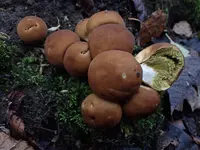
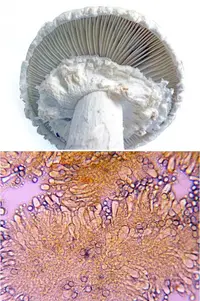
Saproamanita vittadinii, commonly called barefoot amanita, is a wild, mycorrhizal fungus rather than a traditional houseplant. It forms stout white to cream mushrooms with a scaly cap and a thick stem, often appearing in grasslands, pastures, and open wood edges. This species occurs in parts of Europe, western Asia, and has been reported in some temperate regions elsewhere. It can be difficult to culture at home because it depends on a partnership with living plant roots, not standard potting soil. For those exploring how to care for Barefoot Amanita, the focus is usually on conserving suitable outdoor habitats with appropriate host plants, moderate soil moisture, and undisturbed ground.

Main Plant Requirements

Care Difficulty

Hard Care

Light Preference

Partial Shade

Water Requirements

Regular Water

Temperature Preference

Cool Climate

Hardiness Zone

Unknown

Soil Texture

Loamy, Sandy, Rocky

Soil pH

Slightly acidic (6.5–7.0), Neutral (7.0)

Soil Drainage

Well-drained

Fertilization

Minimal (feed rarely)

Get Personalized Care Plan

Scan your plant to receive care tips personalized for your specific plant

Available on iOS and Android

How to Care for the Barefoot Amanita

This fungus prefers open, sun-exposed habitats but tolerates some light variation across the day.

  • Provide 6–8 hours of direct sun, ideally full morning and midday exposure on open grassland or sandy soil sites.
  • Tolerates light partial shade for a few hours, but persistent shade reduces fruiting; Barefoot Amanita forms best where turf is short and unshaded.
  • In hot summers, brief late-afternoon shade limits drying and scorching of surrounding vegetation, which can reduce its mycelial vigor over time.

This mycorrhizal fungus is adapted to relatively dry, well-drained soils rather than constantly moist ground.

  • Allow the top 3–5 cm of soil to dry between natural rain events or any supplemental watering to avoid suffocating the mycelium.
  • Favor sharply drained, sandy or gritty soil so water runs through quickly; puddling or slow-draining clay promotes rot and loss of fruiting bodies.
  • During cooler, rainy seasons, do not add extra water; in hot dry spells, light, infrequent watering that moistens but does not saturate the upper soil layer is enough for Saproamanita vittadinii.

This species prefers temperate conditions and tolerates a fair range of seasonal outdoor temperatures.

  • Optimal fruiting usually occurs around 55–75°F (13–24°C), with cool to mild days and moderate soil moisture supporting stable mycelial activity.
  • Mycelium can survive brief drops near 25–30°F (-4– -1°C), but repeated hard freezes without insulating litter or snow reduce survival and future fruiting.
  • Sustained heat above 90°F (32°C), especially with dry, compacted soil, stresses the organism; partial shade, mulch, and maintained soil porosity help buffer extreme summer temperatures.

Humidity is not a major factor for Saproamanita vittadinii, which tolerates relatively dry air.

  • Maintain ambient humidity around 30–50% to match typical outdoor conditions.
  • Dry air rarely harms Barefoot Amanita, provided soil moisture stays appropriate for its substrate.
  • Markings or caps drying and cracking usually indicate substrate or heat stress rather than low humidity.

Saproamanita vittadinii associates with soil-dwelling roots, so substrate must be well-aerated, free-draining, and low in added nutrients.

  • Use a sandy or sandy-loam mineral substrate with only a thin layer of organic matter on top.
  • Aim for slightly alkaline to neutral conditions, around pH 6.8–7.8, avoiding strongly acidic media.
  • Combine washed sand, fine gravel, and a small amount of low-nutrient compost to improve structure and drainage.
  • Avoid dense peat-heavy mixes, waterlogged spots, or heavily fertilized potting mixes that disrupt its mycorrhizal partnership.

This species is not well suited to container growing, since it depends on mutualistic relationships with living plant roots in open ground.

This ectomycorrhizal fungus relies mainly on its tree partners for nutrients, so additional fertilizer for Saproamanita vittadinii is usually unnecessary in garden or landscape settings.

Pruning is not applicable to Saproamanita vittadinii, since it is a mushroom-forming fungus rather than a woody or leafy plant.

This species is not suited to conventional repotting or transplanting, as it depends on a living symbiosis with tree roots and native soil fungi.

  • Avoid attempting to grow Saproamanita vittadinii in standard pots; cultivation typically fails without its natural host trees.
  • If relocation is needed, move associated host trees or soil blocks, not individual mushrooms or mycelium fragments.
  • Transplant only during cool, moist periods to reduce stress on the tree root system and associated fungal network.
  • Keep soil structure intact and avoid disturbing fine roots, which support the ectomycorrhizal partnership.

Deliberate propagation of this ectomycorrhizal mushroom is challenging and rarely successful for home growers, so practical methods are limited.

In climates where host trees are hardy, Saproamanita vittadinii generally overwinters in the soil without special care.

  • The fungal mycelium remains protected in the soil while fruiting bodies disappear after frost.
  • Avoid deep soil disturbance or heavy compaction during winter so the underground network stays intact.
  • In container-grown trees, which are uncommon for Barefoot Amanita, insulating the root ball helps maintain a more stable environment.

Care Tips

Host grass management

Maintain a stable, unfertilized or very lightly fertilized grass sward and avoid frequent deep cultivation so the fungal mycelium linked to the grass roots is not repeatedly disturbed.

Minimal soil disturbance

When marking or observing colonies, use flags or surface markers instead of digging or turning the soil, as repeated disturbance can break mycelial networks and reduce future fruiting.

Controlled mowing regime

If the site is mown, schedule cuts a little after the main fruiting period and set the mower high to avoid chopping young mushrooms and to keep the grass structure that supports growing Barefoot Amanita.

Drainage pattern protection

Keep existing drainage patterns intact by avoiding new trenches, compacted paths, or heavy equipment on the site, since Saproamanita vittadinii prefers well-drained, aerated ground with stable moisture dynamics.

Spore spread assistance

To encourage new patches over time, gently move mature, open-cap specimens or collected spore-rich caps to nearby suitable grass areas, placing them on the surface so wind and insects can help disperse their spores.

Common Pests and Diseases

Mycophagous springtails

These insects feed directly on developing fruiting bodies, creating pits and tunnels in caps and stems and sometimes preventing normal mushroom development. Symptoms include distorted, scarred, or partially eaten mushrooms, especially in humid, organic-rich substrates.

Solution

Reduce excess surface moisture by improving drainage and ventilation around the fruiting area, and avoid overwatering any associated container or bed. Remove and discard heavily damaged mushrooms, then use sticky traps or a fine 0.5 mm mesh barrier on cultivation trays to limit access; in intensive setups, a targeted application of a biological control such as Beauveria bassiana can help reduce springtail populations.

Fungus gnat larvae

This pest lives in moist substrates and tunnels through developing primordia (young mushroom buttons), causing them to abort or develop misshapen. Symptoms include hollow stems, collapsed young mushrooms, and small black adult gnats flying around the growing site.

Solution

Allow the upper substrate layer to dry slightly between waterings, improve airflow, and cover the substrate with a breathable fine mesh to block egg‑laying adults. Remove and discard compromised mushrooms, then use yellow sticky traps for adults and, if needed in a controlled growing context, apply a Bacillus thuringiensis israelensis (Bti) drench according to label directions to target larvae in the substrate.

Parasitic Hypomyces

This disease is caused by parasitic fungi in the genus Hypomyces that colonize mushroom surfaces, leading to a white, yellow, or reddish crust that deforms and eventually destroys the fruiting body. Symptoms include powdery patches that spread over the cap and gills, making the mushroom felted or crusty.

Solution

Promptly remove and discard any infected mushrooms and adjacent substrate to reduce spore spread. Improve spacing and air circulation around fruiting areas, limit overhead watering that keeps caps wet for long periods, and in any repeat-cultivation setup rotate the site or containers and sterilize tools and growing equipment to reduce residual inoculum.

Slug feeding damage

This pest grazes on caps and stems, leaving irregular holes, slime trails, and sometimes entirely consumed young fruiting bodies. Symptoms include ragged edges on caps and missing tissue at the substrate line where slugs hide and feed at night.

Solution

Hand‑pick slugs during evening or early morning checks, and use physical barriers such as copper tape or rough diatomaceous earth bands around small beds or containers. Reduce nearby hiding spots (dense groundcover, boards, thick mulch right at the base), and place simple beer or yeast traps at the perimeter to intercept slugs before they reach the mushrooms.

Interesting Facts

Early European description

This species was first formally described in 1835 by the Italian mycologist Carlo Vittadini, who originally placed it in the genus Amanita based on its distinctive scaly cap and persistent ring.

Dry grassland specialist

It typically occurs in dry, open habitats such as steppe-like grasslands, pastures, and field margins, often on calcareous or sandy soils rather than in dense forests like many other amanitas.

Non-mycorrhizal lifestyle

Unlike many close relatives in Amanita that form mycorrhizae (mutual root partnerships) with trees, this species is reported from open, often treeless sites, suggesting a different and still not fully resolved ecological strategy.

FAQs about Barefoot Amanita

Yes. This species is considered poisonous and should never be eaten. Contact with intact skin is usually not dangerous, but ingestion can cause serious illness. Keep children and pets from touching or consuming any part.

Grow Healthy Plants with Botan Care

Keep your plants happy and healthy with plant identification, disease detection, and easy care guidance.

Botan plant care app — identify plants on mobile

Explore More Plants