spike lichen Care (Calicium glaucellum)

Also known as: Chippendale stubble, Spike lichen; White-collar stubble, white ring stubble lichen
spike lichen

About spike lichen

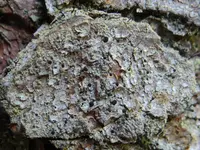
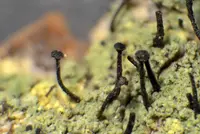
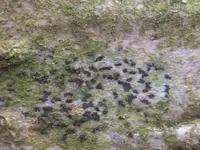
Spike lichen (Calicium glaucellum) is a small, crusty lichen that grows on bark and old wood, forming tiny stalked spore structures that look like dark pins. It is not a flowering plant but a symbiosis between a fungus and algae.

This species occurs mainly in cool, humid forests of North America and northern Europe, where air is relatively clean. It grows very slowly and is sensitive to air pollution and habitat disturbance, which makes it challenging to keep in artificial settings.

Those who want to learn how to care for spike lichen should focus on stable humidity, gentle light, and a consistently cool, well-ventilated environment.

Main Plant Requirements

Care Difficulty

Hard Care

Light Preference

Partial Shade

Water Requirements

Low Water

Temperature Preference

Cold Hardy

Hardiness Zone

Unknown

Soil Texture

Rocky, Sandy, Loamy

Soil pH

Acidic (5.5–6.5), Slightly acidic (6.5–7.0)

Soil Drainage

Well-drained

Fertilization

Minimal (feed rarely)

Get Personalized Care Plan

Scan your plant to receive care tips personalized for your specific plant

Available on iOS and Android

How to Care for the spike lichen

Calicium glaucellum typically grows on bark or weathered wood in cool, low to moderate light forest conditions.

  • Provide bright shade or dappled light with 1–3 hours of weak morning sun; avoid harsh midday and afternoon sun that can desiccate the thallus surface.
  • Allow partial shade beneath trees where it receives indirect light most of the day, similar to its natural woodland microhabitat as spike lichen.
  • In summer, shield from reflected heat and intense sun, while in winter ensure some open sky exposure so it still receives low-angle, diffuse light.

This lichen absorbs moisture from rain, dew, and humid air rather than from conventional soil watering.

  • Allow the substrate to dry completely between wetting; if cultivated, lightly mist only when the surface looks fully dry and the tissue appears dull or slightly shrunken.
  • Reduce any supplemental misting in cool, short-day periods, relying mostly on natural rainfall to avoid persistent wetness and algal growth around Calicium glaucellum.
  • Watch for overwatering signs such as soft, darkened or slimy patches on the lichen and substrate, and decrease moisture exposure if these changes appear.

This species is adapted to cool, temperate climates with marked seasonal variation.

  • Aim for an overall range of 40–70°F (4–21°C), where metabolic activity remains stable without rapid drying or heat stress.
  • Tolerates short drops near 5–14°F (-15 to -10°C) when attached to natural substrates, but prolonged severe freezes combined with drying winds can cause tissue damage.
  • Above about 80°F (27°C), provide shade and higher ambient humidity; reduce heat and direct sun during hot spells to limit desiccation stress.

This crustose lichen tolerates a wide range of humidity but needs periodic moisture to stay active.

  • Performs best with ambient humidity around 50–80% combined with regular surface wetting from rain, mist, or dew.
  • Tolerates short dry spells well but prolonged very dry air slows growth and may cause spike lichen thalli to appear paler and more brittle.
  • Increase local humidity outdoors by positioning on shaded, moisture-retentive substrates such as rough bark or porous stone that hold surface dampness.

Calicium glaucellum is not grown in soil in the usual sense but anchors to firm, stable surfaces.

  • In cultivation, mimic its natural crust on bark or rock rather than using loamy or organic-rich potting media.
  • If a substrate mix is needed, use a very thin layer of sterilized fine sand with minimal organic matter over a firm base, ensuring extremely rapid drainage.
  • Keep the surface well aerated and exposed; avoid compacted, water-holding materials that stay wet for more than a few hours after watering or rain.
  • Avoid nutrient-rich composts, manures, or dense peat-based mixes, which encourage algae and moss that outcompete the lichen.

This species is only loosely suited to container growing because it prefers stable, outdoor bark or rock surfaces.

  • Mount bark or stone fragments colonized by the lichen in a shallow, heavy container to prevent tipping in wind.
  • Choose a wide, low pot so the substrate lies nearly horizontal, allowing uniform wetting by rain or mist and rapid drying.
  • Leave the container unlined and unglazed where possible so sidewalls breathe and do not trap long-term moisture against the lichen.

Calicium glaucellum is adapted to nutrient-poor bark and wood, so fertilizing is usually unnecessary and can be harmful.

Calicium glaucellum needs almost no pruning because it is a slow-growing lichen tightly attached to its substrate.

This lichen is best left on its original bark or wood and is not suited to frequent transplanting.

  • Attempt transplanting only when moving an entire bark or wood section, since detaching the lichen thallus causes severe damage.
  • Choose cool, moist weather for any move to reduce desiccation stress and shock.
  • Minimize handling; keep the original orientation to light and moisture when fixing the host piece in a new position.
  • Maintain gentle, even humidity after relocation so the lichen can re-establish its fungal and algal balance.

Propagation of Calicium glaucellum is specialized and slow, so it is rarely attempted in typical home or indoor setups.

This species is naturally cold hardy in temperate climates and usually needs no special winter care when left on outdoor bark or wood.

Care Tips

Select stable substrate

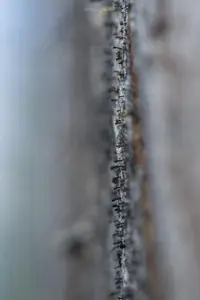
Mount thalli on long-lasting, rough, calcareous or siliceous stones or old hardwood that will not crumble quickly, so the extremely slow-growing colony can establish without frequent disturbance.

Minimize handling

Plan any mounting, labeling, or display work before attaching the lichen and then avoid touching or brushing it, as even light mechanical damage can remove whole podetia and set growth back by years.

Encourage gentle airflow

Position displays in a place with light but steady air movement, not in sealed cases, to limit fungal contamination and surface algae that can overgrow the tiny fruiting stalks.

Control competing growth

Periodically inspect the substrate and very gently remove moss, algae films, or aggressive foliose lichens with a soft brush or fine tweezers so the spike lichen is not shaded or displaced.

Use seasonal mist cycles

If keeping material for study or education, simulate natural wet–dry cycles by misting lightly during naturally wetter seasons and allowing full dry-out between events, which better supports long-term vitality when growing spike lichen in captivity.

Common Pests and Diseases

Air pollution sensitivity

Symptoms include fading or bleaching of the thallus and reduced spore production on trunks or rocks exposed to traffic or industrial fumes. This condition reflects the lichen’s high sensitivity to sulfur dioxide, nitrogen oxides, and other airborne pollutants.

Solution

Improve local air quality around the colony where possible by avoiding wood smoke, pesticides, and chemical sprays nearby, and favoring clean, well‑ventilated outdoor locations away from roads or chimneys. In practice, the only effective measure is to site or encourage Calicium glaucellum growth in clean air habitats and avoid moving substrate from polluted areas when growing spike lichen for educational or display purposes.

Substrate instability

Symptoms include patches breaking off, crumbling, or disappearing after bark shedding, branch breakage, or flaking rock surfaces. This issue is linked to the lichen’s reliance on stable, long‑lived bark or rock to maintain mature colonies.

Solution

Avoid mechanical disturbance by not peeling bark, cutting supporting branches, or chiseling rock surfaces where the lichen grows. When managing nearby trees, prune carefully outside the colonized areas and limit handling, allowing the lichen to remain on stable, older substrate whenever possible.

Overgrowth by mosses

This condition appears as green moss cushions that gradually cover, shade, and outcompete the small grey thallus and black stalked fruiting bodies. Over time, light and space become too limited for the lichen to persist.

Solution

If conservation or display is a goal, gently remove or thin excess moss around the lichen using soft tools, taking care not to scrape the crust itself. Improve light and air movement slightly by trimming dense surrounding vegetation rather than altering the lichen’s immediate surface.

Fungal overgrowth

This disease presents as irregular dark or discolored patches, sometimes with a slightly fuzzy or sooty surface that obscures the lichen structure. These secondary fungi exploit weakened or shaded colonies and can gradually kill the underlying lichen tissue.

Solution

Reduce stress on the lichen by maintaining an open, well‑ventilated, naturally lit habitat and avoiding chronic damp shading. In field or outdoor display conditions, control is mainly preventive; avoid wetting the area repeatedly and do not apply fungicides, which can be more damaging to the lichen than to the overgrowing fungus.

Invertebrate grazing

This pest pressure is seen as finely grazed, patchy areas where the lichen crust looks thinned or scraped, often due to snails, slugs, or tiny arthropods feeding on the thallus. Damage is usually localized but can be significant in very small colonies.

Solution

Limit access of slugs and snails around key colonies by reducing nearby hiding spots such as boards, dense debris, or persistent mulch, and hand‑remove large grazers when found directly on the substrate. Avoid chemical molluscicides or broad insecticides, as these can harm the lichen and its microhabitat more than the grazers themselves.

Interesting Facts

Minute pin-lichen specialist

This species is a tiny crustose pin lichen that forms dark, pin-like fruiting stalks (mazaedia) on a thin, grayish crust, making it difficult to detect without a hand lens.

Wood-decay indicator

It occurs mainly on well-rotted, dry dead wood of conifers and some hardwoods in boreal and cool temperate forests, and its presence often indicates long-term continuity of decaying wood microhabitats.

Mazaedial spore release

Its spherical, powdery spore heads are composed of loose masses of ascospores that are easily dispersed by wind or disturbance, a characteristic feature of mazaediate lichens in the family Caliciaceae.

Botan icon

Did you know?

Calicium glaucellum is frequently used in ecological and conservation studies as part of indicator lichen lists to identify old-growth or structurally complex forests in northern regions, because it tends to persist only where dead wood resources have been stable over long periods.

FAQs about spike lichen

This species grows very slowly, often adding only fractions of a millimeter per year. Growth rate depends on clean air, stable moisture, and low disturbance. Even in good conditions, visible size changes can take many years.

Grow Healthy Plants with Botan Care

Keep your plants happy and healthy with plant identification, disease detection, and easy care guidance.

Botan plant care app — identify plants on mobile

Explore More Plants