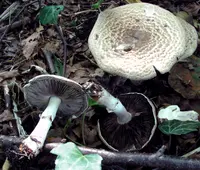
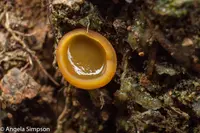
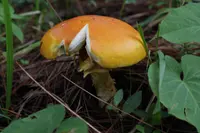
jack-o'-lantern mushroom Care (Omphalotus illudens)

Also known as: Eastern American jack-o'-lantern, Eastern American jack-o'-lantern mushroom, eastern jack-o'-lantern
jack-o'-lantern mushroom

About jack-o'-lantern mushroom

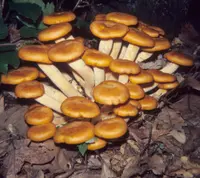
The jack-o'-lantern mushroom, Omphalotus illudens, is a bioluminescent wood-rotting fungus, not a true plant, often found on stumps, buried roots, or at tree bases. It forms dense clusters of bright orange, funnel-shaped caps with closely spaced gills that glow faintly green in the dark.

This species occurs mainly in forests and parklands across eastern North America, especially on decaying hardwoods. It is not recommended for beginners to grow, since it requires specific wood-based substrates and careful identification to avoid confusion with edible mushrooms. For those studying how to care for jack-o'-lantern mushroom, stable moisture, cool to mild temperatures, and shaded conditions are generally preferred.

Main Plant Requirements

Care Difficulty

Hard Care

Light Preference

Shade

Water Requirements

Keep Soil Moist

Temperature Preference

Cool Climate

Hardiness Zone

Unknown

Soil Texture

Loamy, Organic-rich, Peaty

Soil pH

Acidic (5.5–6.5)

Soil Drainage

Moist but well-drained

Fertilization

Minimal (feed rarely)

Get Personalized Care Plan

Scan your plant to receive care tips personalized for your specific plant

Available on iOS and Android

How to Care for the jack-o'-lantern mushroom

This saprotrophic mushroom prefers dim, forest-like light rather than direct sun exposure.

  • Provide bright shade or dappled woodland light, such as under deciduous trees with filtered sun for 1–3 hours in early morning only.
  • Avoid strong midday or afternoon sun, which dries substrates and can scorch jack-o'-lantern mushroom fruiting bodies, reducing size and lifespan.
  • In summer, use thicker leaf litter or additional shade cloth; in low-light seasons, ensure at least open, indirect daylight for 8–10 hours to support mycelium vigor.

Moist but not waterlogged conditions are essential for reliable fruiting of this fungus.

  • Keep the substrate (logs, buried wood, or wood-rich beds) evenly moist; surface should feel damp but not spongy or slimy when pressed.
  • Water thoroughly when the top 2–4 cm of surrounding soil or mulch feels just barely moist, then allow excess water to drain away rather than pooling.
  • Reduce heavy watering in cool seasons to prevent sour, anaerobic smells; pale, shrinking caps suggest dryness, while soft, dark, foul-smelling tissue signals overwatering stress for Omphalotus illudens.

Stable, cool to mild temperatures favor strong mycelium growth and fruiting.

  • Aim for 55–70°F (13–21°C) as the main fruiting range, similar to cool autumn forest conditions.
  • The mycelium usually survives down to about 25°F (−4°C) if insulated by soil and leaf litter, but exposed fruiting bodies are damaged by hard frost.
  • Above 80°F (27°C), fruiting declines; in hot summers, provide extra shade and moisture, and expect peak mushroom production during cooler spring or fall periods.

This saprotrophic mushroom prefers consistently moist air but tolerates a moderate humidity range.

  • Aim for 70–90% humidity around fruiting bodies; lower levels slow growth and may dry caps.
  • Dry air causes shriveling edges, cracked caps, and stalled development of jack-o'-lantern mushroom clusters.
  • Increase humidity with a covered but ventilated tub, frequent fine misting of substrate (not caps), or a nearby cool-mist humidifier.

This species fruits best from organic-rich, wood-based substrates rather than conventional garden soil.

  • Use a mix based on hardwood sawdust or chips with 20–30% well-aged compost to supply nutrients and structure.
  • Ensure the substrate drains freely but stays evenly moist; large wood pieces and coarse particles prevent waterlogging.
  • Maintain a slightly acidic environment around pH 5.5–6.5, similar to decaying hardwood forest litter.
  • Avoid dense clay, heavy peat blocks, or any mix that stays soggy, as these reduce aeration and invite competing fungi.

This fungus can be grown in containers, but only when the vessel is treated as a contained log or substrate block rather than a standard potted plant.

  • Choose a rigid bucket or tub deep enough to hold a 15–20 cm substrate layer, which stabilizes tall fruiting clusters.
  • Drill multiple side and bottom holes so excess water drains quickly while still allowing gas exchange through the substrate.
  • Line the container with a breathable plastic liner or filter patch to limit contamination while moderating moisture loss through the walls.

This wood-decaying fungus typically grows on nutrient-rich logs and does not benefit from conventional plant fertilization.

Pruning is not a standard practice for Omphalotus illudens because the fruiting bodies are short-lived and seasonal.

Cultivated jack-o'-lantern mushroom setups focus on substrate replacement rather than traditional repotting or transplanting.

  • Replace spent substrate blocks or log sections once fruiting declines or contamination appears, instead of moving the mycelium to a new container.
  • Schedule new substrate inoculations in cool to mild seasons to reduce heat stress on developing mycelium.
  • Handle colonized substrate gently, minimizing breaking or crumbling, which can dry exposed mycelium and slow regrowth.
  • Maintain stable moisture and indirect light after moving or replacing substrate so the fungus can re-establish and resume fruiting.

Propagation of Omphalotus illudens under controlled conditions is specialized and not usually attempted by general home growers.

Outdoor colonies on native host trees are typically cold hardy and need no special winter care beyond normal ecosystem conditions.

Care Tips

Use Fresh Substrate

Prepare each new batch on freshly sterilized hardwood sawdust or wood chips rather than reusing old substrate to reduce contamination by competing fungi and bacteria.

Pre-Colonize In Darkness

Allow the mycelium to fully colonize the substrate in sealed, dark containers before exposing it to fresh air and light, which promotes strong, even growth and more reliable fruiting.

Control Fresh Air

Introduce small, regular fresh-air exchanges using vent holes with micropore tape or a loose lid fit to remove excess carbon dioxide while still maintaining high humidity around developing clusters.

Cool Shock For Fruiting

After full colonization, provide a slight temperature drop of about 5–10°F for a few days to trigger fruiting, which is a helpful technique when growing jack-o'-lantern mushroom in controlled conditions.

Harvest As Clusters

Cut entire clusters at the base with a clean knife rather than picking individual caps, which minimizes damage to the remaining mycelium and reduces entry points for mold or bacteria.

Common Pests and Diseases

Fungus gnats

This pest is attracted to damp, organic-rich substrates used for cultivating this mushroom and can damage developing mycelium and pins. Adults lay eggs in the substrate, and larvae feed on fungal tissue and decaying matter.

Solution

Reduce excess surface moisture, allow the substrate top to dry slightly between misting, and improve airflow around the growing container. Use fine mesh screens on vents, apply yellow sticky traps for adults, and if needed drench the substrate surface with a biological control such as Bacillus thuringiensis var. israelensis (BTI) according to label directions.

Mites

These insects are tiny arthropods that colonize moist, nutrient-rich mushroom substrates and can graze on mycelium or developing fruiting bodies. Symptoms include slowed growth, distorted or stunted clusters, and sometimes visible moving specks on the substrate or stems.

Solution

Lower humidity slightly while maintaining adequate conditions for fruiting, increase ventilation, and remove heavily infested blocks or clusters. For persistent problems, use predatory mites introduced to the growing area or apply a targeted acaricide that is labeled as safe for edible mushrooms, following all safety guidelines.

Green mold (Trichoderma)

This disease appears as white mycelium that quickly turns bright to dark green on the substrate surface, outcompeting the mushroom mycelium. Symptoms include stalled colonization, patchy growth, and failure to form fruiting bodies.

Solution

Isolate and discard contaminated blocks or heavily affected areas promptly, as this mold spreads rapidly by spores. Improve hygiene during inoculation, sterilize or thoroughly pasteurize substrate, disinfect tools and containers, and maintain proper fresh air exchange to reduce condensation and localized wet spots.

Bacterial blotch

This disease causes wet, greasy-looking patches or spots on caps and stems, sometimes with a yellow or brown discoloration and soft, slimy texture. Symptoms include deformed fruiting bodies and premature decay, especially under stagnant, overly humid conditions.

Solution

Reduce surface water on caps by adjusting misting to shorter, less frequent sessions and increasing gentle air movement around the fruiting area. Remove and discard affected mushrooms, wipe down growing surfaces with a food-safe disinfectant, and avoid overhead splashing that spreads bacteria between clusters.

Competing mold contamination

This disease involves various fast-growing molds that appear as blue, black, gray, or fuzzy white patches on substrate or fruiting surfaces, displacing the desired mycelium. Symptoms include uneven colonization, off-odors, and weak or no mushroom formation.

Solution

Cull heavily contaminated substrates quickly to protect nearby cultures and reduce airborne spores. Strengthen sterile or clean technique during spawn preparation and inoculation, use high-quality spawn, control dust and drafts in the grow area, and adjust moisture so the substrate is damp but not waterlogged to support healthy Omphalotus illudens care instructions.

Interesting Facts

Glowing gill tissue

Its bioluminescence comes mainly from the gills under the cap, where a luciferin–luciferase chemical reaction produces a dim green light visible in dark-adapted conditions.

Root-like feeding habit

This fungus forms dense, root-like mycelial structures called rhizomorphs that spread through buried wood and roots, allowing it to colonize large underground areas on stumps and hardwood trees.

Deadly look-alike

It is a toxic species that can be mistaken in poor light for edible chanterelles, but it grows in dense clusters on wood and has true gills rather than the blunt, forked ridges seen in chanterelles.

Botan icon

Did you know?

This species is a common cause of documented mushroom poisonings in eastern North America, where ingestion leads to severe gastrointestinal symptoms but is not known to cause fatal outcomes in otherwise healthy people.

FAQs about jack-o'-lantern mushroom

This species is poisonous and must never be eaten. It can cause severe gastrointestinal upset, including nausea, vomiting, cramps, and diarrhea. It also glows faintly in the dark, which helps distinguish it from edible look-alikes.

Grow Healthy Plants with Botan Care

Keep your plants happy and healthy with plant identification, disease detection, and easy care guidance.

Botan plant care app — identify plants on mobile

Explore More Plants