Use Decaying Wood
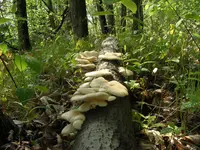
Introduce well-rotted hardwood chips or small logs partially buried in the substrate, as the fungus fruits more reliably when it can colonize a stable, lignin-rich food source rather than only loose compost or soil.

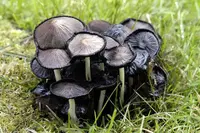
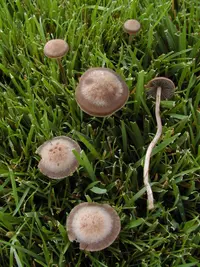
Common inkcap, Coprinopsis atramentaria, is a short-lived, saprophytic mushroom that decomposes dead organic matter in soil, wood chips, and lawns. It appears in clusters or tight groups with gray to brown, egg-shaped caps that quickly expand and dissolve into a black, inky liquid as spores mature.
This fungus is native to Europe but is now widespread in temperate regions, often emerging after rain in nutrient-rich, disturbed ground. It can be relatively easy to encounter outdoors but is not a beginner-friendly species to cultivate intentionally. Those who want to learn how to care for Common inkcap should understand its need for consistently moist, organic-rich substrates and cool, shaded locations.

Care Difficulty
Moderate Care

Light Preference
Partial Shade

Water Requirements
Keep Soil Moist

Temperature Preference
Cool Climate

Hardiness Zone
Unknown

Soil Texture
Loamy, Silty, Organic-rich

Soil pH
Acidic (5.5–6.5), Slightly acidic (6.5–7.0)

Soil Drainage
Moist but well-drained

Fertilization
Minimal (feed rarely)
Scan your plant to receive care tips personalized for your specific plant
Available on iOS and Android
This saprobic mushroom thrives in cool, moist habitats with filtered light rather than strong direct sun.
This fungus depends on consistently moist, organic-rich ground rather than precise watering schedules.
This species fruits best in cool to mild conditions and declines quickly in heat or hard frost.
Humidity is not a controlling factor for Coprinopsis atramentaria compared with moisture in the substrate.
This species needs consistently moist, organic-rich substrate rather than typical houseplant potting soil.
This species can be grown in containers primarily as a short-lived, experimental culture rather than a long-term display.
Coprinopsis atramentaria is a saprobic fungus that obtains nutrients from decaying organic matter, so it usually needs no intentional fertilization.
Pruning is not a standard practice for Coprinopsis atramentaria, as fruiting bodies are short-lived and naturally decompose.
This fungus is rarely grown in pots; management focuses on where it fruits rather than classic repotting.
Propagation of Coprinopsis atramentaria is typically left to natural spore dispersal and is not managed like a garden plant.
This species is naturally cold hardy in temperate climates and usually needs no specific winter care beyond normal site conditions.

Plant Health Check
Not sure what's wrong with your plant? Check your plant's health inside the app.
This mushroom contains coprine, a compound that disrupts alcohol metabolism and can cause flushing, vomiting, and rapid heartbeat if alcohol is consumed within about 2–3 days of eating it.
Its gills undergo autodigestion, a process where the tissue breaks itself down into a black, ink-like liquid that helps release and spread spores efficiently over a short time window.
It commonly appears in nutrient-rich, disturbed soils such as lawns, roadsides, and garden beds, often emerging in tight clusters after rain in spring and autumn.

Historically, the black liquid produced by the autodigesting caps was used as a crude writing ink, giving rise to the common name inkcap and linking this fungus to early, low-technology record keeping.
This species is technically edible when young but becomes dangerously toxic if alcohol is consumed from about 2–3 days before to several days after eating it. Symptoms include flushing, nausea, and palpitations. Most foragers avoid it.
Keep your plants happy and healthy with plant identification, disease detection, and easy care guidance.