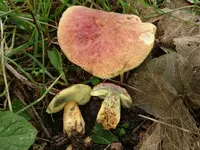
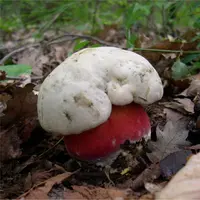
the sickener Care (Russula emetica)

Also known as: emetic russula
the sickener

About the sickener

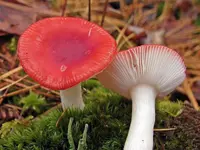
Russula emetica, commonly called the sickener, is a small to medium woodland mushroom, not a typical houseplant. It produces bright red caps with white gills and stem, creating a striking contrast on mossy forest floors. The flesh is brittle, a typical feature of many Russula species.

This fungus usually appears in coniferous forests, especially in cool, moist regions of the Northern Hemisphere. It forms mycorrhizal associations, meaning it lives in partnership with tree roots and cannot be grown in regular pots or garden beds.

Because it depends on specific tree partners and soil fungi, it is considered very difficult to cultivate intentionally. For most plant owners, learning how to care for the sickener mainly means recognizing it outdoors rather than trying to grow it at home.

Main Plant Requirements

Care Difficulty

Hard Care

Light Preference

Partial Shade

Water Requirements

Keep Soil Moist

Temperature Preference

Cool Climate

Hardiness Zone

Unknown

Soil Texture

Loamy, Sandy, Organic-rich

Soil pH

Strongly acidic (4.5–5.5), Acidic (5.5–6.5)

Soil Drainage

Moist but well-drained

Fertilization

Minimal (feed rarely)

Get Personalized Care Plan

Scan your plant to receive care tips personalized for your specific plant

Available on iOS and Android

How to Care for the the sickener

This woodland fungus relies on forest light conditions rather than direct garden-style sun exposure.

  • Prefers dappled or filtered light under conifers or mixed woods, roughly equivalent to 2–4 hours of soft morning sun with shade or deep filter the rest of the day.
  • Avoid full, open sun; prolonged exposure can dry the forest floor, slowing fruiting and causing caps of the sickener to crack or fade.
  • Best production occurs where summer canopy blocks strong afternoon sun yet allows shifting patches of light across the ground through the day.

This mycorrhizal fungus depends on consistently moist, well-drained forest soil rather than direct watering.

  • Thrives where soil stays evenly moist to 5–8 cm depth; surface may dry slightly between rains but deeper layers should remain cool and damp.
  • Grows best in freely draining, humus-rich soil; persistent puddling, sour smell, or slimy litter indicate excess water and poor aeration.
  • In dry spells, natural habitats that retain some shade and leaf litter moisture support Russula emetica, while cracked soil and brittle litter signal drought stress.

This species is adapted to cool, moist forest climates with moderate seasonal variation.

  • Fruits most reliably in cool conditions around 50–65°F (10–18°C), often from late summer into fall when soils are moist and nights are cooler.
  • Tolerates a broader mycelial range of roughly 40–75°F (4–24°C), but prolonged heat above 80°F (27°C) can dry the substrate and reduce fruiting.
  • Dormant mycelium in soil survives typical winter cold below 32°F (0°C), yet exposed fruiting bodies are short-lived and quickly damaged by hard frost or freeze–thaw cycles.

Humidity is not a significant controllable factor for Russula emetica, which fruits outdoors in natural forest conditions.

Russula emetica relies on specific outdoor forest soil rather than constructed potting mixes.

  • This ectomycorrhizal fungus associates with conifer roots in moist, acidic, organic-rich forest soils, typically pH 4.0–5.5.
  • Soil should be loose, well aerated, and never compacted, with abundant decomposing needles and leaf litter for structure.
  • Excessive drainage improvement with sand, gravel, or perlite can dry the upper soil horizons and disrupt fine root and fungal contact.
  • Avoid fertilized, limed, or heavily disturbed soils, since nutrient enrichment and higher pH suppress fruiting and alter its native microbiome.

This species is not suitable for container growing because it depends on complex mycorrhizal relationships with tree roots in natural forest soil.

This wild ectomycorrhizal fungus does not need fertilization in typical garden or forest settings, and added nutrients may even disrupt its tree partnership.

Russula emetica is a wild mushroom and is not managed through pruning in cultivation or natural habitats.

This fungus grows in symbiosis with tree roots in soil, so it is not suited to normal container growth or routine transplanting.

  • Avoid attempting to grow Russula emetica in pots; it relies on close association with living conifer roots.
  • If moving host trees, expect the fungal network to be disturbed and often lost during transplanting.
  • Limit soil disturbance around established trees to preserve existing mycelium, the underground fungal body.
  • Maintain suitable forest-like conditions instead of repotting, focusing on soil health and low disturbance.

This species is not practically propagated by home growers, as it depends on a complex mycorrhizal relationship with host trees.

As a hardy forest fungus, this species requires no special winter care in its natural range.

Care Tips

Host tree selection

Establish the fungus near compatible acid-loving hosts such as pine, spruce, or birch, since this ectomycorrhizal species depends on a living tree root system rather than typical mushroom bed substrates.

Minimal soil disturbance

Avoid digging, raking, or tilling the top 5–10 cm of soil around the host tree’s root zone so the fine mycorrhizal threads are not broken and fruiting bodies can emerge freely.

Mulch with restraint

Use a thin, airy layer (1–3 cm) of pine needles or fine bark as mulch to conserve moisture and maintain acidity, but keep it loose and not deeper than necessary so mushrooms can still push through.

Watering pattern management

For growing the sickener outdoors, focus on steady, light irrigation during dry spells rather than occasional heavy soaking, which better mimics natural rainfall and supports stable mycelium activity.

Avoid chemical inputs

Do not use synthetic fertilizers, soil conditioners with lime, or systemic fungicides near the host tree, since these can reduce soil acidity or directly harm the mycorrhizae and suppress fruiting.

Common Pests and Diseases

Mycophagous slugs

This pest feeds on caps and gills of fruiting bodies, often leaving irregular holes and slime trails on Russula emetica in damp woodland sites. Damage is usually cosmetic but can completely destroy young mushrooms before they mature.

Solution

Hand-pick slugs during cool, wet periods and use physical barriers such as copper tape or coarse grit around known fruiting zones. Reduce nearby ground cover that shelters slugs, and if necessary use iron phosphate slug baits placed away from non-target wildlife to protect areas where you want to grow Russula emetica.

Fungus gnats

These insects lay eggs in moist, organic-rich soil or moss near the mycelium, and larvae tunnel through developing fruiting bodies, causing soft patches, collapse, or premature decay. Symptoms include tiny black adult flies hovering near mushroom clusters.

Solution

Improve drainage and avoid over-saturated conditions where feasible, and use sticky traps to reduce adult gnat populations around fruiting areas. For more intensive setups such as mushroom beds, lightly drench the substrate with a biological control containing Bacillus thuringiensis israelensis (Bti) according to label directions to target larvae without harming the mycelium.

Parasitic Hypomyces

This disease is caused by Hypomyces species that overgrow Russula caps and gills with a white to yellowish mold, deforming and eventually killing the fruiting bodies. Symptoms include a felt-like coating that replaces normal gill structure and prevents spore release.

Solution

Promptly remove and discard all infected mushrooms and nearby debris to reduce local spore load. Avoid disturbing contaminated material into adjacent areas where the sickener indoor care or outdoor cultivation is planned, and if possible, encourage better airflow and less crowding of fruiting bodies to make infection less likely.

Interesting Facts

Highly specific tree partner

This species forms ectomycorrhizal associations almost exclusively with conifers, especially Scots pine and spruce, exchanging mineral nutrients from the soil for sugars from the tree roots.

Bright warning color

The intense red cap functions as aposematic coloration, a visual warning that the fruiting body is unpalatable and can cause strong gastric upset if eaten raw or undercooked.

Extreme cap hydrophobicity

The cap cuticle is strongly water-repellent, so raindrops bead and roll off easily, which helps protect the gills and spores from waterlogging in wet, boggy habitats.

Botan icon

Did you know?

The sickener is a classic model species in fungal toxicology studies, because its fast-onset gastrointestinal toxins cause severe but usually non-lethal symptoms, allowing researchers to investigate mushroom poisoning mechanisms without the extreme risk associated with deadly amatoxin-producing fungi.

FAQs about the sickener

This mushroom is considered poisonous and should not be eaten, even after cooking or drying. It typically causes acute gastrointestinal upset, including nausea, vomiting, and diarrhea. Identification errors with similar red-capped species increase the risk of accidental poisoning.

Grow Healthy Plants with Botan Care

Keep your plants happy and healthy with plant identification, disease detection, and easy care guidance.

Botan plant care app — identify plants on mobile

Explore More Plants