Use clean substrates
Prepare any cultivation trays or test patches with pasteurized, not raw, lawn thatch or grass clippings to lower the load of competing fungi and bacteria before trying to grow Panaeolus foenisecii.

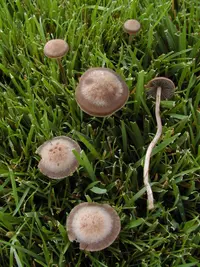
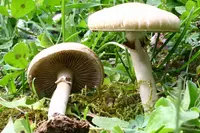
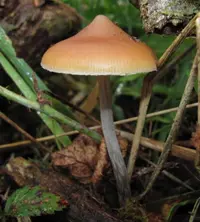
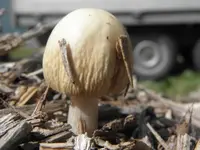
Mower's mushroom, Panaeolus foenisecii, is a small lawn-dwelling fungus often found in turf, parks, and garden grass rather than in pots or beds. It appears as delicate brown to tan caps on thin stems, usually in scattered groups after rain or irrigation.
This species thrives in moist, well-watered lawns rich in organic matter and commonly shows up without being intentionally introduced. It is not suited to deliberate cultivation indoors, and conditions are difficult to control for reliable fruiting.
Gardeners mainly encounter it as a spontaneous guest, so information on how to care for Mower's Mushroom focuses more on lawn management than on targeted mushroom culture.

Care Difficulty
Moderate Care

Light Preference
Partial Shade

Water Requirements
Keep Soil Moist

Temperature Preference
Cool Climate

Hardiness Zone
Unknown

Soil Texture
Loamy, Silty, Organic-rich

Soil pH
Acidic (5.5–6.5), Slightly acidic (6.5–7.0)

Soil Drainage
Moist but well-drained

Fertilization
Minimal (feed rarely)
Scan your plant to receive care tips personalized for your specific plant
Available on iOS and Android
This lawn fungus prefers mild, indirect light rather than intense direct sun.
This species depends on consistently moist but not saturated turf to produce mushrooms.
This lawn mushroom favors cool, moist conditions and slows growth in temperature extremes.
This lawn-dwelling mushroom tolerates a wide humidity range but fruits best in moderate to high air moisture.
This species prefers moist, organic-rich turf rather than conventional potting or garden substrates.
This lawn fungus is poorly suited to long-term container growing, as it depends on established turf and complex soil life.
This lawn-dwelling fungus usually needs no fertilizer in healthy, moderately fertile turf or soil.
Panaeolus foenisecii does not require pruning in the usual horticultural sense.
This fungus is not typically grown in containers, so transplanting focuses on moving colonized substrate rather than true repotting.
Reproduction of this species occurs mainly through spores rather than conventional plant-like propagation methods.
Outdoor colonies are generally cold tolerant in temperate lawns and need little targeted winter care.

Plant Health Check
Not sure what's wrong with your plant? Check your plant's health inside the app.
This species is one of the most frequently encountered small mushrooms in regularly mowed lawns and turf, especially in temperate urban and suburban areas where it fruits after rain during mild weather.
Its spore print is typically dark brown rather than the black to purple-black print of many related psychoactive Panaeolus species, a key feature used by mycologists to separate it from look-alikes.
Reports describe occasional mild poisoning in children after eating lawn specimens, and some mycologists note that chemical composition may vary with climate and substrate, which further complicates reliable toxicity assessment.
This lawn fungus is not recommended for eating. It is considered inedible and has been linked to mild poisoning symptoms in children. Identification mistakes with similar small brown mushrooms can be dangerous, so removal from play areas is advisable.
Keep your plants happy and healthy with plant identification, disease detection, and easy care guidance.