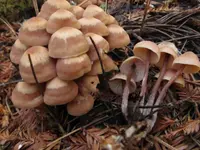
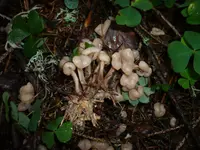
Use clean substrate
Prepare a cultivation substrate from well-pasteurized straw, sawdust, or hardwood chips to reduce competing fungi and bacteria before growing White Domecap.

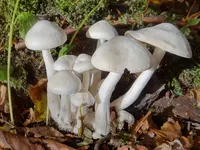
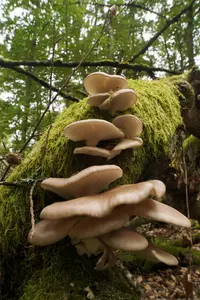
White domecap, Leucocybe connata, is a gilled mushroom rather than a leafy plant. It forms tight clusters of smooth, pale to creamy white caps with slender stems. The caps often fuse at the base, creating dense tufts on decaying wood, leaf litter, or rich forest soil.
This species occurs mainly in temperate forests, especially in Europe and North America, where it helps decompose organic matter. Identification is difficult, and it can resemble edible and poisonous look-alikes, which affects how safe it is to collect or grow. Those who care for White Domecap in controlled culture focus on stable moisture, cool to mild temperatures, and a consistently organic, well-aerated substrate.

Care Difficulty
Hard Care

Light Preference
Shade

Water Requirements
Keep Soil Moist

Temperature Preference
Cool Climate

Hardiness Zone
Unknown

Soil Texture
Loamy, Silty, Organic-rich

Soil pH
Acidic (5.5–6.5), Slightly acidic (6.5–7.0)

Soil Drainage
Moist but well-drained

Fertilization
Minimal (feed rarely)
Scan your plant to receive care tips personalized for your specific plant
Available on iOS and Android
This saprophytic mushroom prefers cool, shaded forest-like light conditions.
Moist, aerated substrate is essential for healthy mycelium and fruiting.
This fungus thrives in cool to mild conditions typical of temperate woodlands.
Humidity is not a major factor for Leucocybe connata, which mainly depends on overall substrate moisture.
Leucocybe connata thrives in moist, organic-rich substrates that stay airy and never waterlogged.
This species is not well suited to typical ornamental container growing, but can be cultured in tubs or boxes for experimental purposes.
Leucocybe connata grows as a saprophytic fungus and does not need fertilizer in typical garden or woodland settings.
Pruning is not part of normal care for Leucocybe connata, since it is a short-lived mushroom rather than a woody or leafy plant.
This fungus is not suited to standard repotting; focus instead on establishing and maintaining an appropriate substrate outdoors.
Intentional propagation of this wild decomposer fungus is uncommon and technically challenging for home growers.
No special winter care is needed, as the underground mycelium is generally cold hardy and survives normal temperate winters while fruiting bodies die back.

Plant Health Check
Not sure what's wrong with your plant? Check your plant's health inside the app.
This species typically fruits in dense clusters where multiple stems fuse at the base into a single mass, which is why older literature placed it in the genus Clitocybe under the name Clitocybe connata, meaning joined or connected.
Its pale, sometimes slightly translucent caps and white gills can resemble some edible white mushrooms, but slight differences in odor, gill attachment, and habitat make accurate identification important, especially because some sources report it as inedible or suspect.
It usually grows on soil rich in buried wood, sawdust, or woody debris in parks, gardens, and forest edges, where it helps decompose lignin- and cellulose-rich material and recycle nutrients back into the upper soil layer.
This mushroom develops fruiting clusters quickly, often within 1–3 weeks after favorable moisture and temperature occur, but the underlying mycelium expands slowly through wood debris or rich organic soil over several seasons.
Keep your plants happy and healthy with plant identification, disease detection, and easy care guidance.