


Controlled fresh air
Introduce short, frequent air exchanges using a small fan set to indirect flow to reduce CO2 buildup without drying the substrate surface, and adjust duration so caps do not show cracking from low humidity.

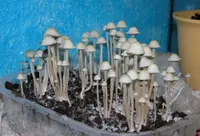
Panaeolus cyanescens, often called blue meanies, is a fast-growing, dung-loving mushroom rather than a traditional green plant. It typically forms small, pale gray to tan caps with slender stems that bruise blue when handled.
This species occurs naturally in warm, subtropical and tropical regions, especially in pastures with grazing animals. It is considered difficult for beginners because it needs very specific humidity, temperature, and cleanliness conditions to fruit reliably.
Those who care for blue meanies usually work in tightly controlled indoor setups and use nutrient-rich, well-drained substrates that can stay evenly moist but not waterlogged.

Care Difficulty
Hard Care

Light Preference
Partial Shade

Water Requirements
Keep Soil Moist

Temperature Preference
Tropical / Frost Sensitive

Hardiness Zone
Unknown

Soil Texture
Loamy, Silty, Organic-rich

Soil pH
Slightly acidic (6.5–7.0)

Soil Drainage
Moist but well-drained

Fertilization
Minimal (feed rarely)
Scan your plant to receive care tips personalized for your specific plant
Available on iOS and Android
This dung-loving mushroom prefers bright, indirect light that mimics open pasture conditions.
Moisture management is critical because the fungal mycelium is sensitive to both drying and waterlogging.
Stable, warm conditions support vigorous mycelial growth and fruiting for this species.
This species needs consistently high humidity to form healthy fruiting bodies.
Panaeolus cyanescens grows on nutrient-rich, manure-based substrates rather than typical garden soil.
This fungus is suitable for shallow container cultivation such as trays or small tubs.
This fungus is usually grown on nutrient-rich substrates, so additional fertilizing is minimal and must stay very light when caring for blue meanies.
Pruning for Panaeolus cyanescens is limited to hygiene rather than shaping.
Container culture for this fungus focuses on renewing substrate rather than classic repotting.
Propagation of Panaeolus cyanescens is specialized and usually done using controlled culture techniques rather than casual home methods.
Cold outdoor conditions are unsuitable for this tropical fungus, so winter care focuses on maintaining indoor stability.

Plant Health Check
Not sure what's wrong with your plant? Check your plant's health inside the app.
This species is known for intense blue staining where the tissue is touched or damaged, caused by oxidation of its psilocybin-related compounds. The color change can appear within minutes and is one reason it is colloquially called blue meanies in some regions.
It is a coprophilous mushroom, meaning it grows almost exclusively on herbivore dung, especially from cattle and horses in warm, humid climates. Its spores pass through the animals’ digestive tracts and germinate in nutrient-rich manure deposits.
This fungus is naturally found in tropical and subtropical regions worldwide, including parts of Southeast Asia, Australia, Central and South America, and the southern United States. It typically fruits after summer rains when temperatures remain consistently warm.

Molecular studies have shown that populations long identified under this name may hide multiple closely related lineages, and some mycologists suspect that what is called Panaeolus cyanescens in cultivation and field guides could represent a small species complex rather than a single uniform species.
This mushroom contains psychoactive tryptamines that act on the central nervous system. Ingestion can cause intense psychological effects, nausea, and other adverse reactions. Children, pets, and anyone unprepared for these effects should never consume it.
Keep your plants happy and healthy with plant identification, disease detection, and easy care guidance.

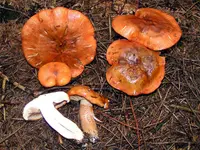
golden orange tricholoma
Tricholoma aurantium
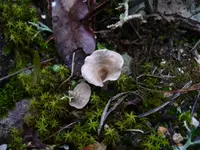
Arrhenia spathulata
Arrhenia spathulata
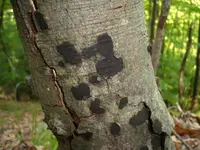
Beech Tarcrust
Biscogniauxia nummularia
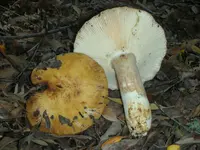
Almond-scented Russula
Russula fragrantissima
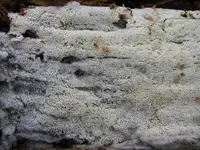
Anomoporia kamtschatica
Anomoporia kamtschatica
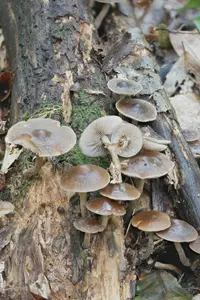
Agrocybe firma
Agrocybe firma
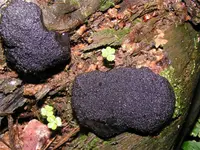
thick tarcrust
Camarops polysperma
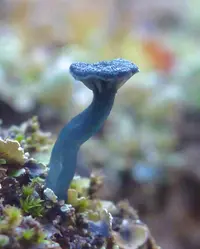
Verdigris Navel
Arrhenia chlorocyanea