Substrate pasteurization
Before inoculation, heat straw or hardwood sawdust to 60–70°C for 1–2 hours to reduce competing fungi and bacteria, which stabilizes yields and reduces contamination losses when growing Agrocybe firma.

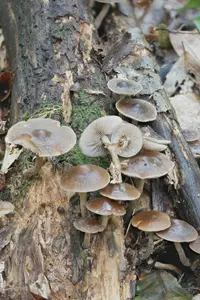
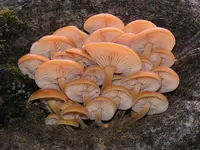
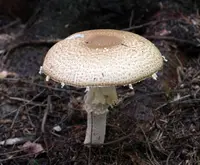
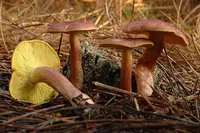
Agrocybe firma is a small saprotrophic mushroom that grows on decaying wood, leaf litter, or rich organic debris. It forms modest clusters with pale to tan caps and slender stems. The caps usually stay relatively firm and dry, which helps distinguish it from more fragile woodland fungi.
This species occurs mainly in temperate woodlands and park-like habitats, often appearing in spring or early summer after moist weather. It is not commonly cultivated, so most observations come from wild or semi-natural settings.
Because it depends on decomposing organic matter and specific moisture levels, it is considered challenging for beginners to maintain. Anyone wanting to learn how to care for Agrocybe firma should understand that it behaves more like a specialized decomposer than a typical houseplant or garden ornamental.

Care Difficulty
Moderate Care

Light Preference
Partial Shade

Water Requirements
Moderate Water

Temperature Preference
Warm Climate

Hardiness Zone
Unknown

Soil Texture
Loamy, Organic-rich

Soil pH
Slightly acidic (6.5–7.0)

Soil Drainage
Moist but well-drained

Fertilization
Minimal (feed rarely)
Scan your plant to receive care tips personalized for your specific plant
Available on iOS and Android
This fungus prefers gentle, indirect light rather than intense direct sun exposure.
Steady substrate moisture is more important than strict watering schedules for this wood- and litter-inhabiting fungus.
This species fruits best in mild, cool to moderately warm conditions without temperature extremes.
This species tolerates a wide humidity range but benefits from slightly moist air.
Substrate choice is critical, as this fungus relies on consistently moist, well-aerated organic material rather than mineral soil.
This species can be grown in containers when the substrate volume and gas exchange are managed carefully.
This wood-inhabiting fungus typically needs no fertilizer when grown on fresh, nutrient-rich woody substrate.
As a saprophytic fungus, this species does not require pruning in the usual horticultural sense.
Cultivation of Agrocybe firma focuses on renewing substrate rather than traditional repotting or transplanting.
Propagation relies on expanding the mycelium onto fresh substrate rather than producing new plants in the usual sense.
Outdoor cultivation blocks of this fungus are generally tolerant of cool conditions and need little dedicated winter care.

Plant Health Check
Not sure what's wrong with your plant? Check your plant's health inside the app.
This species is a saprobic fungus that specializes in decomposing dead hardwood, helping break down lignin-rich material and returning nutrients to forest soils.
It typically produces its mushrooms in dense clusters on decaying logs, stumps, or buried wood rather than singly scattered across soil.
The species has a dark brown spore print, a feature used by mycologists to distinguish it from similar pale-spored woodland mushrooms.
This species is generally regarded as inedible or of unknown edibility and should not be eaten. Identification of small brown mushrooms is difficult, and toxic look-alikes exist. For safety, avoid consumption unless confirmed by an expert mycologist.
Keep your plants happy and healthy with plant identification, disease detection, and easy care guidance.