Toasted Waxcap Care (Cuphophyllus colemannianus)

Toasted Waxcap

About Toasted Waxcap

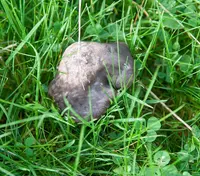
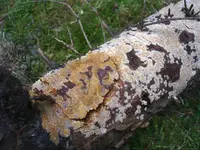
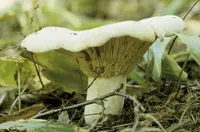
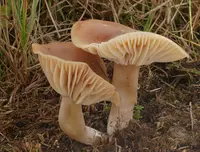
Toasted waxcap, Cuphophyllus colemannianus, is a small grassland mushroom rather than a leafy houseplant. It forms smooth, dry caps in warm brown to toasted orange tones, often with paler gills and a slender stem.

This species typically appears in unimproved lawns, old pastures, and meadows, especially on short, nutrient-poor grassland in Europe. It is considered a habitat specialist and can be quite sensitive to disturbance and fertilizer use, which makes it challenging to encourage in typical garden lawns.

Those who want to learn how to care for Toasted Waxcap should focus on maintaining low-nutrient, undisturbed, closely cut grass with good drainage and minimal soil compaction.

Main Plant Requirements

Care Difficulty

Hard Care

Light Preference

Partial Shade

Water Requirements

Regular Water

Temperature Preference

Cool Climate

Hardiness Zone

Unknown

Soil Texture

Loamy, Silty, Organic-rich

Soil pH

Strongly acidic (4.5–5.5), Acidic (5.5–6.5)

Soil Drainage

Moist but well-drained

Fertilization

Minimal (feed rarely)

Get Personalized Care Plan

Scan your plant to receive care tips personalized for your specific plant

Available on iOS and Android

How to Care for the Toasted Waxcap

This grassland fungus prefers cool, open sites with moderate natural light rather than intense direct sun.

  • Provide 3–5 hours of gentle morning or late-afternoon sun, with bright overcast or lightly dappled light for the rest of the day.
  • Allow partial shade at midday; Toasted Waxcap often fruits best in short, unimproved grass where taller plants cast intermittent shade.
  • Avoid dense shade that limits fruiting and harsh, all-day summer sun that dries the turf and soil surface, reducing mushroom production.

This waxcap relies on consistently moist but not waterlogged turf or grassland rather than direct, frequent watering.

  • Aim for soil that feels evenly moist 2–5 cm down; if the top layer is bone-dry and grass begins to dull or wilt, moisture is too low for reliable fruiting.
  • Ensure free-draining soil; persistent surface puddles, sour smell, or slimy, collapsing fruitbodies indicate chronic overwatering or poor drainage.
  • During dry spells, light irrigation that moistens the upper 5–8 cm of soil is preferable to heavy soaking, which can compact soil and disrupt Cuphophyllus colemannianus habitat.

This species fruits best in cool to mild conditions typical of autumn in temperate grasslands.

  • Optimal fruiting usually occurs around 45–60°F (7–16°C), often in late fall when nights are cool and days are mild.
  • The fungus tolerates short dips close to 32°F (0°C), but repeated hard frosts below 28°F (-2°C) can damage fruitbodies and shorten the season.
  • Sustained heat above 77°F (25°C) combined with dry conditions suppresses fruiting, so peak activity is expected outside hot summer periods.

Humidity requirements are not a practical cultivation factor, as this fungus is not suited to typical home or container culture.

In nature, this species fruits in short, unimproved grassland rather than in conventional potting media.

  • Cuphophyllus colemannianus associates with low-fertility, fine-textured turf soils that are moderately moist but never waterlogged.
  • Aim for a firm, dense, grass-dominated sward over a thin, mineral-rich topsoil rather than a deep, loose, organic substrate.
  • Soils are typically slightly acidic to neutral, around pH 5.5–7.0, with very limited added nutrients or fertilizers.
  • Avoid mulches, peat-heavy mixes, and heavily manured or compacted clay soils, which disrupt the grassland structure it requires.

This species is not realistically suitable for container growing, as it depends on complex grassland soil conditions that are difficult to reproduce in pots.

This grassland fungus is adapted to low-nutrient soils and generally should not be fertilized in cultivation.

Cuphophyllus colemannianus does not require pruning, as it is a mushroom forming from underground mycelium rather than a leafy plant.

Transplanting is rarely appropriate, as this waxcap depends on intact soil structure and associated organisms.

  • Avoid disturbing established Cuphophyllus colemannianus colonies; they rely on complex soil fungi networks.
  • If moving turf that hosts the fungus, lift large, deep blocks to keep soil structure intact and moist.
  • Transplant only during cool, moist weather in autumn to reduce mycelium stress and drying.
  • After moving, water gently to settle soil, then leave undisturbed so the mycelium can recover.

Propagation of this fungus in gardens is difficult and not routinely successful, even for experienced growers.

This grassland fungus is naturally cold hardy and usually needs no specific winter care in suitable climates.

Care Tips

Habitat-style substrate

When establishing a site, mix well-washed, low-nutrient sand or fine grit into the native, unfertilized soil to keep nutrient levels low and mimic the naturally impoverished grassland conditions this waxcap prefers.

Moss-friendly management

Encourage a thin moss layer by avoiding raking and scarifying, since waxcaps often associate with moss-rich turf and this microhabitat helps maintain the stable moisture and structure they need.

Reduced mowing regime

Use a late and light mowing schedule (for example, 1–2 cuts per year with removal of clippings) to keep competition from coarse grasses down while preserving the short, open sward structure favored by this species.

No-input nutrient control

Prevent nutrient build-up by never applying fertilizer, compost, or lawn feed and by removing all leaf litter and grass clippings, which helps maintain the nutrient-poor conditions critical for growing Toasted Waxcap.

Gentle site protection

Limit foot traffic, machinery, and soil disturbance in known fruiting areas by using stepping stones or temporary markers, since compaction and repeated disturbance can damage the fine fungal network in the turf.

Common Pests and Diseases

Fungal parasitism

This disease affects fruiting bodies in pasture habitats, where competing fungi colonize the waxcap caps and gills, causing distortion, discoloration, or premature decay. Symptoms include misshapen, slimy, or rapidly collapsing mushrooms that fail to mature normally.

Solution

Remove and discard parasitized fruiting bodies to reduce local spore load, and avoid disturbing the soil to maintain stable grassland structure that favors healthy waxcaps. Land managers should limit nitrogen enrichment, heavy trampling, and soil compaction, since these stressors weaken waxcap communities and make them more vulnerable to aggressive parasitic fungi.

Slug and snail grazing

These pests feed on young and mature fruiting bodies, leaving ragged holes, missing caps, or completely eaten mushrooms, especially in damp grassland. This pest activity is common in humid conditions and can prevent normal spore release.

Solution

Hand-pick slugs and snails during damp evenings and mornings, and use physical barriers such as copper tape or rough mulch zones around key fruiting areas. Avoid broad-spectrum slug pellets in sensitive grasslands; if control is essential, use iron phosphate formulations sparingly and only around targeted patches to limit non-target impact when caring for Toasted Waxcap.

Interesting Facts

Rare waxcap fungus

This species is a rare grassland mushroom in Europe, strongly associated with old, unimproved, low-nutrient grasslands that have not been ploughed or heavily fertilized.

Indicator of intact grasslands

Its presence is used by conservationists as part of waxcap grassland indicator sets, helping identify high-value, species-rich turf habitats that support many other specialized fungi and invertebrates.

Warm brown cap color

The fruiting bodies typically have a smooth, warm brown to toasted cap with a waxy texture, a feature that inspired the common name toasted waxcap and helps distinguish it from more brightly colored waxcap relatives.

Botan icon

Did you know?

This fungus is listed as globally vulnerable on the IUCN Red List due to the ongoing loss and degradation of traditional grassland habitats across its European range, making its remaining populations a conservation priority.

FAQs about Toasted Waxcap

This fungus develops seasonally rather than continuously. Caps typically appear in autumn, maturing from tiny pins to full size within a few days, then persisting about 1–2 weeks before collapsing, depending on moisture and temperature conditions.

Grow Healthy Plants with Botan Care

Keep your plants happy and healthy with plant identification, disease detection, and easy care guidance.

Botan plant care app — identify plants on mobile

Explore More Plants