Staggered Harvesting
Harvest clusters in stages by cutting the largest caps first and leaving smaller ones to expand, which extends the flush and improves total yield from each block or bag.

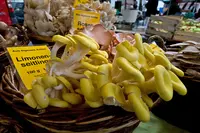
The golden oyster mushroom, Pleurotus citrinopileatus, is a fast-growing edible fungus valued for its bright yellow caps and delicate, clustered form. It is not a leafy plant but a saprophytic organism that feeds on dead wood and plant waste.
In nature it occurs in parts of East Asia, often on hardwood logs or stumps, and it has become popular in small-scale indoor cultivation. Its rapid colonization, attractive color, and mild flavor make it appealing for home growers who want to care for Golden Oyster Mushroom with simple tools.
This species prefers high humidity, gentle indirect light, and a moist but well‑aerated substrate such as straw or sawdust, which supports reliable flushes when conditions are stable.

Care Difficulty
Moderate Care

Light Preference
Partial Shade

Water Requirements
Keep Soil Moist

Temperature Preference
Warm Climate

Hardiness Zone
Unknown

Soil Texture
Organic-rich, Peaty, Loamy

Soil pH
Acidic (5.5–6.5), Slightly acidic (6.5–7.0)

Soil Drainage
Moist but well-drained

Fertilization
Minimal (feed rarely)
Scan your plant to receive care tips personalized for your specific plant
Available on iOS and Android
This fungus needs gentle, indirect light to form healthy, well-colored fruiting bodies.
This species requires consistently moist, not waterlogged, substrate to fruit well.
This mushroom fruits best in cool to moderately warm conditions without sharp fluctuations.
This fungus needs very high humidity to form healthy, full clusters of caps.
This species does not grow in soil and instead requires a specially prepared lignocellulosic substrate.
This mushroom grows very well in containers such as buckets, bags, or boxes.
Golden Oyster Mushroom grown on nutrient-rich substrate usually needs no additional fertilizer.
Pleurotus citrinopileatus does not require true pruning, but timely harvesting maintains healthy production.
This fungus is periodically moved to fresh substrate rather than traditionally repotted.
New Pleurotus citrinopileatus crops are commonly started using spawn rather than conventional plant propagation methods.
Outdoor cultivation of this species is usually seasonal, while indoor setups allow year-round production with controlled conditions.

Plant Health Check
Not sure what's wrong with your plant? Check your plant's health inside the app.
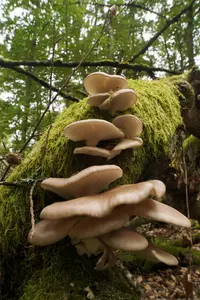
This species forms dense clusters of bright sulfur-yellow to golden caps that often fade to pale cream with age, a color pattern that helps distinguish it from other oyster mushrooms with white or gray caps.
In nature and cultivation, its fruiting bodies develop quickly on hardwood substrates but also degrade rapidly, often becoming brittle and losing texture within a few days after full expansion.
It is native to East Asia, especially northeastern China and Japan, where it occurs on dead or dying broadleaf trees and has long been intentionally cultivated as an edible mushroom.

Genetic and cultivation studies show that yellow oyster strains sold under different trade names in global mushroom markets are often the same species, indicating that this fungus has been widely distributed and standardized through commercial breeding from a relatively narrow original wild gene pool.
This species is edible and widely cultivated for food. Caps are preferred; tough stems are usually discarded. Always cook thoroughly to improve texture and flavor, and avoid consuming wild look-alikes unless identified by an experienced mycologist.
Keep your plants happy and healthy with plant identification, disease detection, and easy care guidance.