
Golden Oyster Mushroom Identification (Pleurotus citrinopileatus)

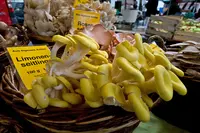
Recognize Golden Oyster Mushroom by its dense clusters of small to medium caps, often 1-3 inches (2.5-7.5 cm) wide, attached laterally with little or no stem.

The caps are bright yellow and fan- to shell-shaped, with crowded white gills that run down the short off-center stem or directly onto the attachment point.

Pleurotus citrinopileatus Identification

Is This Golden Oyster Mushroom?

Check your plant ID by uploading a clear photo to Botan.

Clear images work best. Avoid photos taken too close or too far away

Check the cluster form, cap shape, gills, and stem placement first.

  • Fruiting bodies grow in dense, overlapping clusters rather than singly.
  • Caps are small to medium, usually about 1-4 inches (2.5-10 cm) wide, fan-shaped to shallowly funnel-shaped.
  • Cap color is bright yellow to golden, often strongest toward the center.
  • Gills are crowded, pale yellow to whitish, and run down the stem, a feature called decurrent.
  • Stems are short, off-center to nearly absent, so caps look attached from one side.

Use several traits together, especially the clustered habit, golden caps, and decurrent gills.

Golden Oyster Mushroom shows clear, useful visual changes as its fruiting bodies expand and age.

  • Young plant: Pins begin as tight, bright yellow knots with very short stems; individual caps are barely separated and the cluster surface appears bumpy.
  • Fruiting stage: Developing clusters spread into overlapping fan-shaped caps, often 1-3 inches (2.5-7.5 cm) across, with pale gills running down slender off-center stems.
  • Mature plant: At maturity, caps broaden and flatten with wavy margins; the yellow color often fades, and densely layered shelves create a rosette-like cluster.

Most visible seasonal clues come during warm weather, when Pleurotus citrinopileatus fruits in dense shelf-like clusters on wood. In spring through fall, fresh caps are vivid lemon yellow. As clusters age or weather turns hot and dry, caps often fade to paler yellow or whitish, which can still help with recognition when the layered growth form remains clear.

A few yellow clustered oyster mushrooms can be confused with Golden Oyster Mushroom.

Elm oyster(Hypsizygus ulmarius)

It also forms overlapping pale caps on wood. It differs by its white to cream color, thicker central stems, and gills that do not run as far down the stem.

Orange mock oyster(Phyllotopsis nidulans)

This species makes dense shelf-like clusters and can look similar from a distance. It is deeper orange, densely fuzzy on the cap, and has crowded orange gills rather than smooth bright yellow caps.

Pleurotus citrinopileatus is native to eastern Asia, with reliable records from China, Japan, and the Russian Far East. In the wild it fruits on dead or dying hardwood, especially in broadleaf woodland. That setting helps with identification because this species is tied to wood rather than soil. Finding clustered fruiting bodies on fallen logs, stumps, or standing dead hardwood in temperate forest is a useful clue when separating it from yellow mushrooms of lawns or leaf litter.

  • Misidentification risk: Pleurotus citrinopileatus is a mushroom, so the main safety issue is ingestion after a wrong ID by humans or pets.
  • Key dangerous confusion: A serious look-alike risk is jack-o'-lantern mushroom, Omphalotus illudens, which is poisonous if eaten by humans. It usually grows from wood in dense clusters like oysters, but its gills are not decurrent, meaning they do not run clearly down the stem.

Not Sure About the ID?

Use Botan to identify or confirm it from a photo so you can make better decisions with more confidence.

FAQ

The clearest feature is its dense clusters of bright yellow to golden caps with white, decurrent gills, meaning the gills run down the short off-center stem. This combination is central to Golden Oyster Mushroom identification.

More Plant Identification Guides

Identify It. Learn More About It.

Use Botan to identify it from a photo, then get plant details, care information, and common problems for that species.

Botan app identifying a plant from a photo
How to Mist Plants – Proper Technique and Common Mistakes

7 min read · 30 Jul 2026

How to Mist Plants – Proper Technique and Common Mistakes

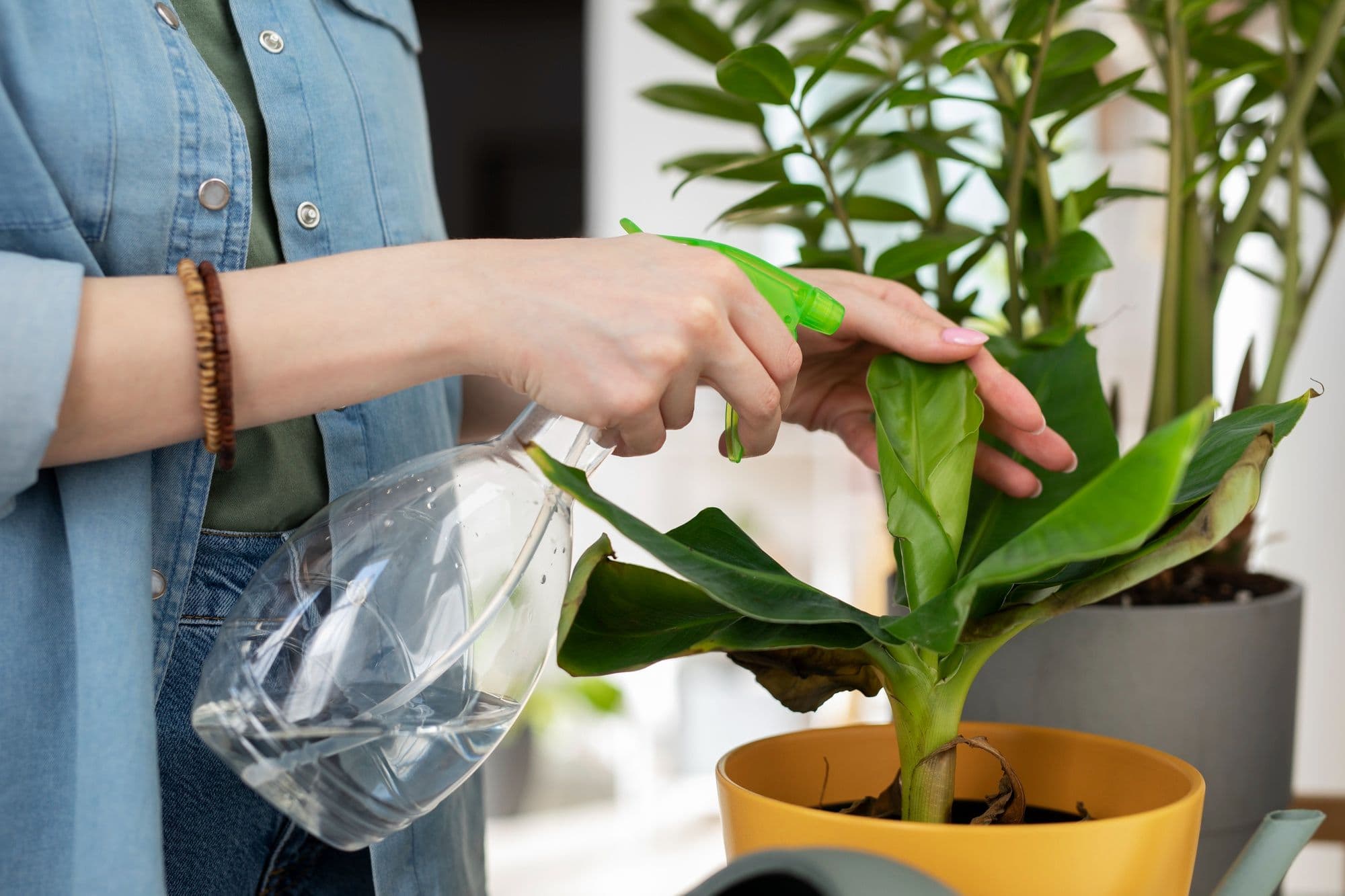
Find out when misting works well and when to avoid it. Here, you’ll find detailed information about compatible and incompatible species, tips on how often to mist plants and do it correctly, and some great alternatives for raising humidity.

Beginner Guides
How to Mist Plants – Proper Technique and Common Mistakes
Top 15 Fast-Growing Trees For Your Garden

13 min read · 28 Jul 2026

Top 15 Fast-Growing Trees For Your Garden

Learn which of the 15 fastest-growing trees will suit your area. We’ll share detailed information on each: growth rate, mature spread, key tree demands, and main vulnerabilities. Read on and make the best choice possible.

Plant Recommendations
Top 15 Fast-Growing Trees For Your Garden
What Plants Don't Like Epsom Salt?

11 min read · 29 Jul 2026

What Plants Don't Like Epsom Salt?

Learn which plants can be seriously damaged by Epsom salt and which will thrive on it. We’ll explain when and how to use it properly, provide tips for indoor & outdoor plants — read on and enjoy a healthy garden.

Plant Care
What Plants Don't Like Epsom Salt?