
Yarrow Identification (Achillea millefolium)

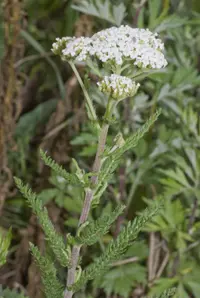
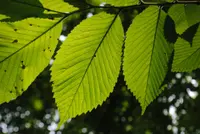
To recognize Yarrow, look for upright stems topped by flat, dense flower clusters and leaves that are deeply divided into many narrow segments, giving a fine, feathery outline.

Achillea millefolium usually forms clumps, with alternate leaves along the stem and a fernlike texture that stands out at first glance.

Achillea millefolium Identification

Check Your Plant ID

Check your plant ID by uploading a clear photo to Botan.

Clear images work best. Avoid photos taken too close or too far away

Use these quick checks to assess Achillea millefolium by sight.

  • Leaves are alternate and narrow in outline, about 2-6 inches (5-15 cm) long, but cut into many fine segments for a feathery look.
  • Stems are upright, usually unbranched below, with several leafy sections along the stem.
  • Flower heads sit in a flat-topped cluster at the stem tip, forming a broad, level surface.
  • Each small flower head is about 1/8-1/4 inch (3-6 mm) wide and usually shows 4-6 short ray florets around the edge.

Check both the finely divided leaves and the flat flower cluster, since together they are especially useful.

Yarrow shows clear structural changes from early divided leaves to flat-topped flowering stems.

  • Seedling: Seedlings form a small basal rosette with narrow first leaves, then quickly produce finely divided true leaves that already show the fernlike pattern.
  • Young plant: Before flowering, the plant stays low and tufted, with many basal leaves and few upright stems; leaves lengthen to about 2-6 inches (5-15 cm).
  • Mature plant: Mature plants send up several erect, leafy stems from the crown, creating a broader clump; upper leaves are smaller and more finely cut than basal leaves.
  • Flowering stage: At flowering, stems branch near the top into flat-topped clusters of many small white to pinkish heads, a strong contrast with the earlier leafy rosette.

Yarrow has several named selections with consistent, easy-to-see differences.

  • 'Cerise Queen': Flowers are deep cerise-pink rather than the typical white to pale pink, held in broad flat clusters.
  • 'Paprika': Flower heads open brick red to salmon-red with paler centers, giving a warmer, darker look than the species.
  • 'Moonshine': This form stands out for sulfur-yellow flower clusters and a tidier mound, usually about 18-24 inches (45-60 cm) tall.
  • 'Red Velvet': Flower clusters are a saturated dark red and keep a deeper color than most pink-flowered forms.

In spring, Yarrow forms fresh basal clumps of finely divided, fernlike leaves. By early to midsummer, upright stems carry flat-topped clusters of small white to pale pink flower heads, which are among the clearest field marks. After flowering, the heads dry and turn tan. In winter, top growth often dies back, leaving a reduced or bare patch.

Several carrot-family plants can be mistaken for Yarrow at a quick glance.

queen Anne's lace(Daucus carota)

Both have finely divided leaves and flat-topped clusters of small white flowers. Queen Anne's lace usually grows a single large compound umbel, while Achillea millefolium has many dense flower heads in a broader cluster; its leaves are also softer and more feathery.

poison hemlock(Conium maculatum)

Young plants can resemble it because both have dissected foliage. Poison hemlock has smooth, hollow stems with distinct purple blotches and larger, triangular leaves; yarrow stems are not blotched, and the flower clusters are tighter and less umbrella-like.

Achillea millefolium is native across much of Europe, Asia, and North America. Its broad native range matters because wild plants are often found far beyond gardens, especially in temperate regions. Look for it in open, sunny places such as meadows, prairies, roadsides, field edges, and disturbed ground. Finding a plant in dry to moderately moist grassland or similar open habitat helps separate it from shade-loving look-alikes.

  • Skin contact: Leaves and stems can cause contact dermatitis in some people, especially during handling. This is a skin-contact risk for humans rather than an ingestion risk.
  • Ingestion: Achillea millefolium can be mildly toxic if eaten by pets, especially dogs, cats, and horses. The concern is ingestion of the plant parts, including leaves and flowers.
  • Hazardous confusion: Yarrow is sometimes confused with poison hemlock, a highly poisonous plant. Poison hemlock has smooth, hollow stems with purple blotches, unlike yarrow’s finely divided fern-like leaves and clustered flower heads.

Not Sure About the ID?

Use Botan to identify or confirm the plant from a photo, which can help avoid mix-ups with similar plants.

FAQ

The clearest feature is the finely divided, feathery leaves. Each leaf is cut into many narrow segments, giving a soft, fernlike look. Flat-topped clusters of many small flower heads reinforce Yarrow identification.

More Plant Identification Guides

Identify Your Plant with Botan

Identify it from a photo, then get plant details, care information, and common problems for that species.

Botan app identifying a plant from a photo
20 Most Popular Fruits Around the World

7 min read · 22 Jul 2026

20 Most Popular Fruits Around the World

Curious which fruits the world actually eats the most? Here's the top-20 by production volume, an overview of what people choose in each region, and a few figures that defy common assumptions.

Plant Recommendations
20 Most Popular Fruits Around the World
12 Most Wanted Rare Houseplants to Grow at Home

6 min read · 21 Sept 2026

12 Most Wanted Rare Houseplants to Grow at Home

Rare houseplants can turn an ordinary corner in your apartment into a living botanical collection. This guide covers 12 most admired picks, what makes them special, and how to grow them successfully at home.

Plant Recommendations
12 Most Wanted Rare Houseplants to Grow at Home
Best Time to Mow Lawn – A Complete Guide

5 min read · 10 Aug 2026

Best Time to Mow Lawn – A Complete Guide

Explore when to mow your lawn for its health and a pleasant green color. Find out the best time for this task during the summer heat, and follow practical tips for correctly cutting the grass, and learn common mistakes to avoid.

Plant Care
Best Time to Mow Lawn – A Complete Guide