
stinging nettle Identification (Urtica dioica)

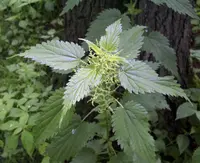
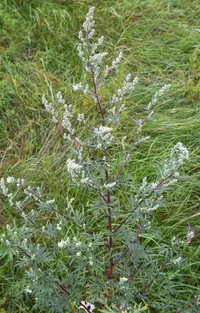
To recognize stinging nettle, look for opposite pairs of sharply toothed, lance- to heart-shaped leaves on upright, square stems, usually 2 to 6 feet (0.6 to 1.8 m) tall.

Another strong clue is the long, slender clusters of tiny green flowers hanging from the leaf axils, where each leaf joins the stem.

Urtica dioica Identification

Check Your Plant ID

Upload a plant photo and check the identification in seconds.

Clear images work best. Avoid photos taken too close or too far away

Use these quick visual checks for Urtica dioica.

  • Leaves grow in opposite pairs along the stem, not singly or in a rosette.
  • Leaf blades are oval to lance-shaped with pointed tips and coarse, saw-toothed edges, often 2-6 inches (5-15 cm) long.
  • Stems are upright, usually unbranched or lightly branched, and carry many fine stinging hairs.
  • Small greenish flowers hang in slender branching clusters from the leaf axils, where leaf stalks meet the stem.

Check both the opposite leaves and the hanging flower clusters together.

Urtica dioica shows clear visual shifts from early shoots to flowering and fruiting stems.

  • Young plant: Early shoots form a few opposite leaf pairs on short, unbranched stems; leaves are smaller, softer, and less elongated than later growth.
  • Mature plant: Vegetative stems become taller, usually 2-4 feet (0.6-1.2 m), with longer internodes and larger, sharply toothed opposite leaves on upright, fibrous stems.
  • Flowering stage: Slender branched clusters appear from upper leaf axils, adding a looser outline; the tiny greenish flowers hang or stand outward beyond the leaves.
  • Fruiting stage: After flowering, those clusters persist as denser strings of small dry fruits, often drooping more noticeably and extending the plant's airy upper structure.

In spring, stinging nettle sends up fresh green shoots and opposite, sharply toothed leaves. By early to midsummer, dangling green flower clusters become visible from the leaf axils, giving patches a softer, more feathery look. By late fall and winter, aboveground growth dies back. Old stems may remain standing for a time, brown and dry, before patches disappear to the ground.

Several common weeds can be mistaken for stinging nettle at a glance.

clearweed(Pilea pumila)

Often confused because both have opposite, toothed leaves on upright green stems. Clearweed lacks stinging hairs and usually has smoother, more translucent stems and leaves.

wood nettle(Laportea canadensis)

Similar in leaf texture and stinging hairs. Wood nettle usually has alternate leaves rather than opposite pairs, and its leaves are broader with a more heart-shaped base.

false nettle(Boehmeria cylindrica)

This plant has nettle-like serrated leaves and a similar colony-forming habit. It does not sting, and its flower clusters are more slender and spike-like along the stem.

Urtica dioica is native across much of Europe, Asia, and North Africa, and is also native in parts of North America. It is most often found in temperate regions. For identification, habitat is useful because it commonly appears in nutrient-rich, disturbed places such as streambanks, ditches, woodland edges, floodplains, fencerows, and moist meadows. Finding dense patches in partial sun or light shade can help narrow an identification.

  • Skin contact: Leaves and stems have stinging hairs that can inject irritating chemicals into human skin on contact, causing immediate burning, itching, or a rash.
  • Pets: The same stinging hairs can irritate the mouth or skin of pets if they brush against or mouth the leaves or stems.

Scan. Check. Confirm.

Use Botan to compare a photo and help verify the plant before you spend more time researching or making decisions.

FAQ

For quick stinging nettle identification, check for opposite, sharply toothed leaves and many fine stinging hairs on stems and leaf undersides. Dead-nettles usually lack those hairs and often have square stems with larger, showier flowers.

More Plant Identification Guides

Find the Plant. Get the Details.

Identify a plant from a photo with Botan, then review species details, care information, and common problems.

Botan app identifying a plant from a photo
Plant Pot Sizes: How to Choose the Right Plant Container

7 min read · 20 Aug 2026

Plant Pot Sizes: How to Choose the Right Plant Container

Plant pot sizes can be confusing because the number on the label only tells you part of the required information. A container may look spacious but actually be too shallow. So, how to choose pot size for plant species?

Beginner Guides

Plant Pot Sizes: How to Choose the Right Plant Container
How Fast Does Bamboo Grow Per Day, Month, and Year

10 min read · 7 Jul 2026

How Fast Does Bamboo Grow Per Day, Month, and Year

Bamboo grows extremely fast: some species can reach 5-6 m in just 3-4 months under the right conditions. This guide explains how much bamboo can grow per day, week, and year, and what affects its growth rate.

Plant Recommendations
How Fast Does Bamboo Grow Per Day, Month, and Year
Is Sugar Water Good for Plants?

4 min read · 14 Sept 2026

Is Sugar Water Good for Plants?

Sugar water may sound like an easy boost, but most rooted plants do not need extra sucrose. This guide explains how green tissues produce carbohydrates, when a sweetened solution can be useful, and why too much can cause problems.

Plant Care
Is Sugar Water Good for Plants?