


Use Root Barriers
Install a deep plastic or metal root barrier 25–30 cm into the soil around the patch to prevent rhizomes from spreading into beds or lawns and to keep the stand easy to manage over many seasons.

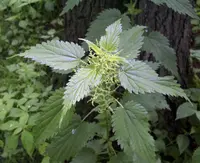
Common nettle, Urtica dioica, is a hardy herbaceous perennial known for its stinging hairs and vigorous spreading habit. It typically forms dense colonies with upright, square stems and sharply toothed, dark green leaves.
This species is native across Europe, Asia, and North America, where it grows in moist, nutrient-rich soils along rivers, woodland edges, and disturbed ground. It is fast-growing and resilient, but its sting makes handling and site selection important.
For those who want to care for Common Nettle, it is usually easy to grow in consistently moist soil with good light, especially in cooler climates.

Care Difficulty
Easy Care

Light Preference
Partial Shade

Water Requirements
Keep Soil Moist

Temperature Preference
Cold Hardy

Hardiness Zone
3–10

Soil Texture
Loamy, Silty, Organic-rich

Soil pH
Acidic (5.5–6.5), Slightly acidic (6.5–7.0)

Soil Drainage
Moist but well-drained

Fertilization
Minimal (feed rarely)
Scan your plant to receive care tips personalized for your specific plant
Available on iOS and Android
This species thrives in cool, bright conditions with some protection from intense sun.
This plant prefers consistently moist, but not waterlogged, soil.
This hardy perennial tolerates a wide temperature range but grows best in moderate conditions.
This species grows well in moderately moist air but does not require special humidity control.
Urtica dioica prefers moist, fertile, well-structured soil that stays aerated yet never waterlogged.
This species can be grown in containers if the pot is sized and weighted to handle vigorous, spreading growth.
Urtica dioica is a vigorous native that usually grows well in average soil and needs only light feeding in poor or heavily harvested sites.
Pruning supports manageable growth and fresh foliage on Urtica dioica, especially in cultivated patches.
Transplanting is more relevant than repotting for Common Nettle, which is typically grown in beds, edges, or wild-style patches.
Urtica dioica spreads strongly by rhizomes and is most practically propagated by division, though seeds are also viable.
Urtica dioica is very cold hardy and typically needs no special winter care in temperate climates.

Plant Health Check
Not sure what's wrong with your plant? Check your plant's health inside the app.
The stinging hairs on the leaves and stems are tiny, hollow structures made of silica that act like hypodermic needles, injecting a mix of irritating chemicals such as histamine, formic acid, and acetylcholine when touched.
This species serves as a key larval food plant for several butterflies, including the small tortoiseshell and peacock butterflies in Europe, whose caterpillars rely on its leaves for growth.
In the wild, this plant often forms dense patches in nutrient-rich, disturbed soils, so its presence is widely used by ecologists as an indicator of high nitrogen levels in the ground.

Archaeological evidence from Europe shows that this species was used as a bast fiber crop for making textiles, ropes, and fishing nets long before widespread cultivation of flax and hemp, giving it an important role in early human material culture.
Yellowing often comes from nutrient-poor soil, especially low nitrogen, or from root disturbance, compaction, or waterlogged conditions. Improve drainage, avoid overwatering, and top-dress or feed with a balanced, nitrogen-rich fertilizer to restore color.
Keep your plants happy and healthy with plant identification, disease detection, and easy care guidance.

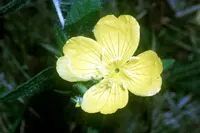
meadow evening primrose
Oenothera pilosella
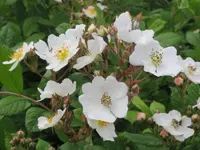
multiflora rose
Rosa multiflora

Santa Clara thorn-mint
Acanthomintha lanceolata

whitest evening primrose
Oenothera albicaulis

Sacred fig
Ficus religiosa
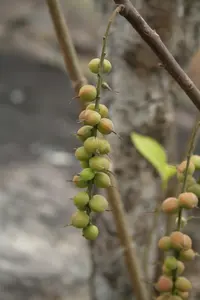
Alchornea cordifolia
Alchornea cordifolia

Japanese flowering cherry
Prunus serrulata
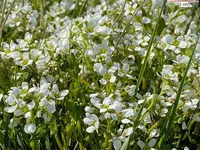
English Scurvygrass
Cochlearia anglica