Japanese flowering cherry Care (Prunus serrulata)

Also known as: Oriental Cherry, Japanese Cherry, Flowering Cherry, Japanese Hill Cherry
Japanese flowering cherry

About Japanese flowering cherry

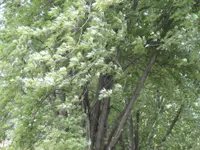
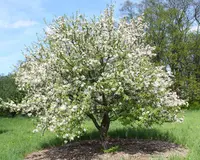
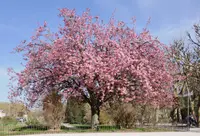
The Japanese flowering cherry, Prunus serrulata, is a small deciduous tree grown mainly for its abundant spring blossoms. It is often used as an ornamental feature in gardens, streets, and parks. The tree usually has a rounded crown, smooth gray bark, and simple leaves that often show good autumn color. Flowers range from single to fully double, in shades of pale to deep pink, depending on the cultivar. Prunus serrulata originates from East Asia and prefers temperate climates with distinct seasons. Its shallow roots, sensitivity to waterlogging, and susceptibility to several pests and diseases mean that how to care for Japanese flowering cherry must be considered carefully before planting.

Main Plant Requirements

Care Difficulty

Moderate Care

Light Preference

Full Sun

Water Requirements

Moderate Water

Temperature Preference

Cold Hardy

Hardiness Zone

5–8

Soil Texture

Loamy, Sandy, Clay

Soil pH

Acidic (5.5–6.5), Slightly acidic (6.5–7.0)

Soil Drainage

Moist but well-drained

Fertilization

Minimal (feed rarely)

Get Personalized Care Plan

Scan your plant to receive care tips personalized for your specific plant

Available on iOS and Android

How to Care for the Japanese flowering cherry

This tree prefers full sun for best flowering and overall vigor.

  • Provide 6–8 hours of direct sun daily, ideally with morning sun and some light afternoon shade in hotter regions.
  • Japanese flowering cherry tolerates light partial shade, but expect fewer blossoms and a looser crown in less than 4–5 hours of sun.
  • In summer, monitor for leaf scorch on exposed sites; in winter, ensure the canopy still receives open sky light, avoiding constant deep shade from buildings or evergreens.

Prunus serrulata needs consistent but not saturated soil to stay healthy and flower well.

  • Before watering, let the top 3–5 cm of soil dry, then water deeply so moisture reaches the main root zone rather than just the surface.
  • During the first 2–3 growing seasons, use soil feel and leaf condition: limp, dull leaves signal thirst; yellowing leaves and soggy soil indicate excess water.
  • Ensure free-draining soil; avoid standing water after rain by improving drainage with organic matter or slightly raising the planting area.

This species is a hardy, temperate-climate tree that needs cool winters and mild to warm summers.

  • Active growth is strongest around 55–75°F (13–24°C), supporting good leaf and flower bud development.
  • Mature trees tolerate winter lows near -10°F (-23°C) once established, but young trees benefit from protection from severe wind and sudden cold snaps.
  • In hot summers above 90°F (32°C), provide mulch, deep but infrequent watering, and, where possible, some late-afternoon shade to reduce heat stress and leaf scorch.

This species tolerates a wide humidity range, so ambient outdoor levels are usually sufficient.

  • Target 40–60% humidity, typical of most temperate outdoor conditions, for stable foliage and flower bud development.
  • Dry air combined with heat and wind can cause leaf edge browning, marginal scorch, and premature leaf drop on Japanese flowering cherry.
  • Increase local humidity by underplanting with low groundcovers or mulch that conserves soil moisture, rather than misting foliage.

Prunus serrulata prefers well-structured, aerated mineral soil that drains freely but does not dry out too fast.

  • Use a loamy mix with moderate organic matter, such as garden loam blended with compost and a small portion of coarse sand.
  • Aim for slightly acidic to neutral pH (6.0–7.0) to support nutrient uptake and reduce the risk of micronutrient deficiencies.
  • Improve drainage and aeration on heavier sites by incorporating 20–30% coarse sand or fine gravel through the upper 30–40 cm of soil.
  • Avoid compacted, waterlogged, or highly alkaline substrates, which increase risk of root rot and reduce overall vigor.

This species can be grown in large containers for several years, but only with careful attention to root space and stability.

  • Choose a deep, heavy container that resists tipping as the canopy enlarges and catches wind.
  • Use a mineral-based mix with added bark or coarse sand so water moves quickly through the root zone after watering.
  • Raise the pot slightly off the ground on feet or bricks to ensure fast outflow from drainage holes after heavy rain.

Fertilization supports flowering and overall vigor in Japanese flowering cherry, but moderate feeding is sufficient.

  • Use a balanced slow-release fertilizer (around 10-10-10) or well-rotted compost spread over the root zone in early spring.
  • Apply once in early spring and, in poor soils, once again in mid-summer, avoiding late-season nitrogen that encourages tender growth.
  • Reduce or stop feeding in late fall and winter, when the tree is dormant and nutrient demand is low.
  • For young or stressed trees, use fertilizer at 1/2 strength and water deeply afterward to limit root burn.

Pruning helps maintain structure, health, and flowering quality in Prunus serrulata.

  • Time main pruning for late spring to early summer, just after flowering, to avoid removing next year’s flower buds.
  • Use clean, sharp bypass pruners or loppers to remove dead, diseased, or crossing branches back to healthy wood.
  • Thin crowded interior branches to improve light and air flow, which supports better bloom and reduces fungal issues.
  • Limit cuts to smaller branches to preserve the natural shape and avoid large wounds that heal slowly.

Transplanting is more common than long-term container culture for Prunus serrulata, which prefers a stable garden position.

  • Plan major transplanting for late fall or very early spring, when the tree is dormant and stress is lower.
  • Look for signs such as roots circling the planting hole or persistent slow growth despite good care before moving established trees.
  • Dig a wide root ball, disturb roots as little as possible, and set the tree at the same soil depth in the new location.
  • Water thoroughly after transplanting, then keep soil evenly moist and mulch 5–8 cm deep to reduce root stress and temperature swings.

Propagation of Prunus serrulata for home gardeners is possible but more demanding than many shrubs or perennials.

  • Use semi-hardwood cuttings in mid- to late summer, placing them in a moist, well-drained medium under high humidity and bright, indirect light.
  • Sow seeds in fall and allow natural cold stratification outdoors, or chill moist seeds in a refrigerator for 2–3 months before spring sowing.
  • Many ornamental forms are grafted; budding onto compatible rootstocks in late summer gives more reliable clones of named cultivars.
  • Maintain even moisture, avoid waterlogging, and keep temperatures around 65–75°F to support rooting and early seedling growth.

Mature Prunus serrulata trees are generally cold hardy in suitable climates and need only modest winter care.

  • Apply a 5–8 cm layer of organic mulch over the root zone in late fall, keeping it a few cm away from the trunk.
  • Young trees benefit from a breathable trunk guard or wrap to limit bark cracking and rodent damage in winter.
  • For container-grown specimens, move pots into a sheltered, unheated but frost-moderated area and insulate containers if temperatures drop below local hardiness levels.

Care Tips

Graft union protection

When planting, keep the graft union slightly above soil level and avoid piling mulch against it to reduce the risk of rot and graft failure over time.

Borer monitoring routine

From late spring, inspect the lower trunk and main branches monthly for small exit holes, sawdust-like frass, or oozing sap, and prune out infested twigs early to limit spread of borers.

Canker management

After wet or frosty periods, check branches for sunken, discolored areas and promptly prune 15–20 cm below any suspected canker, disinfecting tools between each cut to slow disease.

Root zone preservation

Keep a wide, permanent mulch ring around the tree and avoid regular foot traffic, digging, or turf competition under the canopy to protect fine feeder roots and maintain stable moisture.

Flowering wood renewal

Every 2–3 years after bloom, selectively remove a few of the oldest, most congested flowering branches back to a younger side shoot to encourage vigorous new flowering wood and improve light penetration when caring for Japanese flowering cherry.

Common Pests and Diseases

Cherry leaf spot

This disease causes small purple to brown spots on leaves that often enlarge, turn tan in the center, and lead to premature leaf drop. Symptoms include thinning foliage and reduced vigor, especially after wet spring weather.

Solution

Collect and discard fallen leaves, prune for better airflow, and avoid overhead watering to reduce leaf wetness. In areas with a history of leaf spot, apply a labeled copper or chlorothalonil fungicide at bud break and repeat according to label during wet periods.

Brown rot blossom blight

This disease attacks blossoms and young shoots, causing wilted, brown flowers that cling to the branches and cankers on twigs. In humid, rainy weather it can also cause soft, brown fruit rot with tan spore masses.

Solution

Prune out and dispose of blighted blossoms and twig tips during dry weather, cutting 10–15 cm below visible damage. Improve canopy airflow and, where brown rot is recurring, use a registered stone-fruit fungicide starting at early bloom and repeat as directed through wet bloom periods as part of overall Prunus serrulata care instructions.

Black knot

This disease forms hard, black, elongated swellings on twigs and branches that can girdle and kill affected parts. Symptoms include rough, coal-black galls that enlarge over several years.

Solution

During dormancy, prune out infected twigs and branches at least 15–20 cm below each knot and destroy the prunings away from the tree. Inspect nearby Prunus species and remove infected material, and in high-pressure areas consider preventive fungicide sprays in early spring if recommended by local extension services.

Aphids

These insects cluster on young shoots and the undersides of leaves, sucking sap and causing curling, distortion, and sticky honeydew that can lead to sooty mold. This pest is often heaviest on tender spring growth.

Solution

Spray colonies off with a strong stream of water, and encourage or introduce natural predators such as lady beetles. For persistent infestations, use insecticidal soap or a light horticultural oil, making sure to cover leaf undersides and repeating as needed according to the product label.

Japanese beetles

These insects feed on leaves and flowers, skeletonizing foliage so that only the veins remain and sometimes stripping ornamental blooms. Damage peaks in early to mid-summer when adults are active.

Solution

Hand-pick beetles in the early morning into soapy water to reduce numbers and monitor daily during peak flight. For higher pressure, use protective netting over smaller trees during peak activity or apply a labeled contact or systemic product timed to adult emergence, avoiding use of beetle traps near the tree to prevent attracting more insects.

Interesting Facts

Double blossom dominance

Many Japanese flowering cherry cultivars derived from this species, such as 'Kanzan' and 'Shogetsu', are known for their dense double flowers that can have 20–50 petals each, far more than the 5 petals of the wild-type blossom.

Limited natural fruiting

Most ornamental forms of this species are either sterile or set very little viable fruit, because heavy selection for flower form and color has reduced normal seed production compared with wild cherries.

Short-lived ornamental tree

Unlike many long-lived temperate trees, cultivated Japanese flowering cherries commonly decline after about a few decades due to graft incompatibility, fungal diseases, and trunk canker susceptibility, so urban specimens are regularly replanted to maintain cherry-lined streets and parks.

Botan icon

Did you know?

This species was central to the development of modern cherry-blossom viewing in Japan; trees sent from Tokyo to Washington, D.C. in 1912, many of them derived from Prunus serrulata forms, established the famous Tidal Basin cherry display and helped popularize hanami-style cherry festivals in North America.

FAQs about Japanese flowering cherry

Lack of flowers usually comes from insufficient sunlight, pruning at the wrong time, or stress from drought, waterlogging, or nutrient imbalance. Late frosts can also damage flower buds. Address stress factors first before considering major pruning.

Grow Healthy Plants with Botan Care

Keep your plants happy and healthy with plant identification, disease detection, and easy care guidance.

Botan plant care app — identify plants on mobile

Explore More Plants