Early structural training
In the first 3–5 years, select a single central leader and remove or shorten competing upright shoots in late winter to build a strong, storm-resistant framework.

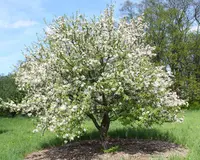
Plumleaf crab apple (Malus prunifolia) is a small deciduous tree grown mainly for its spring flowers, colorful fruit, and neat, rounded crown. It is often used in gardens, streets, and small landscapes as an ornamental accent tree.
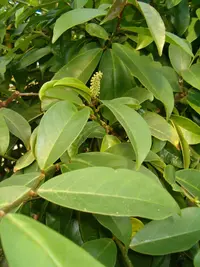
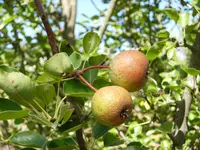
The tree typically has glossy, plum-like leaves, white to pale pink blossoms, and small, firm crab apples that persist into fall. It originates from East Asia and adapts well to many temperate regions.
Malus prunifolia prefers full sun, moderately moist, well-drained soil, and benefits from good air circulation to limit disease. Understanding how to care for plumleaf crab apple helps keep it healthy and flowering reliably, even in typical home garden conditions.

Care Difficulty
Moderate Care

Light Preference
Full Sun

Water Requirements
Moderate Water

Temperature Preference
Cold Hardy

Hardiness Zone
4–8

Soil Texture
Sandy, Loamy, Clay

Soil pH
Acidic (5.5–6.5), Slightly acidic (6.5–7.0)

Soil Drainage
Moist but well-drained

Fertilization
Minimal (feed rarely)
Scan your plant to receive care tips personalized for your specific plant
Available on iOS and Android
This small ornamental tree performs best with abundant direct light outdoors.
This species prefers evenly moist, well-drained soil rather than frequent shallow watering.
This hardy temperate tree tolerates a wide range of outdoor temperatures once established.
Humidity is rarely a limiting factor for Malus prunifolia grown outdoors in temperate climates.
Malus prunifolia prefers structured, well-drained mineral soil that still holds moderate moisture.
This species can be grown in containers for several years, especially dwarf or grafted forms, if certain structural needs are met.
Malus prunifolia grows well in reasonably fertile soil and usually benefits from modest, targeted feeding rather than heavy fertilization.
Pruning Malus prunifolia helps maintain a strong framework, good air flow, and reliable flowering.
This crab apple is usually grown in the ground, so focus on careful transplanting or infrequent container up-potting.
Propagation of Malus prunifolia is common in nurseries but requires patience and attention to conditions.
This species is generally cold hardy in much of the US and needs only modest winter care once established.

Plant Health Check
Not sure what's wrong with your plant? Check your plant's health inside the app.
This species is widely used as a rootstock in apple breeding because it combines good cold tolerance with strong graft compatibility, which helps support many cultivated apple varieties.
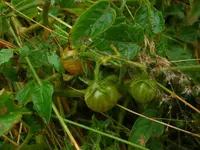
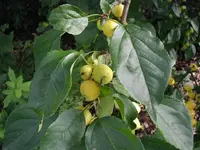
Its small yellow to red fruits show notable variation in size, color, and astringency among seed-grown trees, making it valuable in breeding programs focused on ornamental and fruit qualities.
This crab apple is native to northern and eastern China and has been introduced to other temperate regions, where it serves both as an ornamental tree and as genetic material in Malus prunifolia plant care and breeding research.

In some traditional East Asian horticultural practices, this species has been used as understock for espaliered and dwarf apple trees, allowing growers to create compact, highly managed fruiting walls in limited spaces.
Lack of flowers is often linked to immature age, heavy pruning at the wrong time, or nutrient imbalance. Frost-damaged buds and deep shade also reduce flowering. Check pruning timing and ensure balanced fertilization, especially phosphorus for buds.
Keep your plants happy and healthy with plant identification, disease detection, and easy care guidance.