


Young tree staking
Stake young trees for the first 1–2 years in windy sites, using two or three stakes and soft, flexible ties that allow slight trunk movement to build strength while preventing root rocking.

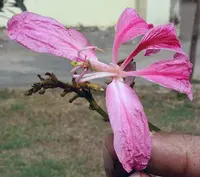
Butterfly-tree, Bauhinia purpurea, is a small to medium ornamental tree known for its showy, orchid-like purple flowers and distinctive twin-lobed leaves. It usually forms a rounded, open crown with a light, airy appearance.
This species is native to South Asia and Southeast Asia but is widely planted in warm climates as a street and garden tree. It is considered moderately fast-growing and can bloom over a long season in suitable conditions.
Bauhinia purpurea prefers full sun, well-drained soil, and moderate moisture, and it tolerates short dry spells once established. These traits make it relatively straightforward for gardeners who want to learn how to care for Butterfly-tree in mild, frost-free regions.

Care Difficulty
Moderate Care

Light Preference
Full Sun

Water Requirements
Moderate Water

Temperature Preference
Tropical / Frost Sensitive

Hardiness Zone
9–11

Soil Texture
Sandy, Loamy, Organic-rich

Soil pH
Slightly acidic (6.5–7.0), Neutral (7.0)

Soil Drainage
Well-drained

Fertilization
Minimal (feed rarely)
Scan your plant to receive care tips personalized for your specific plant
Available on iOS and Android
This subtropical tree needs abundant sun for strong flowering and compact growth.
This tree prefers evenly moist, well-drained soil and reacts quickly to prolonged dryness or saturation.
This warm-climate ornamental thrives in mild, frost-free conditions and struggles with hard freezes.
This species grows well in 40–60% humidity with good air movement.
This tree prefers freely draining, moderately fertile, slightly acidic to neutral soil.
This species is suitable for container growing when young or maintained as a small patio tree.
This subtropical tree benefits from moderate feeding during active growth but does not need heavy fertilizer inputs.
Pruning supports a strong framework and better flowering in Bauhinia purpurea without excessive intervention.
This tree is usually grown in the ground, so focus on careful transplanting rather than frequent repotting.
Propagation of this species is usually done from seed, with cuttings used where clonal traits must be preserved.
This subtropical tree is frost sensitive and needs protection in cooler climates, especially when young or container grown.

Plant Health Check
Not sure what's wrong with your plant? Check your plant's health inside the app.
The leaves are deeply cleft into two rounded lobes, a feature that inspired the genus name Bauhinia in honor of twin botanist brothers, as the leaf resembles two fused leaflets.
In many subtropical climates, this species produces abundant purple to magenta flowers from late fall through early spring, often when the tree is partly or fully leafless, which makes the blooms especially conspicuous.
When the flattened pods dry on the tree, the valves twist and split suddenly, flinging seeds away from the parent plant and helping the species spread efficiently in warm regions.

In parts of Asia, the stylized twin-lobed leaf of this species has been used as a symbol on emblems and logos, reflecting its easily recognizable silhouette and long association with cultivated gardens and streetscapes.
Lack of flowers usually comes from insufficient light, heavy pruning of young wood, or excess nitrogen fertilizer. Mature trees bloom best when not overwatered and when growth is not constantly stimulated with high-nitrogen feeds.
Keep your plants happy and healthy with plant identification, disease detection, and easy care guidance.

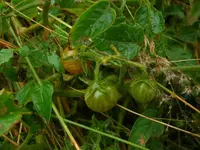
currant tomato
Solanum pimpinellifolium
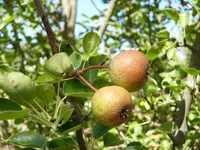
Himalayan Pear
Pyrus pashia
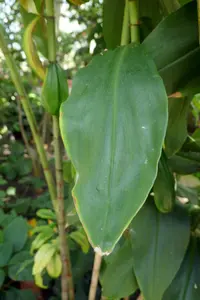
African Spiral Flag
Costus lucanusianus
Tropical milkweed
Asclepias curassavica
Speedy Jenny
Tradescantia chrysophylla 'Baby Bunny Bellies'
Australian Umbrella Tree
Heptapleurum actinophyllum

Siberian Spruce
Picea obovata
Persian shallot
Allium stipitatum