Windfirm training
Stake young trees only in very exposed sites and remove stakes after 1–2 years so the trunk can flex and strengthen, which improves long-term wind resistance in harsh climates.

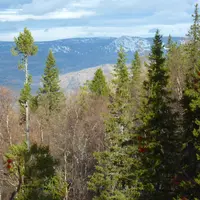
Siberian spruce, Picea obovata, is an evergreen conifer mainly used as a forest and landscape tree in cold and boreal climates. It forms a dense, pyramidal crown with short, stiff needles and small, rounded cones.
This species is native to northern Europe and Siberia, where it tolerates severe winters, wind, and poor, acidic soils. Its strong cold hardiness and moderate growth rate usually make it reliable once established.
Gardeners who care for Siberian Spruce find it fairly low-maintenance if planted in full sun with consistent moisture and good drainage. It suits larger gardens, shelterbelts, and naturalistic plantings rather than small patios or containers.

Care Difficulty
Moderate Care

Light Preference
Full Sun

Water Requirements
Moderate Water

Temperature Preference
Cold Hardy

Hardiness Zone
2–6

Soil Texture
Sandy, Loamy, Silty

Soil pH
Strongly acidic (4.5–5.5), Acidic (5.5–6.5)

Soil Drainage
Moist but well-drained

Fertilization
Minimal (feed rarely)
Scan your plant to receive care tips personalized for your specific plant
Available on iOS and Android
This cold-climate conifer prefers bright outdoor conditions with consistent access to direct sun.
This species prefers evenly moist, cool soil that drains well and does not stay saturated.
This conifer is highly cold-tolerant and thrives in cool to cold outdoor climates.
This species prefers cool, moderately humid air but usually tolerates outdoor fluctuations.
This conifer grows best in cool, moist, well-aerated mineral soil with steady drainage.
This species can be grown in containers for several years, but demands careful attention to root space and stability.
This spruce usually grows well in average garden soil and needs only light, targeted feeding.
Picea obovata needs minimal pruning, mainly to maintain health and a natural outline.
This species is typically grown in the ground, with transplanting more relevant than frequent repotting.
Propagation of Picea obovata is possible but slow, and usually done from seed or semi-hardwood cuttings.
This spruce is very cold hardy and usually needs little specific winter care in the ground.

Plant Health Check
Not sure what's wrong with your plant? Check your plant's health inside the app.
This Siberian spruce naturally occurs in regions where winter temperatures regularly fall below −50°C, and its buds, needles, and tissues have evolved high frost hardiness that allows survival in some of the harshest forest climates on Earth.
In areas where their ranges overlap, this species forms natural hybrids with Picea abies, creating intermediate forms that forest geneticists use to study adaptation to cold and timber traits.
It is a dominant tree in large areas of the Siberian taiga, where its dense evergreen canopy shapes snow distribution, provides critical winter shelter for wildlife, and strongly influences local microclimates and soil development.

Tree‑ring records from this species are widely used in dendroclimatology, where scientists analyze its annual growth rings to reconstruct past temperature and moisture conditions across northern Eurasia over several centuries.
This conifer has a slow to moderate growth rate, usually adding about 20–35 cm per year under good conditions. Growth is slower in poor soil, exposed windy sites, or in areas with severe drought or heat stress.
Keep your plants happy and healthy with plant identification, disease detection, and easy care guidance.