Wind-hardening young trees
Stake only very young plants in windy sites and gradually loosen the ties over 1–2 seasons so the trunk flexes and develops strong taper instead of becoming dependent on support.

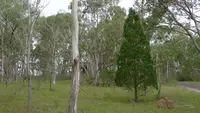
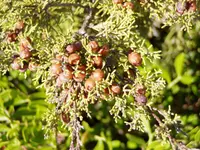
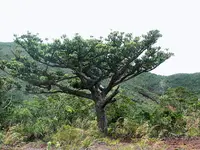
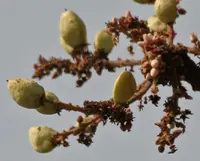
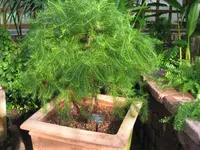
Black cypress-pine, Callitris endlicheri, is a slow-growing conifer native to inland eastern Australia. It typically forms a narrow, upright tree with dense, fine foliage and small, woody cones.
In nature it grows on dry, rocky slopes and poor, sandy or stony soils, which makes it adapted to low fertility and periodic drought. Its tough, resinous foliage and strong apical growth give it good wind and sun tolerance but reduce suitability for frequent clipping.
Those traits make it relatively low-maintenance once established but slower to size up, so patience is important when learning how to care for Black Cypress-pine.

Care Difficulty
Moderate Care

Light Preference
Full Sun

Water Requirements
Low Water

Temperature Preference
Warm Climate

Hardiness Zone
9–11

Soil Texture
Sandy, Loamy, Rocky

Soil pH
Acidic (5.5–6.5), Slightly acidic (6.5–7.0)

Soil Drainage
Well-drained

Fertilization
Minimal (feed rarely)
Scan your plant to receive care tips personalized for your specific plant
Available on iOS and Android
Callitris endlicheri prefers full sun but can tolerate some light shade, especially in hotter regions.
This species is drought-tolerant once established and prefers infrequent, deep watering over light, frequent applications.
This hardy conifer tolerates a wide temperature range but grows best in moderate, not extreme, conditions.
This species handles typical indoor humidity well and rarely needs special adjustments.
Callitris endlicheri prefers mineral, sharply draining soil that does not stay wet.
This species can be grown in containers, especially while young, if stability and drainage are managed carefully.
Callitris endlicheri grows slowly and usually needs only modest fertilization in cultivation.
Pruning Callitris endlicheri is minimal and mainly corrective, aimed at maintaining structure and safety.
This species is usually grown in the ground, so management focuses on careful transplanting rather than frequent repotting.
Propagation of Callitris endlicheri is possible but not usually undertaken by casual home gardeners.
Mature Callitris endlicheri is generally cold hardy in its suitable climate range and needs little special winter care.

Plant Health Check
Not sure what's wrong with your plant? Check your plant's health inside the app.
This species develops thick, fibrous, dark bark that insulates the living tissues from bushfires, allowing many mature trees to survive intense burns that would kill thinner-barked conifers.
Black cypress-pine often grows on shallow, rocky, or low-fertility soils in inland eastern Australia, where many competing tree species struggle to establish, giving it a key role in stabilizing these harsh sites.
In parts of New South Wales and Victoria it forms open woodlands or mixes with eucalypts, providing structure, shelter, and seed resources for local wildlife, including woodland birds that use its dense foliage for cover.

Wood from this species is naturally durable and termite-resistant, so it has been valued historically for fence posts and similar ground-contact uses in rural Australia, where long service life without chemical treatment is important.
This species is evergreen, keeping foliage year-round rather than dropping it seasonally. Old inner scale leaves may shed gradually, but the overall canopy stays green, which makes it useful for screening and windbreaks in many landscapes.
Keep your plants happy and healthy with plant identification, disease detection, and easy care guidance.