Scrub Cypress-pine Care (Callitris verrucosa)

Also known as: Camphor Wood, Mallee Pine, Turpentine Pine, Warty cypress-pine
Scrub Cypress-pine

About Scrub Cypress-pine

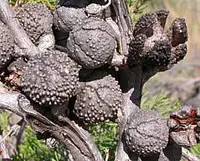
Scrub cypress-pine (Callitris verrucosa) is a small, slow-growing conifer native to sandy heathlands and mallee regions of southern Australia. It often forms a compact, bushy shrub with fine, scale-like foliage and small, rounded cones.

This species is adapted to dry, nutrient-poor soils and coastal conditions, which makes it relatively tough once established. In cultivation, it prefers full sun, sandy or well-drained soil, and low to moderate moisture.

Because it grows slowly and dislikes heavy, waterlogged substrates, it suits patient growers who can provide stable conditions. Understanding how to care for Scrub Cypress-pine starts with respecting its need for drainage and avoiding overwatering.


Main Plant Requirements

Care Difficulty

Moderate Care

Light Preference

Full Sun

Water Requirements

Low Water

Temperature Preference

Warm Climate

Hardiness Zone

9–11

Soil Texture

Sandy, Loamy, Rocky

Soil pH

Slightly acidic (6.5–7.0), Neutral (7.0)

Soil Drainage

Well-drained

Fertilization

Minimal (feed rarely)

Get Personalized Care Plan

Scan your plant to receive care tips personalized for your specific plant

Available on iOS and Android

How to Care for the Scrub Cypress-pine

This sun-loving Australian conifer thrives in open, bright sites with consistent direct light.

  • Provide 6–8 hours of direct sun daily; full sun suits Scrub Cypress-pine best in most temperate, low-humidity climates.
  • Allow light afternoon shade in very hot inland areas to reduce foliage scorch, especially on young or newly transplanted plants.
  • Avoid dense shade, which causes sparse, weak growth; in cooler regions, a south- or west-facing exposure maximizes winter light and keeps the canopy compact.

This species prefers dry to slightly moist conditions and is highly sensitive to excess water.

  • Let the top 5–8 cm of soil dry before watering established plants; in the ground, rely mainly on rainfall once roots are deep.
  • Use sharply draining, sandy or loamy soil so water does not pool around the roots, which increases risk of rot in Callitris verrucosa.
  • In hot, dry spells, watch for dull, flagging foliage as a cue to water deeply; yellowing tips and persistent wet soil suggest overwatering.

This hardy conifer tolerates a wide temperature range but grows best in mild, dry climates.

  • Optimal growth occurs around 60–80°F (16–27°C), with steady growth in spring and fall when extremes are limited.
  • Mature plants usually tolerate brief drops to about 20°F (-6°C); prolonged colder periods can cause tip dieback, especially in exposed sites.
  • In summer, it handles 95–100°F (35–38°C) if soil is not waterlogged; combine good airflow and mulch to limit heat and cold stress around the roots.

Humidity is rarely critical for Callitris verrucosa, which adapts well to dry air in most homes and outdoor settings.

  • Target 30–50% humidity, similar to typical indoor air, without needing special humidification.
  • Tolerates dry central heating, but prolonged very dry, hot drafts can cause browning at needle tips.
  • If tips brown and shed more than usual, improve air circulation and move away from heaters rather than adding extra humidity.

Callitris verrucosa prefers sharply drained, sandy soil that mimics its natural, low-fertility habitat.

  • Use a mix of 50–70% coarse sand or sandy loam with the rest split between fine bark and a small amount of compost.
  • Ensure rapid drainage; water should pass through in seconds, not sit on the surface or pool in the container or bed.
  • Aim for slightly acidic to neutral pH around 6.0–7.0, avoiding very alkaline or heavily limed substrates.
  • Avoid dense clay, peat-heavy mixes, and constantly wet sites, or roots may suffocate and develop rot.

This species can be grown in containers for several years if the pot and substrate are chosen for stability and sharp drainage.

  • Select a deep, heavy pot that resists tipping as the woody crown becomes taller and more wind-exposed.
  • Use a coarse, mineral-rich mix that dries quickly, preventing the lower root zone from remaining waterlogged after rain.
  • Raise the pot on feet or bricks so drainage holes stay clear and excess water evacuates freely in wet weather conditions.

Native Callitris verrucosa usually grows well in poor soils and needs very little supplemental feeding.

  • If growth is weak in containers, use a balanced slow-release fertilizer (for example 10-10-10) at half label rate in early spring.
  • For in-ground plants, a light top-dressing of compost once in spring is sufficient for caring for Scrub Cypress-pine.
  • Avoid summer high-nitrogen products, which can cause overly soft growth and reduce drought tolerance.
  • Do not fertilize in late fall or winter, as the plant is relatively dormant and extra nutrients are not used effectively.

Callitris verrucosa needs only light, targeted pruning to maintain a stable structure.

  • Best time is late winter to early spring before new growth starts, avoiding very cold or very hot days.
  • Remove dead, diseased, or storm-damaged branches with clean, sharp bypass pruners or a small pruning saw.
  • Thin crowded interior twigs slightly to improve air movement while keeping the natural conical form.
  • Limit cuts to small branches; heavy pruning into old bare wood rarely resprouts and can distort the tree.

This species is more often grown in the ground, so focus on careful transplanting rather than frequent repotting.

  • Transplant young trees in late winter to early spring when soil is workable and temperatures are mild.
  • Look for signs such as roots circling the pot, water running off quickly, or stalled growth in containers.
  • Shift container plants only every 2–3 years, moving to a pot just 2–5 cm wider with free-draining, sandy mix.
  • Reduce root stress by watering well before and after moving, handling the root ball gently, and shading for 3–5 days.

Callitris verrucosa is most reliably propagated from seed, with cuttings used less frequently.

  • Collect ripe cones, dry them until they open, then extract seeds and store cool and dry until sowing.
  • Sow in late winter to early spring in a free-draining, sandy mix; keep slightly moist, not wet.
  • Provide bright light, good air flow, and temperatures around 60–70°F to support even germination.
  • Semi-hardwood cuttings taken in late summer root only under controlled conditions with hormone, bottom heat, and high humidity.

Mature Callitris verrucosa is reasonably cold hardy and usually needs minimal winter care in mild to moderate climates.

  • In areas with freeze–thaw cycles, apply a 5–8 cm mulch layer around the root zone, keeping it off the trunk.
  • Newly planted or young trees benefit from windbreaks or burlap screens in very exposed sites.
  • Container plants in colder zones can be moved to an unheated garage or sheltered porch to reduce root freezing.

Care Tips

Wind-hardening young plants

Expose young plants to increasing wind over several weeks by reducing windbreak height or gradually moving containers to more open sites so their root systems and stems strengthen before facing full coastal or inland winds.

Encourage deep rooting

In the first 2–3 years, water less often but for a longer duration so moisture reaches 20–30 cm deep, which trains roots to anchor the plant firmly and improves drought resilience.

Firewise spacing strategy

In fire-prone regions, space plants with at least 3–4 m between canopies and avoid planting directly under eaves or near structures, since the resinous foliage can burn quickly during wildfires.

Minimal root disturbance

When transplanting, handle the root ball gently, avoid teasing out roots, and plant at the same depth as in the pot, because this species reacts poorly to root disturbance and can stall or decline if damaged.

Targeted cone management

On smaller landscape specimens, selectively remove some cones each year to reduce branch weight and encourage new shoot growth, which keeps the canopy less congested and supports long-term structural health when caring for Scrub Cypress-pine.

Common Pests and Diseases

Cypress aphids

This pest feeds on young shoots and foliage, causing yellowing, reduced growth, and, in heavy infestations, dieback of branch tips.

Solution

Prune and dispose of heavily infested twigs, then spray foliage thoroughly with a strong jet of water to dislodge aphids; for persistent problems, use an insecticidal soap or horticultural oil labeled for conifers, applied in the cool part of the day and repeated as directed until populations are reduced.

Cypress scale

These insects attach along stems and needles, sucking sap and leading to patchy yellowing, thinning foliage, and sometimes twig death on stressed plants.

Solution

Cut out and discard badly affected branches, then treat remaining stems with a horticultural oil during the crawler stage, ensuring full coverage of twigs and inner foliage while also improving plant vigor through proper watering and avoiding excess nitrogen fertilizer.

Cypress canker

This disease causes sunken, resin-oozing lesions on branches, leading to browning foliage and dieback that often starts on one branch and gradually spreads.

Solution

Prune affected branches at least 20–30 cm below visible symptoms during dry weather, disinfecting tools between cuts, and improve airflow and spacing around plants; avoid overhead irrigation and maintain moderate, even moisture to reduce stress that makes trees more susceptible.

Needle blight

This disease leads to browning and premature drop of older needles, often starting on shaded inner branches and giving the plant a thin, scorched appearance.

Solution

Collect and discard fallen needles, thin dense growth to increase light and air movement, and, in persistent cases, apply a registered fungicide for conifer needle blights at the start of new growth, repeating according to label directions while monitoring for improved foliage retention.

Interesting Facts

Fire-triggered seed release

This species forms woody, warted cones that can remain closed on the tree for many years and then open en masse after intense heat from wildfire, releasing large numbers of seeds onto the newly cleared ground.

Mallee dune specialist

It is naturally concentrated on deep sandy soils of mallee dune systems in southern Australia, where it helps stabilize shifting sands and forms part of a distinctive low, multi-stemmed woodland structure.

Low-resin, termite-resistant wood

The pale, fine-textured wood is relatively low in resin compared with some other Australian conifers but is naturally durable and resistant to termite attack, which has led to local use for fencing and outdoor posts.

Botan icon

Did you know?

Genetic studies place this species among the few native Australian members of the cypress family (Cupressaceae), making it part of a small and evolutionarily distinct Southern Hemisphere lineage that diverged early from the ancestors of many northern cypress and juniper species.

FAQs about Scrub Cypress-pine

This species is an evergreen conifer, keeping its scale-like foliage year-round rather than shedding leaves seasonally. Older inner foliage and shaded branches may brown and drop gradually, which is normal as long as new outer growth stays healthy.

Grow Healthy Plants with Botan Care

Keep your plants happy and healthy with plant identification, disease detection, and easy care guidance.

Botan plant care app — identify plants on mobile

Explore More Plants