Early leader selection
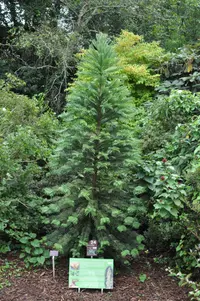
In the first 3–5 years, select and lightly stake one strong central leader and remove competing upright shoots so the tree develops a stable, wind-resistant structure.

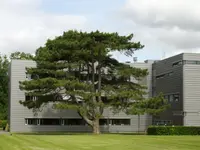
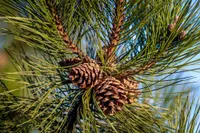
Austrian pine (Pinus nigra) is a hardy, long-lived conifer commonly used as a landscape and windbreak tree. It forms a dense, pyramidal to broadly oval crown with strong branches and dark green needles in pairs.
This species is native to central and southern Europe but is widely planted in temperate regions of North America. It is valued for its adaptability to urban conditions, including tolerance of wind, cold, and some air pollution.
Pinus nigra generally prefers full sun, moderately moist but well-drained soil, and benefits from good air circulation. These traits make it relatively straightforward for those learning how to care for Austrian pine in parks, large gardens, and shelterbelts.

Care Difficulty
Easy Care

Light Preference
Full Sun

Water Requirements
Low Water

Temperature Preference
Cold Hardy

Hardiness Zone
4–7

Soil Texture
Sandy, Loamy, Rocky

Soil pH
Slightly acidic (6.5–7.0), Slightly alkaline (7.0–7.5)

Soil Drainage
Well-drained

Fertilization
Minimal (feed rarely)
Scan your plant to receive care tips personalized for your specific plant
Available on iOS and Android
Pinus nigra is a sun-loving conifer that develops best color and density in ample light.
Pinus nigra prefers evenly moist but never saturated soil, especially while establishing.
This hardy pine tolerates a wide climate range but performs best in cool to temperate conditions.
Humidity is rarely critical for Pinus nigra, which adapts well to outdoor conditions in most temperate climates.
Pinus nigra prefers mineral, well‑structured soil that drains freely yet retains moderate moisture.
This species is only moderately suitable for container growing and performs best in large, stable outdoor tubs or boxes.
This conifer needs modest feeding, mainly to support growth on poor or disturbed sites.
Pruning Pinus nigra is usually light and focused on safety and structure rather than shaping.
This pine is typically grown in the ground, so care centers on transplanting rather than frequent repotting.
Propagation of Pinus nigra for landscape use is done mainly from seed and is moderately technical for home growers.
This species is cold hardy in much of the US and usually needs minimal winter care once established.

Plant Health Check
Not sure what's wrong with your plant? Check your plant's health inside the app.
This species has very strong wood and a deep, wide-spreading root system, which makes it especially resistant to windthrow compared with many other pines.
As it matures, its bark changes from relatively smooth and gray to thick, dark, and deeply fissured plates that provide increased protection from mechanical damage and moderate surface fires.
It is naturally distributed across a wide band from Austria and central Europe through the Balkans to parts of Turkey, showing notable local variation in growth form and cold or drought tolerance.

Some individuals of Pinus nigra in Europe have been dated to well over 500 years old, making them important long-term recorders of past climate conditions through the study of their tree rings.
This species is moderately fast-growing, typically adding 30–60 cm per year in youth under good conditions. Growth slows with age. Fertile, well-drained soil and full exposure help maintain steady extension growth and dense branching.
Keep your plants happy and healthy with plant identification, disease detection, and easy care guidance.