


Windward placement
Site the tree so its most exposed side faces prevailing winds in open landscapes, which encourages a stronger root system and more even crown development over time.

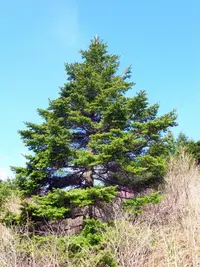
Korean fir, Abies koreana, is a compact evergreen conifer valued for its neat, pyramidal shape and short, glossy needles with silvery undersides. It often forms striking upright cones that can appear purple on young trees, giving strong ornamental interest even at a small size.
This species is native to cool, mountainous regions of Korea, where it grows in moist, well-drained, slightly acidic soils. In gardens, it prefers full sun to light shade and consistent moisture, and it is generally slow-growing but long-lived.
Most gardeners find it moderate in difficulty: it needs cool conditions, good air flow, and protection from severe heat or drying winds. Understanding how to care for Korean Fir mainly involves matching its cool, moist, mountain-like habitat as closely as the site allows.

Care Difficulty
Moderate Care

Light Preference
Full Sun

Water Requirements
Moderate Water

Temperature Preference
Cold Hardy

Hardiness Zone
5–7

Soil Texture
Loamy, Sandy, Clay

Soil pH
Strongly acidic (4.5–5.5), Acidic (5.5–6.5)

Soil Drainage
Moist but well-drained

Fertilization
Minimal (feed rarely)
Scan your plant to receive care tips personalized for your specific plant
Available on iOS and Android
This species prefers cool, sunny sites with some protection from harsh afternoon exposure.
Abies koreana prefers evenly moist, cool soil that never stays waterlogged.
This cold-hardy conifer thrives in cool to cold climates and struggles in prolonged heat.
This conifer prefers cool, moderately moist air but usually adapts to typical outdoor humidity levels.
Abies koreana needs aerated, consistently moist, well-drained soil to root deeply and resist stress.
This species can be grown in containers for many years when moisture, stability, and root space are carefully managed.
This conifer grows well in reasonably fertile soil and needs only light, targeted feeding for healthy growth.
Abies koreana needs only light structural pruning to maintain health and a natural form.
Abies koreana is usually grown in the ground, so focus on careful transplanting of young trees rather than frequent repotting.
Raising Abies koreana is most reliable from seed, while cuttings are slower and less predictable for home growers.
This species is generally cold hardy in suitable climates and needs only modest winter care once established in the landscape.

Plant Health Check
Not sure what's wrong with your plant? Check your plant's health inside the app.
This species occurs naturally only in the cool, humid high mountain regions of South Korea, mainly on Jeju Island’s Hallasan and a few mainland ranges, where it forms subalpine forests on acidic, well-drained volcanic or granitic soils.
Its cones are relatively small, usually bluish to violet-purple when young, and stand upright on the branches rather than hanging, making the tree highly recognizable even at a distance.
Due to habitat loss and climate-related stress in its limited natural range, it is currently listed as Endangered by the IUCN, and many wild populations are fragmented and declining.

Abies koreana was first described scientifically only in 1920 from South Korean material, yet within a century it became one of the most widely planted ornamental firs in temperate gardens because of its compact size and unusually colorful cones.
This species grows slowly, usually about 10–20 cm per year once established. Growth is slower in poor, dry, or compacted soils, and somewhat faster in cool climates with consistent moisture and good drainage.
Keep your plants happy and healthy with plant identification, disease detection, and easy care guidance.

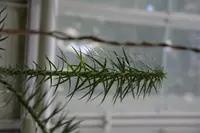
Taiwan-fir
Cunninghamia konishii
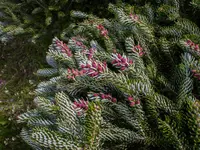
Korean Fir
Abies koreana 'Horstmann's Silberlocke'
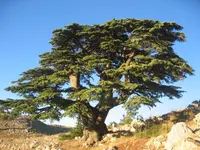
Lebanon Cedar
Cedrus libani
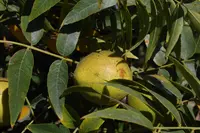
Southern California walnut
Juglans californica
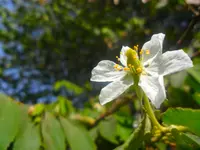
strawberrytree
Muntingia calabura
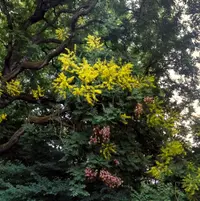
golden rain tree
Koelreuteria paniculata
 POPULAR
Norfolk Island Pine
Araucaria heterophylla
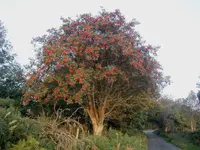
European mountain ash
Sorbus aucuparia