kapoktree Care (Ceiba pentandra)

Also known as: Silk Cotton Tree, Kapok
kapoktree

About kapoktree

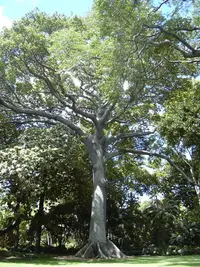
The kapoktree, Ceiba pentandra, is a fast-growing tropical tree known for its tall, straight trunk and wide, umbrella-like crown. In nature it can become very large and develops thick, buttress roots at the base.

It is native to tropical regions of Central and South America, West Africa, and parts of Southeast Asia, where it grows in warm, humid lowland forests. The tree produces fluffy kapok fiber inside its seed pods, historically used as stuffing material.

In cultivation it is usually kept much smaller, often as a landscape or large container specimen. It prefers bright light, warmth, and well-drained soil, and these needs shape how to care for kapoktree in home or garden settings.

Main Plant Requirements

Care Difficulty

Moderate Care

Light Preference

Full Sun

Water Requirements

Moderate Water

Temperature Preference

Tropical / Frost Sensitive

Hardiness Zone

10–12

Soil Texture

Sandy, Loamy, Organic-rich

Soil pH

Acidic (5.5–6.5), Slightly acidic (6.5–7.0)

Soil Drainage

Well-drained

Fertilization

Minimal (feed rarely)

Get Personalized Care Plan

Scan your plant to receive care tips personalized for your specific plant

Available on iOS and Android

How to Care for the kapoktree

Ceiba pentandra develops best with strong, consistent light similar to its native tropical habitat.

  • Provide 6–8 hours of direct sun daily once established, ideally with morning sun and some protection from harsh mid‑afternoon summer sun.
  • Young trees benefit from 4–6 hours of direct morning sun plus bright, filtered light later in the day to reduce leaf scorch risk.
  • Trees tolerate light partial shade, but prolonged low light causes sparse branching and slower growth, while extreme, reflected heat can scorch exposed bark.

This species prefers a pronounced wet‑dry cycle that reflects its tropical dry‑season ecology.

  • During active growth, irrigate when the top 5–8 cm of soil are dry, applying deep water so moisture reaches the main root zone, then allow the soil to dry again.
  • In the cool or dry season, reduce watering frequency, allowing the soil to dry deeper; occasional leaf drop is normal as the tree rests.
  • Use very well‑drained soil or a mound to prevent standing water; persistent soggy soil, sour smell, or soft roots indicate overwatering, while limp, curling leaves and dry, cracked soil signal underwatering.

This tropical tree needs consistently warm conditions and does not tolerate frost.

  • Optimal growth occurs at 75–90°F (24–32°C), with stable warmth encouraging fast trunk thickening and canopy expansion.
  • The tree is damaged near 40°F (4°C) and can be killed by frost; young specimens are especially sensitive to cold, wet conditions.
  • Mature trees tolerate brief heat up to about 100°F (38°C) if soil moisture is adequate, but prolonged heat with drought stress leads to leaf drop, which is normal in caring for kapoktree.

Ceiba pentandra tolerates a wide humidity range but grows best in moderately humid air.

  • Aim for 40–60% humidity to support steady foliage and stem growth in young kapoktree plants.
  • Leaves may curl, brown at the tips, or drop early if air stays very dry and hot for extended periods.
  • Use grouped plants, a nearby humidifier, or a wide pebble tray with water to gently raise humidity around container-grown specimens.

Ceiba pentandra prefers loose, deep, well-drained soil that still retains some moisture.

  • Use a sandy-loam structure, such as 50% cactus mix with 25% coarse sand and 25% compost, to balance drainage and nutrient retention.
  • Ensure rapid drainage so water does not stand around the taproot, which increases risk of root rot and stem base decay.
  • Aim for slightly acidic to neutral pH around 6.0–7.0, avoiding highly acidic or saline soils that restrict nutrient uptake.
  • Improve aeration by incorporating chunky materials like pine bark chips or pumice instead of only fine-textured peat-based substrates.

This species can be grown in containers, especially during its juvenile stage or in cooler climates.

  • Choose a wide, heavy container to counterbalance the tall, top-heavy crown and reduce tipping in wind or on balconies.
  • Select a pot deep enough for early taproot development so roots do not circle tightly near the surface.
  • Use a mineral-rich, fast-draining mix and keep the container slightly elevated on feet or bricks so drainage holes never sit in standing water.

Ceiba pentandra benefits from light, occasional feeding but tolerates low-fertility soils once established.

  • Use a balanced NPK fertilizer (around 10-10-10) or well-rotted compost for young or container-grown kapoktree.
  • Feed every 4–6 weeks during the warm growing season, stopping once growth slows in late summer.
  • Apply at half the label strength for synthetics, or a thin surface layer for compost, to avoid excess salts.
  • Skip feeding in winter or dormancy to prevent weak, elongated growth.

Ceiba pentandra requires minimal pruning, mainly to maintain safe structure and remove problem wood.

  • Carry out light pruning at the end of the dry or cool season, before strong new growth starts.
  • Remove dead, diseased, crossing, or storm-damaged branches using clean, sharp loppers or a pruning saw.
  • Limit cuts to smaller branches to avoid large wounds on the trunk and main scaffold limbs.
  • Use pruning to guide a single strong leader and well-spaced main branches, improving long-term stability.

Ceiba pentandra is usually field-grown, so focus on careful transplanting of young trees from containers or nursery beds.

  • Transplant in warm weather during the rainy or growing season, when soil is moist and temperatures are stable.
  • Look for roots circling the pot, soil drying very fast, or slowed growth as signs a container plant needs more space.
  • Move up only 1–2 pot sizes or into a well-drained ground site, loosening circling roots gently to reduce girdling.
  • Water thoroughly after planting, shade the tree lightly for 1–2 weeks, and keep soil evenly moist to limit transplant shock.

Ceiba pentandra is most commonly propagated from seed, with cuttings used less frequently.

  • Collect mature, fluffy seed pods and sow fresh seeds at the start of the warm, rainy or spring season.
  • Use a free-draining mix, keep temperatures around 75–85°F, and maintain lightly moist, not soggy, conditions for germination.
  • Scarify tough seed coats lightly with sandpaper, then soak for 12–24 hours to improve water uptake and sprouting.
  • For cuttings, take semi-woody pieces, apply rooting hormone, and keep under high humidity with bright, indirect light.

Ceiba pentandra is a tropical species that offers poor frost tolerance and needs protection in cool climates.

  • Grow in frost-free zones or use containers in cooler regions for flexible placement.
  • Move container plants indoors or into a heated greenhouse before temperatures drop below 40°F.
  • In marginal climates, mulch the root zone with 5–8 cm of organic material to buffer soil temperature.

Care Tips

Early trunk training

Stake young plants loosely and adjust ties every 2–3 months so the trunk develops straight and strong without girdling or rubbing damage.

Root-space planning

When planting in the ground, position the tree at least 20–30 ft from buildings, patios, and underground lines to avoid future conflicts from its large buttress roots.

Controlled crown shaping

In the first 3–5 years, direct scaffold branches by selectively shortening or removing steep, crossing, or crowded shoots during late winter to build a stable, open canopy that tolerates storms better.

Pod and fiber management

In landscapes with high foot traffic, schedule regular late-season cleanups of fallen pods and kapok fiber to reduce slipping hazards and clogged drains.

Trunk and spine safety

Where people or pets pass close by, maintain a mulched buffer zone around the base and prune only low, hazardous spurs or spines using clean, sharp tools while avoiding deep cuts into the trunk when caring for kapoktree.

Common Pests and Diseases

Cotton stainer bugs

This pest feeds on young pods and seeds, piercing the tissues and causing brown or dark internal staining that reduces kapok fiber and seed quality.

Solution

Handpick and destroy clusters of bugs on pods, collect and remove dropped pods, and restrict alternate weed hosts around trees; in small plantings, light fabric bagging of developing pods and targeted use of insecticidal soap or neem oil on nymph clusters can help break the life cycle.

Pod borers

These insects tunnel into developing flower buds and pods, leading to premature pod drop, malformed bolls, and reduced viable seed and fiber yield.

Solution

Regularly collect and destroy fallen, infested pods and prune off visibly damaged pods still on the tree to remove larvae; in managed plantings, use light traps to reduce adult moths and time irrigation and fertilization to avoid prolonged flushes of very tender pods that attract egg‑laying.

Leaf beetles

This pest chews irregular holes in young leaves, and heavy infestations can skeletonize foliage and slow growth, especially in seedlings and young trees.

Solution

Inspect foliage frequently during the growing season, handpick adults from reachable branches, and encourage natural predators such as birds by maintaining diverse nearby vegetation; in small-scale plantings, spot-spray only the affected canopy with insecticidal soap or a horticultural oil labeled for chewing beetles, avoiding open flowers.

Sooty mold

This disease develops on the sugary honeydew excreted by sap-sucking insects, coating leaves and twigs with a black, powdery growth that reduces light capture and photosynthesis.

Solution

Focus on controlling honeydew-producing pests such as aphids, scale, or whiteflies using directed sprays of water, horticultural oil, or insecticidal soap; wash affected foliage with a strong but gentle water spray to remove mold layers and improve light penetration, and thin dense interior branches slightly to enhance air movement.

Pink disease

This disease is caused by the fungus Erythricium salmonicolor, which infects branches and stems, producing pinkish crusts, dieback of twigs, and eventual branch death in humid climates.

Solution

Prune out infected twigs and small branches at least 20–30 cm below visible symptoms and disinfect tools between cuts; avoid overhead irrigation that keeps bark wet, improve airflow by selective canopy thinning, and in high-value plantings consider a registered copper-based fungicide applied preventively during the wettest period as part of broader Ceiba pentandra care.

Interesting Facts

Kapok fiber adaptation

The seeds are surrounded by kapok, a lightweight, water-resistant fiber that helps the seeds float long distances over water and aids wind dispersal in its native lowland tropical habitats.

Bat-pollinated giant flowers

Its large, night-blooming, cream-colored flowers produce abundant nectar and a strong scent that attract nectar-feeding bats, which are the primary pollinators of this tree.

Pioneer of disturbed forests

In tropical America and West Africa, it often behaves as a pioneer species, quickly colonizing disturbed or abandoned land and forming towering emergent trees that rise above the surrounding canopy.

Botan icon

Did you know?

Individual Ceiba pentandra trees can live for several centuries and reach over 60–70 m tall, becoming massive emergent canopy trees that are used by scientists as landmark reference points in tropical forest studies.

FAQs about kapoktree

This species grows very quickly in warm climates, often 1–3 m per year when young. Growth slows as it matures but still outpaces many trees, so allow ample vertical and root space from the start.

Grow Healthy Plants with Botan Care

Keep your plants happy and healthy with plant identification, disease detection, and easy care guidance.

Botan plant care app — identify plants on mobile

Explore More Plants