Sucker Management
Inspect the base of the shrub each spring and remove unwanted root suckers with clean, sharp pruners to maintain a single-trunk or multi-stem form that fits your landscape design.

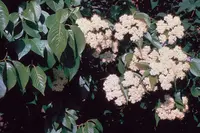
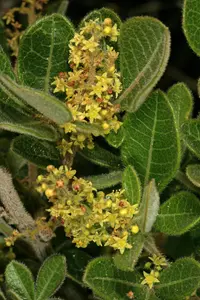
Nannyberry, Viburnum lentago, is a deciduous shrub or small tree known for its dense branching, white spring flowers, and clusters of blue-black berries. It often develops an upright, spreading form that works well in hedges, screens, or naturalized plantings.
This species is native to eastern North America, where it commonly grows along woodland edges, stream banks, and open thickets. It adapts to many garden soils and tolerates urban conditions, which makes it straightforward to care for nannyberry.
Nannyberry prefers sun to light shade and evenly moist, well-drained soil, but it also copes with brief dry or wet spells once established.

Care Difficulty
Easy Care

Light Preference
Full Sun

Water Requirements
Moderate Water

Temperature Preference
Cold Hardy

Hardiness Zone
2–8

Soil Texture
Loamy, Clay, Organic-rich

Soil pH
Acidic (5.5–6.5), Slightly acidic (6.5–7.0)

Soil Drainage
Moist but well-drained

Fertilization
Minimal (feed rarely)
Scan your plant to receive care tips personalized for your specific plant
Available on iOS and Android
Viburnum lentago grows best in sites with long daily light exposure and some protection from harsh afternoon sun.
Viburnum lentago prefers consistently moist, well-drained soil rather than extremes of drought or saturation.
This cold-hardy shrub tolerates a wide temperature range but grows best in moderate seasonal conditions.
Humidity is rarely a limiting factor for Viburnum lentago in typical outdoor conditions.
Viburnum lentago prefers deep, moist, well-drained loam with moderate organic matter for stable growth.
This species can be grown in large outdoor containers, but only with careful attention to stability and root space.
Viburnum lentago is not a heavy feeder but responds well to modest nutrition on poor soils.
Viburnum lentago benefits from light, well-timed pruning to maintain structure and flowering.
Nannyberry is usually grown in the ground, so focus on careful transplanting rather than frequent repotting.
Viburnum lentago can be propagated by cuttings, layering, or seeds, though seeds are slow to mature.
This species is cold hardy in much of North America and usually needs minimal winter care in the ground.

Plant Health Check
Not sure what's wrong with your plant? Check your plant's health inside the app.
Nannyberry is native to eastern and central North America, occurring from Manitoba and Saskatchewan across the Great Lakes region to the northeastern and midwestern United States, where it typically grows along woodland edges, stream banks, and thickets.
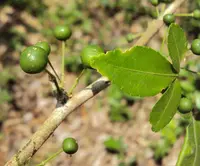
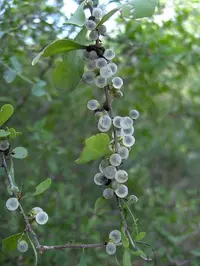
The shrub provides both nectar for early pollinators via its flat-topped clusters of small white flowers and a food source for birds and mammals through its late-ripening, blue-black drupes that often persist into winter.
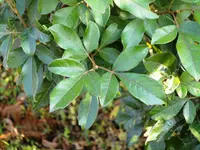
Its leaves are attached by slender petioles with noticeable wing-like extensions, a trait that helps distinguish it from several other viburnum species with otherwise similar foliage.

The common name nannyberry likely arose because the sweet, raisin-like ripe fruits were considered safe and palatable enough to be eaten by children under the watch of a nanny, and the shrub was sometimes planted near homesteads for this dependable, late-season fruit.
Lack of flowering often comes from too much shade, heavy nitrogen fertilization, or pruning at the wrong time, which removes flower buds. Age also matters, since young shrubs may need several years to begin reliable blooming.
Keep your plants happy and healthy with plant identification, disease detection, and easy care guidance.