Northern California walnut Care (Juglans hindsii)

Also known as: northern California black walnut, Hinds's black walnut, California black walnut
Northern California walnut

About Northern California walnut

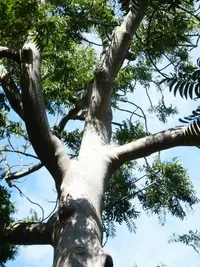
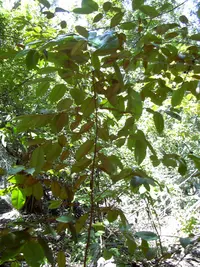
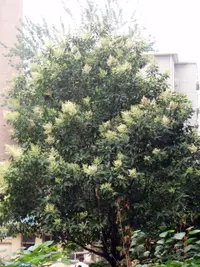
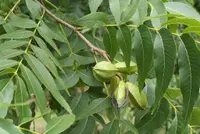
Northern California walnut, Juglans hindsii, is a fast-growing deciduous tree valued for its strong wood and shade. It develops a broad, rounded crown with large, divided leaves that create a dense canopy in the growing season.

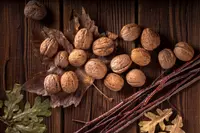
This species is native to riparian areas of California and southwestern Oregon, where it grows along rivers, streams, and valley bottoms. It produces edible nuts with thick shells, though nut quality is usually considered secondary to its use as rootstock and timber.

It is generally robust but needs space, deep soil, and suitable climate conditions, which can limit how to care for Northern California walnut in smaller gardens. It prefers full sun, moderate moisture, and well-drained soils.

Main Plant Requirements

Care Difficulty

Moderate Care

Light Preference

Full Sun

Water Requirements

Moderate Water

Temperature Preference

Cool Climate

Hardiness Zone

7–9

Soil Texture

Sandy, Loamy, Clay

Soil pH

Slightly acidic (6.5–7.0), Neutral (7.0)

Soil Drainage

Moist but well-drained

Fertilization

Minimal (feed rarely)

Get Personalized Care Plan

Scan your plant to receive care tips personalized for your specific plant

Available on iOS and Android

How to Care for the Northern California walnut

Juglans hindsii develops best as a full-sun, outdoor tree with long daily light exposure.

  • Provide 6–8 hours of direct sun daily; it tolerates light afternoon shade in hotter inland areas.
  • Young trees benefit from morning sun with some protection from intense midafternoon summer sun to reduce leaf scorch risk.
  • Northern California walnut in partial shade (less than 4–5 hours direct sun) shows slower growth, thinner canopies, and reduced nut production over time.

Juglans hindsii prefers deep, infrequent watering that keeps soil moist but never waterlogged.

  • In well-drained soil, water when the top 5–8 cm feels dry, allowing a slow soak that reaches 30–45 cm deep around the root zone.
  • Increase watering frequency in hot, dry summers; reduce in cool, rainy seasons, relying more on natural rainfall when soil stays slightly moist.
  • Overwatering shows as yellowing leaves and dieback on young shoots, while underwatering causes early leaf drop, small nuts, and wilted midday foliage.

This species is a hardy, outdoor walnut that tolerates a wide temperature range once established.

  • Active growth is strongest at 65–85°F (18–29°C), with good performance in most temperate orchard climates.
  • Mature trees commonly tolerate winter lows near 10°F (-12°C); young trees benefit from protection from sudden hard frosts below 20°F (-7°C).
  • During summer heat above 95°F (35°C), maintain soil moisture and a mulch layer to reduce heat stress, leaf burn, and premature leaf drop.

This species tolerates a wide humidity range and does not require special air moisture management outdoors.

This walnut prefers deep, fertile, well-structured soil that holds moisture yet drains freely.

  • Use a loamy soil with high organic matter, such as a mix of native loam, compost, and coarse sand for structure.
  • Aim for slightly acidic to neutral pH around 6.0–7.5 to support nutrient availability and root health in Juglans hindsii.
  • Ensure excess water can move away by avoiding compacted or heavy clay; incorporate coarse sand or fine gravel to improve drainage.
  • Avoid waterlogged, shallow, or highly alkaline sites, which restrict root growth and encourage root rot and nutrient imbalances.

This tree is generally unsuitable for long-term container growing due to its vigorous root system and eventual size.

Juglans hindsii benefits from modest, targeted feeding on poorer soils but often needs no fertilizer on deep, fertile ground.

  • Use a balanced granular fertilizer (such as 10-10-10) or well-rotted compost in early spring as new growth begins.
  • Apply a light surface dressing once per year during the growing season; avoid overfeeding, which reduces wood hardness.
  • Reduce or skip feeding in late fall and winter, when the tree is dormant and uptake is low.
  • On young trees, use fertilizer at half the label rate and water in well to limit root burn.

Juglans hindsii responds well to thoughtful structural pruning that improves strength and light penetration.

  • Schedule main pruning in late winter while the tree is dormant, before buds swell.
  • Remove dead, diseased, crossing, or storm-damaged branches first to maintain a clear, healthy framework.
  • Thin crowded interior branches to improve airflow and light, which supports nut production and reduces disease pressure.
  • Use clean, sharp bypass pruners or a pruning saw, making smooth cuts just outside the branch collar.

Northern California walnut is usually field-grown and is better suited to timely transplanting than long-term container culture.

  • Transplant dormant young trees in late winter to early spring, before bud break, for the least root stress.
  • Look for circling roots, stunting, or frequent wilting in nursery containers as cues the tree is ready to move into the ground.
  • Prepare a wide, loosened planting area; set the root flare at soil level and backfill with native soil rather than rich potting mix.
  • Water deeply after planting, then keep soil evenly moist for the first growing season to help new roots establish.

Juglans hindsii is most commonly propagated from seed, with grafting used in commercial or specialized production.

  • Collect nuts in fall from healthy parent trees and remove husks promptly to reduce mold.
  • Cold-stratify seeds at 34–41°F in moist medium for 60–90 days to break dormancy and improve germination.
  • Sow stratified seeds in deep containers or outdoor seedbeds with well-drained soil, placing nuts 5–8 cm deep.
  • Keep the medium evenly moist and protect seedlings from rodents and heavy weed competition during the first 1–2 years.

Mature Juglans hindsii trees are generally cold hardy in their suitable climate range and need minimal winter attention.

  • In colder sites, add 5–8 cm of organic mulch over the root zone, keeping it a few cm away from the trunk.
  • Young or recently transplanted trees benefit from burlap windbreaks to limit desiccation and bark injury.
  • Container-grown specimens, if used, should be moved into an unheated but frost-free garage or shed for the coldest months.

Care Tips

Plan Root Space

Allow at least a 9–12 m radius of unobstructed ground around the tree to prevent root damage to paving, pipes, and foundations as it matures.

Manage Juglone Zone

Keep vegetable beds and sensitive ornamentals such as tomatoes, azaleas, and apples outside the canopy drip line to avoid growth suppression from juglone, the natural chemical produced by the roots and leaves.

Optimize Scaffold Branches

In the first 3–5 years, select 3–5 well-spaced scaffold branches spiraling around the trunk at 30–60 cm vertical intervals to create a strong framework for future nut production and wind resistance.

Mulch for Trunk Health

Maintain a 5–10 cm deep organic mulch ring that extends beyond the drip line, but keep it 10–15 cm away from the trunk to reduce mower damage, moderate soil temperature, and conserve moisture.

Monitor Nut and Leaf Litter

Rake and remove fallen nuts, husks, and heavily spotted leaves in late summer and fall to reduce overwintering pests and diseases, which is a key part of caring for Northern California walnut in home landscapes.

Common Pests and Diseases

walnut husk fly

This pest lays eggs in the walnut husk, and larvae feed inside, causing black, mushy husks and stained shells. Symptoms include premature nut drop and reduced nut quality.

Solution

Monitor from early summer with yellow sticky traps and remove and destroy infested nuts from the ground to break the life cycle. In orchard or large landscape settings, use baited traps and, if pressure is high, apply timed protein bait or spinosad sprays according to local extension guidelines for Juglans hindsii care.

walnut aphids

These insects cluster on the undersides of leaves and suck sap, leading to curled, yellowing foliage and sticky honeydew that promotes sooty mold. Heavy infestations can reduce tree vigor and nut fill.

Solution

Encourage natural predators such as lady beetles by avoiding broad-spectrum insecticides and, on young or smaller trees, wash colonies off with a strong stream of water. For persistent problems, use horticultural oil or insecticidal soap directed at leaf undersides during cooler parts of the day.

walnut blight

This disease, caused by the bacterium Xanthomonas arboricola pv. juglandis, produces black, sunken spots on young shoots, leaves, catkins, and nuts. Symptoms include shriveled kernels and heavy crop loss in wet springs.

Solution

Prune to open the canopy for better airflow, remove and destroy infected twigs and mummified nuts, and avoid overhead irrigation that wets new growth. In regions with a history of severe blight, coordinate timing of copper-based sprays to budbreak and early nut development following local extension service recommendations.

Thousand cankers disease

This disease results from Geosmithia fungi spread by the walnut twig beetle, forming many small cankers under the bark that eventually girdle branches and trunks. Symptoms include progressive branch dieback, yellowing foliage, and tree decline over several years.

Solution

Avoid moving firewood or untreated wood from affected areas and promptly remove and destroy severely infested trees to limit beetle spread. Maintain tree vigor with proper watering and reduced stress, and consult local forestry or extension specialists if symptoms appear, as there is no curative treatment once cankers are widespread.

crown gall

This disease, caused by the soil bacterium Agrobacterium tumefaciens, produces rough, woody galls at the crown, root collar, or on lower stems. Symptoms include reduced vigor, smaller leaves, and increased susceptibility to drought and other stresses.

Solution

Plant in well-drained soil, avoid wounding roots and trunks during planting or cultivation, and discard any nursery stock that shows galls before planting. For existing trees, carefully remove small, accessible galls without ring-barking the trunk and focus on reducing stress with proper irrigation and mulching, as the bacterium cannot be fully eradicated from infected plants.

Interesting Facts

Endemic California walnut

This species is native to a limited area in northern and central California, mainly along river valleys and stream banks, where it forms part of the native riparian woodland community.

Important rootstock parent

It has been widely used in breeding programs as a parent of Paradox rootstocks, which combine this species with the English walnut to produce vigorous, disease-tolerant trees for commercial orchards.

Threatened by hybridization

Pure wild populations are now uncommon because the species readily hybridizes with cultivated walnuts, making it difficult to find genetically intact stands in its natural range.

Botan icon

Did you know?

Northern California walnut wood has been selectively harvested for high-quality gunstocks, fine furniture, and veneer, and is valued for its dark color and distinctive grain that differ from both English walnut and eastern black walnut.

FAQs about Northern California walnut

This species is generally fast-growing when young, often adding 30–60 cm of height per year in good conditions. Growth slows as the canopy fills out and roots occupy the planting space.

Grow Healthy Plants with Botan Care

Keep your plants happy and healthy with plant identification, disease detection, and easy care guidance.

Botan plant care app — identify plants on mobile

Explore More Plants