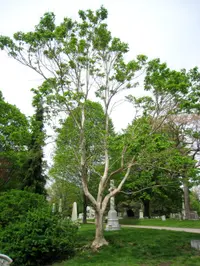
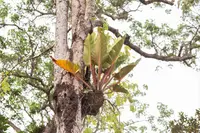
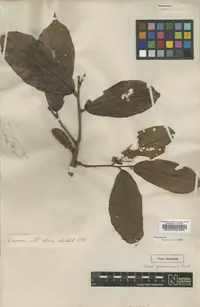
Early structural training
Select and maintain a single strong leader trunk in the first 2–3 years, removing competing uprights while they are still small to create a stable, wind-resistant framework.

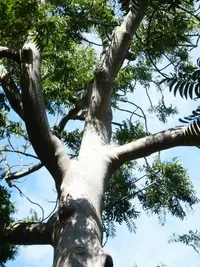
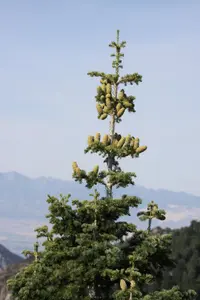
Ferntop ash (Ailanthus triphysa) is a fast-growing deciduous to semi-evergreen tree native to South and Southeast Asia and parts of northern Australia. It is typically tall and slender with smooth gray bark and long, feather-like leaves that give a light, airy look. In suitable climates it grows quickly and can become a medium to large tree, so it is better suited to spacious gardens or landscape use than to small containers. This species is generally tolerant of heat, seasonal drought, and poorer soils, which can make it relatively easy to establish where it is hardy. Those learning how to care for Ferntop Ash should note that it prefers full sun and well-drained soil for best growth.

Care Difficulty
Moderate Care

Light Preference
Full Sun

Water Requirements
Moderate Water

Temperature Preference
Tropical / Frost Sensitive

Hardiness Zone
10–12

Soil Texture
Sandy, Loamy

Soil pH
Slightly acidic (6.5–7.0), Neutral (7.0)

Soil Drainage
Well-drained

Fertilization
Minimal (feed rarely)
Scan your plant to receive care tips personalized for your specific plant
Available on iOS and Android
Ailanthus triphysa grows best in bright, open conditions with strong direct sun.
This species prefers deep but infrequent watering once established, especially in open ground.
This fast-growing tree favors warm to hot climates and is not reliable in areas with hard frost.
This species tolerates a wide humidity range, so humidity management is usually low priority.
This tree adapts to many soils but performs best in well-structured, freely draining ground or mixes.
This species is suitable for short- to medium-term container growing, mainly for young plants or controlled-size specimens.
Ailanthus triphysa grows fast and usually needs only modest feeding in soil that is not severely depleted.
Pruning Ailanthus triphysa focuses on safety, structure, and limiting unwanted spread.
This fast-growing tree is usually transplanted from nursery containers to the ground while still small.
Ailanthus triphysa is commonly propagated by seed and also from vigorous root or stem material in managed settings.
In warm and mild climates, Ailanthus triphysa generally needs minimal winter care once established.

Plant Health Check
Not sure what's wrong with your plant? Check your plant's health inside the app.
This species has long fibers and low lignin content in its wood, which has led to its use in parts of South and Southeast Asia as a raw material for high-quality paper and matchsticks.
The tree naturally occurs in dry evergreen and semi-evergreen forests of India and Sri Lanka, where it behaves as a pioneer species that can colonize open, disturbed sites and help initiate forest regeneration.
Its bark and wood contain aromatic resins and essential oils rich in terpenoids, and the tree has been investigated as a source of oleoresins for industrial applications such as varnishes and surface coatings.

The specific epithet triphysa refers to the typically three-chambered (three-celled) ovary and fruit structure of this species, a feature that helps distinguish it from some related trees in the mahogany order Sapindales.
This species performs best outdoors in warm, frost-free climates where it has space for its deep roots and tall canopy. Indoor cultivation is possible only when young and temporary, as the tree quickly outgrows containers and indoor ceilings.
Keep your plants happy and healthy with plant identification, disease detection, and easy care guidance.