vilevine Care (Philodendron hederaceum var. hederaceum)

Also known as: Velvet Leaf Philodendron, Micans, Imbe
vilevine

About vilevine

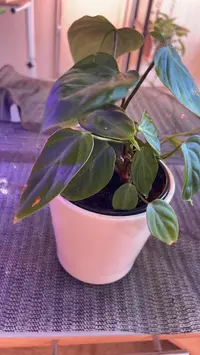
Vilevine, Philodendron hederaceum var. hederaceum, is a tropical climbing aroid commonly grown as a houseplant for its trailing stems and heart-shaped leaves. The foliage is typically medium to dark green with a smooth, glossy surface.

In nature it occurs in Central and South American forests, where it climbs tree trunks in warm, shaded, and humid conditions. Its flexible vines adapt well to hanging baskets, shelves, or moss poles indoors.

This plant is considered relatively forgiving, which makes it easier to care for vilevine than many other tropical species. It generally prefers bright, indirect light, lightly moist but not waterlogged soil, and stable indoor temperatures without strong drafts.

Main Plant Requirements

Care Difficulty

Easy Care

Light Preference

Bright Indirect Light

Water Requirements

Moderate Water

Temperature Preference

Tropical / Frost Sensitive

Hardiness Zone

11–12

Soil Texture

Loamy, Peaty, Organic-rich

Soil pH

Acidic (5.5–6.5), Slightly acidic (6.5–7.0)

Soil Drainage

Moist but well-drained

Fertilization

Light (every 4–6 weeks)

Get Personalized Care Plan

Scan your plant to receive care tips personalized for your specific plant

Available on iOS and Android

How to Care for the vilevine

Philodendron hederaceum var. hederaceum prefers bright, indirect light with some tolerance for shade.

  • Aim for 6–8 hours of bright, filtered light each day, such as near an east- or north-facing window, or under light tree canopy outdoors.
  • Tolerates partial shade but very low light leads to long, sparse vines and small leaves; move vilevine closer to a bright window or brighter spot if growth weakens.
  • Avoid harsh midday or afternoon sun, which can cause yellow, scorched patches; in summer, shift plants slightly back from windows or provide sheer curtains.

Philodendron hederaceum var. hederaceum prefers evenly moist but not saturated soil.

  • Water when the top 2–4 cm of soil feels dry, using enough water to moisten the whole root zone, then let excess drain away fully.
  • In spring and summer, expect more frequent watering as growth and evaporation increase; in fall and winter, extend the interval as growth slows.
  • Watch for early signs: drooping, dull leaves and dry potting mix suggest underwatering, while yellowing leaves, mushy stems, or a sour smell indicate overwatering and poor drainage.

This species grows best in stable, warm conditions without strong temperature swings.

  • Provide an ideal range of 65–80°F (18–27°C) for steady growth, with slightly cooler nights but not below the safe minimum.
  • Avoid temperatures below 55°F (13°C); brief drops near this level can stunt growth, while exposure to frost will kill foliage and may damage roots.
  • In hot periods above 86°F (30°C), increase air movement and shade to limit heat stress, and protect plants from hot drafts or heat sources year-round.

This species prefers moderate to high humidity but stays fairly adaptable in most homes.

  • Aim for 50–70% humidity for best foliage density and minimal leaf browning when caring for vilevine.
  • Tolerates short periods around 35–40%, but prolonged dry air can cause crispy tips and yellowed edges.
  • Increase humidity with a nearby humidifier, grouped plants, or a pebble tray rather than frequent misting to avoid leaf spotting.

This plant prefers a loose, airy, organic-rich mix that drains quickly yet holds some moisture.

  • Use a peat- or coco coir-based mix with added perlite and fine orchid bark to create a chunky, well-structured substrate.
  • Ensure fast drainage; water should flow out within seconds, leaving the mix moist but never waterlogged or compacted.
  • Target a slightly acidic pH around 5.5–6.5, which supports nutrient availability for Philodendron hederaceum var. hederaceum.
  • Avoid dense garden soil, heavy clay, or pure compost, which restrict air around roots and raise the risk of rot.

This species is very suitable for container growing, both on its own and in mixed displays.

  • Choose a pot only 2–4 cm wider than the root ball to maintain even moisture without leaving the mix wet for long periods.
  • Use a stable, heavier container or cachepot if training vines upward, as climbing supports can make the plant top-heavy.
  • Select terracotta when extra evaporation is helpful in humid homes, and plastic when slower drying is needed in drier rooms.

Philodendron hederaceum var. hederaceum benefits from light, consistent feeding during active growth, which supports steady foliage production in vilevine indoor care.

  • Use a balanced liquid fertilizer (e.g., 10-10-10 or 20-20-20) diluted to 1/4–1/2 strength for container plants.
  • Feed every 4–6 weeks in spring and summer when growth is active, after watering the plant lightly first.
  • Apply slow-release granules sparingly at the start of spring if preferred, following label rates for indoor foliage plants.
  • Reduce or stop fertilizing in fall and winter when growth slows, to avoid salt buildup and weak, leggy shoots.

Philodendron hederaceum var. hederaceum responds well to periodic pruning that maintains a compact, leafy form.

  • Carry out most pruning in spring or early summer, when the plant is actively growing and recovers fastest.
  • Remove yellow, dead, or damaged leaves and stems back to a healthy node to limit disease and tidy the plant.
  • Shorten overly long or bare vines just above a node to encourage branching and denser foliage along the stems.
  • Use clean, sharp scissors or pruning shears, disinfected with alcohol between plants, to make smooth, angled cuts.

This species adapts well to containers and usually needs repotting only when roots fill the pot.

  • Check for roots circling the root ball, emerging from drainage holes, or noticeably slowed growth as cues to repot.
  • Plan to move to a slightly larger pot every 2–3 years, ideally in spring when new growth begins.
  • Choose a pot 2–5 cm wider with good drainage and use a loose, airy mix designed for aroids or indoor foliage plants.
  • Gently loosen circling roots, keep the crown at the same depth, water thoroughly after repotting, and keep in bright, stable conditions for 1–2 weeks to limit stress.

This plant is commonly propagated from stem cuttings, which root reliably under warm, humid conditions.

  • Take 1–2 node stem cuttings in spring or early summer, each with at least 1 healthy leaf and visible node.
  • Root cuttings in water or a moist, well-drained mix, keeping temperatures around 70–80°F and humidity above 50–60%.
  • Place cuttings in bright, indirect light and keep the rooting medium just barely moist to avoid rot.
  • Pot rooted cuttings individually once new growth appears, then resume normal watering and light feeding after 2–3 weeks.

This tropical vine is frost-sensitive and needs warm, stable indoor conditions in winter in most climates.

  • Keep plants above 60°F, ideally 65–75°F, avoiding cold drafts from windows, doors, or vents.
  • Move outdoor containers indoors before night temperatures drop below 55°F, placing them in bright, indirect light.
  • Reduce watering in winter, allowing the top layer of mix to dry slightly more to match slower growth.
  • Avoid cold, wet soil and do not place pots directly on uninsulated concrete; use a stand or tray to limit root chill.

Care Tips

Encourage Compact Growth

Pinch back overly long vines just above a node and use the tip cuttings as propagations to keep the plant dense while renewing growth from lower nodes.

Upgrade Support Gradually

When vines reach 30–40 cm, introduce a moss pole or trellis and loosely tie stems with soft ties, then move them to taller supports over time to reduce breakage and stress on older stems.

Rotate for Even Coverage

Rotate the pot 90° every 2–3 weeks so leaves and internodes develop evenly, preventing a lopsided plant with sparse growth on the shaded side.

Monitor Aerial Roots

Tuck aerial roots gently into the support or potting mix instead of cutting them off, which helps the plant anchor and access extra moisture without becoming tangled or unsightly.

Quarantine and Inspect

When bringing in new houseplants, keep them in a separate room for 10–14 days and inspect leaves, petioles, and stem joints with a magnifier to reduce pest transfer, which is especially useful when growing vilevine in collections with many aroids.

Common Pests and Diseases

Spider mites

This pest thrives in warm, dry indoor air and feeds on leaf sap, causing stippled, dull foliage and fine webbing on vines and leaf undersides.

Solution

Rinse vines and leaf undersides thoroughly in the shower or with a sink sprayer, then wipe with a damp cloth; repeat weekly until clear. Increase humidity, isolate the plant, and use an insecticidal soap or a ready-to-use neem oil spray labeled for houseplants, ensuring full coverage of both sides of leaves.

Mealybugs

These insects appear as white, cottony clusters in leaf nodes, along stems, and sometimes on roots, leading to sticky honeydew and gradual leaf yellowing or distortion.

Solution

Isolate the plant, then dab visible clusters with cotton swabs dipped in 70% isopropyl alcohol and wipe stems and nodes thoroughly. Follow up with 2–3 treatments of insecticidal soap or neem oil at 7–10 day intervals, and inspect new vines regularly when caring for vilevine indoors.

Scale insects

This pest forms small, tan to brown bumps along stems and leaf midribs, drawing sap and causing slow decline, yellowing, and reduced new growth.

Solution

Gently scrape or peel off larger scales with a fingernail or soft tool, then wipe stems with a cloth lightly moistened with 70% isopropyl alcohol. Apply insecticidal soap or horticultural oil, ensuring stems and leaf veins are well coated, and repeat every 7–10 days until no new scales appear.

Bacterial leaf spot

This disease causes water-soaked, translucent patches that turn dark brown with yellow halos, often starting on older leaves in dense or poorly ventilated foliage.

Solution

Remove and discard affected leaves, sterilizing scissors between cuts with 70% isopropyl alcohol, and avoid getting water on the foliage. Improve air circulation, reduce crowding, water at the soil line, and allow the top layer of potting mix to dry slightly between waterings to limit spread.

Erwinia stem and leaf blight

This disease leads to rapid soft, mushy lesions on petioles and stems, foul odor, and sudden collapse of leaves and entire vines, especially in very wet and warm conditions.

Solution

Immediately cut away all soft, affected tissue well into healthy areas and discard in trash, disinfecting tools between each cut. Reduce watering, increase airflow, avoid overhead misting, and in severe cases discard the entire plant and potting mix to prevent bacteria spreading to other aroids.

Interesting Facts

Hemiepiphytic growth habit

In its native lowland rainforests, this species often starts life on the forest floor and then climbs tree trunks as a hemiepiphyte, meaning it spends part of its life rooted in soil and part attached to other plants.

Shingle-like juvenile leaves

Young climbing shoots can press their small heart-shaped leaves closely against tree bark, forming a partial shingle pattern that maximizes light capture on vertical surfaces.

Shade-tolerant understory climber

In the wild it naturally inhabits the shaded understory of Central and South American forests, where it has evolved to photosynthesize efficiently under low, filtered light conditions.

Botan icon

Did you know?

In mature plants growing high in the canopy in nature, the leaves can become significantly larger and more elongated than typical houseplant forms, showing a distinct change in shape as the plant transitions from juvenile to adult growth stages.

FAQs about vilevine

Yellowing leaves usually come from overwatering, poor drainage, or old age of the lowest leaves. Check that the pot drains well, let the top soil layer dry slightly between waterings, and remove naturally aging leaves.

Grow Healthy Plants with Botan Care

Keep your plants happy and healthy with plant identification, disease detection, and easy care guidance.


Botan plant care app — identify plants on mobile

Explore More Plants