


Rotate for symmetry
Turn the pot 90° every 1–2 weeks so the plant receives even light on all sides, which keeps the rosette compact and prevents one-sided, leggy growth.

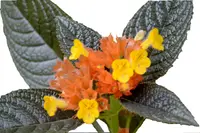
Chrysothemis pulchella, commonly called squarestem, is a compact tropical perennial from Central and South America, often grown as a foliage and flowering houseplant. It typically forms low mounds with thick, softly hairy leaves and bright orange-yellow tube-shaped flowers accented by colorful bracts.
In nature it grows in warm, humid, partially shaded forest edges and clearings. These conditions explain its preference for stable warmth, indirect light, and evenly moist but not waterlogged soil.
Because it grows quickly and responds clearly to stress, many indoor growers find it fairly manageable once they understand how to care for squarestem.

Care Difficulty
Moderate Care

Light Preference
Partial Shade

Water Requirements
Keep Soil Moist

Temperature Preference
Tropical / Frost Sensitive

Hardiness Zone
11–12

Soil Texture
Loamy, Organic-rich

Soil pH
Acidic (5.5–6.5), Slightly acidic (6.5–7.0)

Soil Drainage
Moist but well-drained

Fertilization
Light (every 4–6 weeks)
Scan your plant to receive care tips personalized for your specific plant
Available on iOS and Android
This tropical understory plant prefers bright, indirect light and shelter from harsh sun.
This species prefers evenly moist, not soggy, soil and reacts quickly to extremes in watering.
This plant grows best in warm, stable temperatures with protection from cold and drafts.
This species prefers warm, moderately humid air and reacts quickly to dry indoor conditions.
This plant prefers a loose, airy, organic-rich medium that drains quickly but does not dry out instantly.
This species is well suited to containers, especially in warm, bright, sheltered locations.
Chrysothemis pulchella responds well to modest feeding during active growth, especially in containers.
Pruning helps keep Chrysothemis pulchella compact and encourages more branching and flowering.
Container-grown plants benefit from periodic repotting to refresh the root zone and support vigorous growth.
This species is commonly propagated from stem cuttings and by dividing tuberous roots.
This tropical species is frost sensitive and needs protection in regions with cool or freezing winters.

Plant Health Check
Not sure what's wrong with your plant? Check your plant's health inside the app.
This species produces bright orange-yellow tubular flowers that are partly enclosed by inflated reddish-brown calyces, a color contrast that enhances visibility to pollinators in its native understory habitats.
It forms fleshy underground tubers that store water and carbohydrates, allowing the plant to die back and resprout under fluctuating tropical moisture conditions.
Flowering is strongly influenced by day length, with many plants blooming more reliably under shorter days and stable warm temperatures, a pattern typical of equatorial understory herbs.

In some of its native range in northern South America and the Caribbean, this species often grows on shaded, rocky banks and moist walls, showing an unusual ability among ornamentals to anchor itself in thin, humus-filled crevices rather than deep soil.
Lack of flowering often comes from insufficient light, depleted nutrients, or the plant being out of its warm season. Check for old, woody stems, repot if rootbound, and provide balanced fertilizer during active growth for reliable blooms.
Keep your plants happy and healthy with plant identification, disease detection, and easy care guidance.

Narrowleaf blue-eyed grass
Sisyrinchium angustifolium
Mountain Manna
Begonia obliqua
Hurricane Cactus
Lepismium cruciforme
 POPULAR
Window-Leaf Monstera
Monstera obliqua
Bush Lily
Clivia nobilis
Chapman's butterwort
Pinguicula planifolia
Traveller's palm
Ravenala madagascariensis
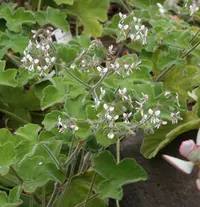
Peppermint-scented geranium
Pelargonium tomentosum