Stoep Jacaranda Care (Plectranthus saccatus)

Stoep Jacaranda

About Stoep Jacaranda

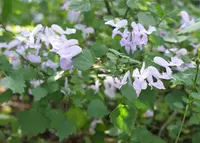
Stoep jacaranda, Plectranthus saccatus, is a soft, fast-growing ornamental shrub grown mainly for its showy flowers and aromatic foliage. It is not a true jacaranda, but the abundant, tubular lavender to violet blooms give a similar light, airy effect. Native to moist, shaded habitats in South Africa, it often forms low mounds or loose, cascading clumps that suit containers, hanging baskets, and sheltered patios. The plant is generally easy to manage, with a forgiving nature and quick recovery from pruning or minor stress. It prefers bright, indirect light, mild temperatures, and evenly moist but well-drained soil, which makes it straightforward to care for Stoep Jacaranda in many home gardens.

Main Plant Requirements

Care Difficulty

Easy Care

Light Preference

Partial Shade

Water Requirements

Moderate Water

Temperature Preference

Tropical / Frost Sensitive

Hardiness Zone

10–11

Soil Texture

Loamy, Sandy, Organic-rich

Soil pH

Acidic (5.5–6.5), Slightly acidic (6.5–7.0)

Soil Drainage

Moist but well-drained

Fertilization

Light (every 4–6 weeks)

Get Personalized Care Plan

Scan your plant to receive care tips personalized for your specific plant

Available on iOS and Android

How to Care for the Stoep Jacaranda

Plectranthus saccatus prefers bright, soft light that mimics dappled woodland conditions.

  • Provide 3–5 hours of gentle morning sun with bright, filtered light for the rest of the day; avoid harsh midday and late-afternoon sun, especially in hot summers.
  • Plant in partial shade outdoors, such as an east-facing border or under light tree canopy; Stoep Jacaranda foliage may scorch in exposed south- or west-facing sites.
  • In winter, ensure it still receives bright light to prevent leggy, weak growth; move container plants closer to bright windows or open shade edges if stems stretch.

Plectranthus saccatus prefers evenly moist, well-drained soil that never stays waterlogged.

  • Water when the top 2–3 cm of soil feels dry, using enough to moisten the root zone, then let excess drain away fully to protect roots from rot.
  • Increase watering during active spring–summer growth and hot spells, monitoring for limp, drooping leaves as an indicator of drought stress.
  • Reduce frequency in cooler months so the soil surface dries a little deeper, and watch for yellowing, mushy stems as a sign of overwatering in heavy or compacted soils.

This shrub-like Plectranthus grows best in mild, frost-free conditions with stable temperatures.

  • Aim for 65–80°F (18–27°C) for active growth; plants generally slow above 85°F (29°C) and benefit from shade and consistent soil moisture in hotter periods.
  • Protect from cold; growth stops near 45°F (7°C), and frost at 32°F (0°C) or below can kill top growth or the entire plant if prolonged.
  • In regions with cool winters, treat it as a tender perennial, lifting container plants or cuttings before frost and overwintering them in a sheltered, above-freezing environment.

This species handles typical indoor humidity but benefits from slightly moist air.

  • Aim for 40–60% humidity to keep leaves plump and reduce edge browning.
  • Tolerates short dry-air periods, but watch for curling, crispy tips, and stalled growth as humidity stress signs.
  • Increase humidity for Stoep Jacaranda by grouping plants, placing trays with damp pebbles nearby, or running a small room humidifier.

This plant prefers a light, airy mix that drains quickly but holds some moisture.

  • Use a peat- or coco-coir-based potting mix amended with 20–30% perlite for structure and drainage.
  • Incorporate a small amount of compost or leaf mold to add organic matter and support root health in Plectranthus saccatus.
  • Keep pH slightly acidic to neutral, around 6.0–7.0, avoiding strongly alkaline mixes that can limit nutrient uptake.
  • Avoid heavy clay, compacted media, or mixes that stay wet for more than 2–3 days to reduce root rot risk.

This species suits container growing and responds well to confined root space.

  • Choose a wide, shallow pot to accommodate its spreading root system without encouraging waterlogged lower layers.
  • Select terracotta or other porous materials if growth conditions are humid, to prevent excess moisture from lingering around roots.
  • Place the container where trailing stems can hang freely, preventing dense matting that traps moisture around the crown.

This plant responds well to light, consistent feeding during its active growing season.

  • Use a balanced liquid fertilizer (for example 10-10-10 or 20-20-20) diluted to 1/4–1/2 strength for caring for Stoep Jacaranda.
  • Feed every 3–4 weeks in spring and summer when growth is strongest.
  • Stop or reduce feeding to once in 6–8 weeks in fall and winter, especially in low light.
  • Compost or a slow-release granular fertilizer in spring can replace some liquid feedings in containers or garden beds.

Plectranthus saccatus benefits from light, routine pruning to keep it compact and flowering well.

  • Pinch or trim shoot tips in early spring to encourage branching and a bushier form.
  • Remove dead, damaged, or weak stems with clean, sharp scissors or hand pruners whenever noticed.
  • Thin out crowded interior stems to improve air movement and reduce disease risk.
  • After main flowering, lightly shorten leggy stems to maintain shape and stimulate fresh growth.

This species adapts well to containers but benefits from occasional repotting or transplanting to refresh roots and soil.

  • Look for roots circling the pot, pushing from drainage holes, or a sudden slowdown in growth as signs it needs more space.
  • Plan to move it to a slightly larger container or fresh bed every 1–2 years, ideally in spring.
  • Gently loosen the root ball, trim damaged roots, and replant at the same depth in a free-draining mix.
  • Water thoroughly after moving, then keep in bright, indirect light for 3–7 days to reduce transplant shock.

This plant is commonly multiplied from softwood cuttings, which root quickly under warm, humid conditions.

  • In late spring to summer, take 7–10 cm non-flowering stem cuttings with at least 2–3 nodes.
  • Strip lower leaves, optionally dip the cut base in rooting hormone, and place in moist, well-drained medium.
  • Keep cuttings in bright, indirect light at 68–75°F with high humidity until roots develop.
  • Once rooted and new growth appears, pot individually into a light potting mix and acclimate to normal conditions.

This species is frost-tender and needs protection in regions with cold winters.

  • Move container plants indoors before temperatures drop below 40°F, placing them in bright, indirect light.
  • In mild climates, use a 5–8 cm mulch layer around outdoor roots to buffer short cold spells.
  • Reduce watering in winter, keeping soil slightly moist but not waterlogged to avoid root problems.

Care Tips

Timed pinch pruning

Pinch out the soft shoot tips every 3–4 weeks in spring and summer to keep plants compact, encourage denser branching, and delay premature woodiness in the stems.

Refresh leggy plants

If stems become woody and sparse, cut back by 1/2–2/3 in late winter, then pot up a few of the healthiest tip cuttings to plant back into the same container for a fuller, rejuvenated clump.

Strategic container choice

Use a wide, shallow pot rather than a deep one, as the relatively shallow root system spreads horizontally and will fill the surface area faster, giving a denser, cascading effect over the rim.

Light grooming of flowers

Regularly remove spent flower spikes before seeds set so the plant redirects energy into new foliage and flowering, which helps maintain a longer, more continuous bloom season when growing Stoep Jacaranda.

Prevent stem breakage

In windy outdoor spots, position the container against a wall or low railing and gently fan stems outward over the edge so flexible growth can trail naturally without kinking or snapping at the base.

Common Pests and Diseases

Aphids

These insects cluster on tender shoot tips and flower spikes, sucking sap and causing curling, distortion, and sticky honeydew on leaves and stems.

Solution

Rinse shoots thoroughly with a strong but controlled stream of water, then spot-treat remaining colonies with insecticidal soap or a diluted neem oil spray, repeating weekly until populations drop. Improving air movement and avoiding excess nitrogen fertilizer reduces soft, aphid-prone growth and helps long-term management of Plectranthus saccatus plant care issues.

Spider mites

These pests thrive in warm, dry conditions, causing fine stippling, dulling of the foliage, and very fine webbing between leaves and stems.

Solution

Increase humidity around the plant, then hose or shower the foliage to remove mites and webbing, making sure to reach leaf undersides. Follow with repeated applications of insecticidal soap or horticultural oil every 5–7 days, and avoid letting the plant sit in very dry indoor air for extended periods.

Mealybugs

These insects appear as white, cottony clusters in leaf axils and along stems, leading to sticky honeydew, sooty mold growth, and general decline if left unchecked.

Solution

Physically remove visible mealybugs with a cotton swab dipped in 70% isopropyl alcohol, then wash the plant with lukewarm water and mild insecticidal soap. Inspect regularly for re-infestation and isolate heavily infested plants until populations are fully controlled.

Botrytis blight

This disease causes soft, water-soaked patches on leaves, stems, or flowers that develop gray-brown fuzzy mold, especially in cool, humid, and poorly ventilated conditions.

Solution

Remove and discard all affected plant parts and dead flowers, then improve airflow and reduce overhead watering so foliage dries quickly. If humidity remains high, consider spacing plants farther apart and applying a labeled fungicide as a preventive measure in severe or recurring cases.

Powdery mildew

This disease produces a white, powdery coating on the upper leaf surfaces, causing leaf yellowing, distortion, and reduced vigor in dense or shaded plantings.

Solution

Prune to open the plant canopy, increase light and air circulation, and avoid wetting the foliage when watering. Remove the most affected leaves and, if needed, treat with a sulfur or potassium bicarbonate fungicide labeled for ornamental plants, applying at the first signs of infection.

Interesting Facts

Mistbelt forest specialist

This species is naturally restricted to cool, moist mistbelt forests and forest margins in South Africa, where it often grows in filtered light under taller trees and shrubs.

Showy two-tone flowers

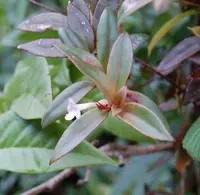
The tubular flowers are typically pale to mid blue with a contrasting white lower lip, and are borne in loose spikes that attract a range of small insect pollinators in their native habitat.

Softly aromatic foliage

When the leaves are gently rubbed or bruised they release a mild, resinous-minty scent, a common defensive trait in the genus but with a characteristic, relatively subtle aroma in this species.

FAQs about Stoep Jacaranda

Lack of flowers usually comes from insufficient light, pruning at the wrong time, or heavy, nitrogen-rich feeding. Promote blooming by providing bright conditions, using balanced fertilizer, and pruning lightly just after flowering to avoid removing developing buds.

Grow Healthy Plants with Botan Care

Keep your plants happy and healthy with plant identification, disease detection, and easy care guidance.

Botan plant care app — identify plants on mobile

Explore More Plants