Columnea microphylla Care

Columnea microphylla

About Columnea microphylla

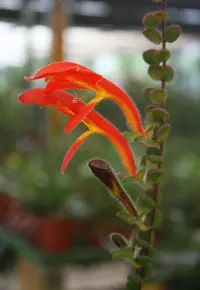
Columnea microphylla is an evergreen, trailing gesneriad often grown as a hanging or shelf plant. It produces long, arching stems with many small, opposite leaves that create a dense, flowing cascade. Bright tubular flowers, usually red to orange, appear along the stems and are adapted for hummingbird pollination. In the wild, it occurs as an epiphyte in humid tropical forests of Central and South America, where it grows on trees rather than in soil. This origin explains its preference for bright, filtered light, steady warmth, and evenly moist but airy growing media. With stable indoor conditions and good humidity, it is moderate in difficulty and rewarding for those who want to learn how to care for Columnea microphylla.

Main Plant Requirements

Care Difficulty

Moderate Care

Light Preference

Bright Indirect Light

Water Requirements

Moderate Water

Temperature Preference

Tropical / Frost Sensitive

Hardiness Zone

11–12

Soil Texture

Loamy, Peaty, Organic-rich

Soil pH

Acidic (5.5–6.5), Slightly acidic (6.5–7.0)

Soil Drainage

Moist but well-drained

Fertilization

Light (every 4–6 weeks)

Get Personalized Care Plan

Scan your plant to receive care tips personalized for your specific plant

Available on iOS and Android

How to Care for the Columnea microphylla

This plant prefers bright, indirect light that mimics dappled forest shade.

  • Provide 6–8 hours of bright, filtered light daily, such as near an east or north-facing window or under light sheer curtains.
  • Allow gentle morning sun but protect from strong midday and afternoon sun, which can scorch leaves and fade flowers on Columnea microphylla.
  • In winter, when natural light is weaker, move the plant closer to the light source or supplement with grow lights to prevent sparse, leggy growth.

Watering should keep the soil lightly moist but never saturated for long periods.

  • Water when the top 2–3 cm of soil feels dry, then water thoroughly until excess drains away, allowing the pot to empty completely.
  • In spring and summer, expect to water more often as growth and evaporation increase; reduce frequency in fall and winter while still preventing complete drying.
  • Watch for limp, wrinkling leaves as a sign of underwatering, and for yellowing, soft leaves or a sour soil smell as signs of overwatering or poor drainage.

Stable, warm conditions support healthy growth and flowering.

  • Aim for 65–80°F (18–27°C) for active growth, avoiding sudden temperature swings and cold drafts around the plant.
  • Protect from temperatures below 55°F (13°C); brief dips may be tolerated, but frost will damage foliage and stems, especially tender new growth.
  • In hot weather above 85°F (29°C), increase air movement, shade from intense sun, and monitor soil moisture more closely to reduce heat stress.

This species benefits from elevated humidity and reacts quickly to very dry indoor air.

  • Aim for 50–70% humidity to support steady growth and flowering.
  • Dry air causes crisping leaf edges, stalled growth, and flower bud drop.
  • Increase humidity with a nearby humidifier, grouped plants, or a pebble tray, but avoid misting that keeps foliage wet for long periods.

This epiphyte prefers a loose, airy, organic-rich mix that drains rapidly yet holds some moisture.

  • Use a mix such as 40% peat or coco coir, 30% fine bark, and 30% perlite to mimic its natural epiphytic conditions.
  • Ensure water drains through in seconds and the mix feels springy rather than compact when squeezed.
  • Keep pH slightly acidic, around 5.5–6.5, which supports nutrient uptake for Columnea microphylla.
  • Avoid heavy garden soil, straight compost, or clay-based mixes that stay wet, collapse, or exclude air around the roots.

This trailing species is very suitable for container growing, especially in hanging baskets or high shelves.

  • Choose a wide, shallow container to match its fibrous root system and support cascading stems without excessive depth that traps water.
  • Select a lightweight plastic pot if faster drying is needed, or a thicker ceramic pot where moisture retention and stability are priorities.
  • Use a pot with freely draining holes and keep it raised on feet or a trivet so water clears quickly from the base after each watering.

Light, consistent feeding supports compact growth and flowering in Columnea microphylla without forcing soft, weak shoots.

  • Use a balanced liquid fertilizer (around 10-10-10 or 20-20-20) diluted to 1/4–1/2 strength for container plants.
  • Feed every 3–4 weeks during spring and summer when growth and flowering are active.
  • Skip or greatly reduce feeding in fall and winter, especially in low light.
  • Avoid heavy compost or slow-release pellets that keep the mix wet or cause salt buildup in small pots.

Thoughtful pruning keeps Columnea microphylla dense, trailing nicely, and flowering along younger stems.

  • Plan main shaping after peak flowering, usually late winter to early spring.
  • Remove dead, damaged, or crossing stems first using clean, sharp scissors or snips.
  • Shorten leggy shoots by up to 1/3 to encourage branching and more flower sites.
  • Pinch soft tips on young growth through the season to maintain a full, cascading form.

Container-grown plants benefit from occasional repotting to refresh the mix and support healthy root function.

  • Repot every 2–3 years or when roots circle the pot, water drains very quickly, or growth slows despite good care.
  • Choose late winter to early spring, just before strong new growth, for less stress.
  • Move to a pot only 2–3 cm wider, using a light, airy, well-draining mix suitable for epiphytes.
  • Water lightly after repotting, keep in bright but indirect light, and avoid heavy feeding for 2–3 weeks while roots recover.

New plants are most often produced from stem cuttings, which root reliably under warm, humid conditions.

  • Take 7–10 cm non-flowering tip cuttings from Columnea microphylla in spring or early summer.
  • Remove lower leaves, leaving 2–3 at the tip, and optionally dip the cut end in rooting hormone.
  • Insert cuttings into moist, airy medium and keep in bright, indirect light at 70–75°F.
  • Maintain high humidity with a loose cover, venting often, and transplant once roots are well developed.

This tropical species is frost-sensitive and needs mild, stable conditions through winter, especially in containers.

  • Keep indoor or greenhouse temperatures around 60–70°F; avoid cold drafts and sudden drops.
  • If grown outside in warm regions, bring hanging baskets indoors before any frost is predicted.
  • Reduce watering in winter, letting the top of the mix dry slightly more between waterings.
  • Provide bright, indirect light and avoid cold window glass touching leaves to limit damage.

Care Tips

Encourage Trailing Growth

Start stems trailing early by gently draping young shoots over the pot edge or onto a hanging basket lip so they lignify in a natural cascade rather than growing upright and then kinking when bent later.

Rotate For Even Bloom

Rotate the pot 90° every 1–2 weeks during active growth to keep stems from leaning toward the brightest side and to distribute flower clusters evenly around the plant.

Pinch To Refresh

Lightly pinch or tip-prune the last 1–2 leaf pairs on leggy shoots after flowering cycles to stimulate branching and denser foliage without removing too many future flower buds at once.

Clean Foliage Safely

Rinse the plant with a gentle, lukewarm shower or use a soft brush to remove dust from the small leaves, improving light capture and reducing spider mite pressure without using leaf-shine products.

Plan For Rejuvenation

Every 3–4 years, take several healthy stem cuttings and root them to start a fresh plant, since older specimens often become woody and sparse, and this staged renewal keeps growing Columnea microphylla compact and floriferous over time.

Common Pests and Diseases

Mealybugs

This pest often hides in leaf axils and along stems, sucking sap and causing leaf yellowing, distortion, and sticky honeydew. Symptoms include slowed growth and, in heavy infestations, leaf drop on trailing stems.

Solution

Isolate the plant, then dab visible insects with cotton swabs dipped in 70% isopropyl alcohol and gently wipe stems and leaf bases. Follow up with repeated applications of an insecticidal soap or neem oil spray every 7–10 days and improve light and airflow to support recovery as part of general Columnea microphylla care instructions.

Spider mites

These insects thrive in warm, dry indoor air and cause fine stippling on leaves, dull foliage, and fine webbing on the undersides of leaves and along stems. Symptoms include gradual leaf yellowing and premature leaf drop if not controlled.

Solution

Rinse foliage thoroughly with lukewarm water, focusing on the undersides of leaves, then apply an insecticidal soap or horticultural oil, repeating weekly until no new damage appears. Raising humidity to 50–60%, avoiding very dry air near heaters, and regularly showering the plant help prevent re‑infestation.

Aphids

This pest congregates on tender shoot tips and flower stems, feeding on sap and causing curling leaves, distorted new growth, and sticky honeydew that can support sooty mold. Symptoms include weakened flowering and general decline of young stems.

Solution

Prune heavily infested shoot tips, then rinse remaining stems and leaves under a gentle stream of water to dislodge insects. Apply insecticidal soap to all above‑ground parts, repeating every 5–7 days until populations are gone, and avoid overfertilizing with high‑nitrogen products that promote soft, aphid‑prone growth.

Botrytis blight

This disease favors cool, humid, stagnant air and causes soft brown lesions on leaves, stems, and flowers, often covered with gray, fuzzy mold. Symptoms include collapsing shoots and flower buds, especially when foliage stays wet for long periods.

Solution

Remove and discard all affected tissues and any fallen leaves from the soil surface, then improve airflow, reduce crowding, and water at the soil level to keep foliage dry. In persistent cases, apply a labeled fungicide for botrytis and avoid cool, damp locations where air cannot move around the trailing stems.

Leaf spot (fungal)

This disease produces small, dark, water‑soaked or tan spots on leaves that may enlarge and merge, leading to yellowing and premature leaf drop, especially on dense hanging baskets. Symptoms include more severe damage on foliage that stays wet after misting or overhead watering.

Solution

Trim off the worst affected leaves, dispose of plant debris, and switch to bottom or directed soil watering so foliage dries quickly. Increase spacing and airflow around the plant, and if new spots keep appearing, use a mild, labeled fungicide while avoiding frequent misting that keeps leaves damp for many hours.

Interesting Facts

Miniature leaf adaptation

This species has very small, opposite leaves, an adaptation that helps reduce water loss in its naturally humid but well-drained cloud forest habitat while still allowing enough surface for photosynthesis.

Epiphytic trailing habit

In the wild, this plant often grows as an epiphyte on tree branches, forming long, pendent stems that hang down to capture filtered light in the lower forest canopy.

Bird-pollinated flowers

Its tubular, brightly colored flowers are specialized for pollination by hummingbirds, which are attracted to the shape and color of the corolla and transfer pollen as they feed on nectar.

FAQs about Columnea microphylla

Lack of flowers often comes from insufficient light intensity, heavy pruning at the wrong time, or low humidity. Mature stems usually need stable warmth, bright but indirect light, and light feeding to support bud formation and repeat flowering.

Grow Healthy Plants with Botan Care

Keep your plants happy and healthy with plant identification, disease detection, and easy care guidance.

Botan plant care app — identify plants on mobile

Explore More Plants