Rotate For Even Growth
Turn the pot 90° every 1–2 weeks so the foliage develops evenly and the tall flower spikes do not lean permanently toward the main light source.

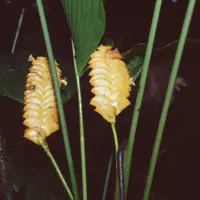
The rattlesnake plant, Calathea crotalifera, is a tropical evergreen grown mainly for its striking upright flower spikes and lush foliage. It belongs to the Marantaceae family, known as prayer plants, which often fold their leaves slightly at night. In the wild, it occurs in warm, humid forests of Central and South America, where it grows as an understory plant protected from direct sun. Its showy, rattlesnake-like bracts and preference for stable warmth and moisture make it attractive but a bit demanding indoors. To successfully care for rattlesnake plant, provide bright shade, evenly moist but airy soil, and consistent humidity without cold drafts.

Care Difficulty
Hard Care

Light Preference
Bright Indirect Light

Water Requirements
Keep Soil Moist

Temperature Preference
Tropical / Frost Sensitive

Hardiness Zone
11–12

Soil Texture
Loamy, Peaty, Organic-rich

Soil pH
Acidic (5.5–6.5)

Soil Drainage
Moist but well-drained

Fertilization
Light (every 4–6 weeks)
Scan your plant to receive care tips personalized for your specific plant
Available on iOS and Android
Calathea crotalifera prefers bright, filtered light that mimics a forest understory.
This species needs evenly moist, but not waterlogged, soil for stable growth.
This tropical plant prefers consistently warm, stable temperatures without sudden swings.
This species needs consistently high humidity to keep foliage healthy and prevent leaf damage.
This plant prefers a loose, moisture-retentive but airy mix that drains quickly.
This species grows well in containers when the pot supports its shallow, spreading root system and moisture needs.
Calathea crotalifera responds well to light, consistent feeding during the warm growing season.
Calathea crotalifera needs only light, maintenance-focused pruning to stay healthy and tidy.
This species prefers stable conditions and benefits from careful, infrequent repotting when container-bound.
Calathea crotalifera is most reliably propagated by division of mature clumps rather than by seed or cuttings.
This tropical plant is frost-sensitive and needs warm, sheltered conditions in winter, especially outside USDA zones 10–12.

Plant Health Check
Not sure what's wrong with your plant? Check your plant's health inside the app.
This species forms upright, cone-like flower spikes whose overlapping bracts resemble a coiled rattlesnake tail, which is the origin of its common name, rattlesnake calathea.
In its native Central and South American habitats, the tubular yellow flowers are primarily pollinated by hummingbirds that can easily access the nectar deep inside each flower.
Like many marantaceae, this plant shows pronounced nyctinasty, a daily leaf movement controlled by a joint-like structure called a pulvinus that allows leaves to change angle between day and night.

In some areas of its native range, large stands of Calathea crotalifera provide important shelter and breeding sites for small frogs and invertebrates, which use the dense clumps and trapped leaf litter as a protected microhabitat.
Leaf curling usually comes from low humidity, inconsistent watering, or excess fertilizer salts in the potting mix. Increase humidity, keep the root zone evenly moist, flush the soil occasionally, and avoid temperature drafts for stable Calathea crotalifera care.
Keep your plants happy and healthy with plant identification, disease detection, and easy care guidance.