Use basket culture
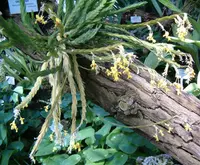
Mount the plant in a fine-slatted wooden basket with coarse, free-draining orchid mix so the long, pendant inflorescences can hang freely without deforming or rotting against the pot rim.

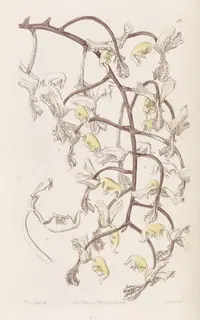
Gongora truncata is an epiphytic orchid, meaning it often grows attached to trees rather than in typical soil. It forms clustered pseudobulbs with long, arching leaves and produces pendent flower spikes. The flowers are intricate and often fragrant, giving the plant high ornamental value for orchid collectors.
This species is native to tropical forest regions of Central and South America, where it experiences warm temperatures, high humidity, and good air movement. It is considered moderately challenging because it dislikes drying out, needs consistent moisture around the roots, and reacts poorly to stagnant, heavy media. Those conditions shape how to care for Gongora truncata in home collections.

Care Difficulty
Hard Care

Light Preference
Bright Indirect Light

Water Requirements
Keep Soil Moist

Temperature Preference
Tropical / Frost Sensitive

Hardiness Zone
Unknown

Soil Texture
Peaty, Organic-rich

Soil pH
Acidic (5.5–6.5)

Soil Drainage
Moist but well-drained

Fertilization
Moderate (every 2–4 weeks)
Scan your plant to receive care tips personalized for your specific plant
Available on iOS and Android
This orchid thrives with bright, filtered light that mimics dappled forest canopy conditions.
This species prefers evenly moist conditions with excellent drainage and high humidity.
This orchid prefers warm to intermediate temperatures with limited fluctuations.
This orchid needs high, stable humidity to thrive and flower well.
This orchid grows best in a very airy, fast-draining, organic medium rather than standard potting soil.
This species is well suited to container growing when the pot supports its pendent inflorescences and airy root zone.
Nutrient support improves flowering and growth but should stay gentle for Gongora truncata roots.
Pruning for this orchid is minimal and focused on hygiene rather than shaping Gongora truncata.
Repotting helps maintain aeration around the roots and keeps this orchid’s medium fresh.
Propagation is usually done by division, as seed culture of this orchid requires laboratory conditions.
This tropical orchid is frost-sensitive and needs sheltered conditions in winter.

Plant Health Check
Not sure what's wrong with your plant? Check your plant's health inside the app.
This epiphytic orchid produces drooping inflorescences with yellow to orange-brown flowers that hang below the plant, often with a noticeable spicy or resinous fragrance that attracts specific pollinators in its native habitat.
Like many members of the subtribe Stanhopeinae, this species has highly specialized pollinia (pollen packets) and floral structures that guide visiting euglossine bees into precise contact points, ensuring efficient pollen transfer between flowers.
Gongora truncata is naturally found in warm, humid lowland to premontane forests of Central and northern South America, where it typically grows as an epiphyte on tree branches in bright, filtered light.
Lack of flowers usually comes from insufficient light, too-warm nights, or not enough seasonal temperature and humidity fluctuation. Provide bright filtered light, slightly cooler, drier conditions after growth matures, then increase humidity and feeding to trigger spikes.
Keep your plants happy and healthy with plant identification, disease detection, and easy care guidance.