Tillandsia prodigiosa Care

Tillandsia prodigiosa

About Tillandsia prodigiosa

Tillandsia prodigiosa is a large epiphytic air plant in the bromeliad family, often growing on trees or rocks rather than in soil. It forms rosettes of stiff, often silver-green leaves that can reach impressive sizes, with tall, showy flower spikes.

This species is native to highland regions of Mexico and nearby areas, where it experiences bright light, good air movement, and regular mist from clouds or rain. Its ability to absorb water and nutrients through specialized leaf scales makes it relatively low maintenance once conditions are stable, which helps beginners learn how to care for Tillandsia prodigiosa.

It generally prefers bright filtered light, regular moisture from misting or soaking, and a mounting surface that allows excellent air circulation around the roots and leaves.

Main Plant Requirements

Care Difficulty

Moderate Care

Light Preference

Bright Indirect Light

Water Requirements

Moderate Water

Temperature Preference

Tropical / Frost Sensitive

Hardiness Zone

10–12

Soil Texture

Rocky, Organic-rich

Soil pH

Acidic (5.5–6.5)

Soil Drainage

Well-drained

Fertilization

Light (every 4–6 weeks)

Get Personalized Care Plan

Scan your plant to receive care tips personalized for your specific plant

Available on iOS and Android

How to Care for the Tillandsia prodigiosa

This species prefers bright, indirect light with brief periods of gentle direct sun.

  • Provide 4–6 hours of bright, filtered light daily, such as under 30–50% shade cloth or behind a sheer curtain, to prevent leaf scorch.
  • Allow soft morning sun but protect from strong midday and afternoon sun, which can bleach or curl leaves of Tillandsia prodigiosa.
  • In summer, increase distance from hot windows or reflective walls; in winter, move closer to bright windows or use a grow light to maintain intensity.

This epiphytic species absorbs water mainly through its leaves, not roots.

  • Mist thoroughly or soak for 10–20 minutes, then drain completely; water again when leaves feel less firm and their color looks slightly dull rather than silvery-bright.
  • Increase watering frequency in warm, dry, moving air and reduce in cool, humid, still air; surfaces should dry fully within 4–6 hours after soaking or heavy misting.
  • Watch for signs: soft, wrinkling leaves indicate underwatering, while limp, browning bases or a musty smell suggest overwatering and poor air movement.

This air plant prefers mild, stable temperatures with good air movement.

  • Aim for 65–80°F (18–27°C) for active growth, avoiding sudden swings of more than 10°F (6°C) within a few hours.
  • Protect from cold below 45°F (7°C); brief dips to 40°F (4°C) may be tolerated if dry, but frost will damage leaf tissues.
  • In hot periods above 90°F (32°C), increase air circulation and humidity, provide shade, and water earlier in the day so plants dry before cooler night temperatures.

This species prefers moderate to high humidity but adapts if airflow and watering are well managed.

  • Aim for 50–70% humidity, with strong air circulation to keep leaf surfaces drying between mistings or soakings.
  • Tolerates short spells of dry indoor air if watered more often, but prolonged exposure causes leaf tips to brown and curl inward.
  • Increase humidity by grouping air plants, placing them near a humidifier, or setting them above (not in) a pebble tray of water.

Tillandsia prodigiosa is an epiphytic air plant and should not be planted in conventional potting soil.

  • Mount the plant on cork, hardwood, or rock using wire or waterproof glue so air can move freely around the base.
  • If placing in a decorative container, keep it unpotted and rest it loosely on dry orchid bark, chunky charcoal, or large pumice pieces.
  • Ensure any display medium dries completely within 4–6 hours after watering to prevent base rot and bacterial problems.
  • Avoid peat-based mixes, compact moss layers, or fine gravel that hold moisture tightly and restrict air around the plant’s base.

This species is suitable for container display as long as it remains unpotted and fully exposed to air.

  • Choose wide, shallow vessels or hanging baskets that allow the rosette to sit above the rim for maximum airflow and light exposure.
  • Use heavier containers or add stones to the base if the plant becomes top-heavy, preventing it from tipping after watering.
  • Avoid glass terrariums with limited ventilation; if used, keep the opening large and position the plant near the edge for air movement.

This epiphytic species needs only light, diluted feeding during active growth.

  • Use a balanced liquid fertilizer at 1/4–1/8 strength, labeled for epiphytic bromeliads or orchids.
  • Apply every 4–6 weeks in spring–summer by misting the foliage and soaking the base, then let it dry fully.
  • Skip feeding in winter or when growth slows, as Tillandsia prodigiosa rests and excess nutrients can burn tissues.
  • Avoid compost or slow-release granules that sit on the plant, since trapped salts damage leaves.

Pruning needs are minimal and focus on hygiene and maintaining an open rosette form.

  • Best timing is late winter to early spring, before strong new growth starts.
  • Remove dead, brown, or damaged leaves by gently twisting and pulling, or trimming close with small clean scissors.
  • Trim dried flower spikes at the base once blooming finishes, which keeps the plant tidy without affecting pups.
  • Clear out crowded, desiccated leaves in the center to improve air flow and reduce rot risk.

This air plant is usually mounted rather than potted, so focus on remounting rather than traditional repotting.

  • Consider remounting when the clump outgrows its mount, leans off the surface, or dries too fast between waterings.
  • Best time is spring to early summer, when Tillandsia prodigiosa is in active growth and recovers faster.
  • Every 3–5 years, detach gently, keeping pups attached if possible, and tie onto fresh cork, bark, or mesh using soft wire or nylon.
  • After remounting, keep light bright but indirect and humidity higher for 1–2 weeks to reduce transplant stress.

Propagation is most practical by separating pups that form around the mother plant after flowering.

  • Allow offsets to reach at least 1/3–1/2 the size of the parent before removal for higher survival.
  • Best season is spring–summer, when warmth, bright light, and 50–70% humidity support new root and leaf growth.
  • Gently twist or cut pups away at the base with a sterile blade, keeping their basal tissue intact.
  • Mount new plants individually, mist lightly, and provide strong air circulation to discourage rot during establishment.

Cold sensitivity means this species needs sheltered conditions anywhere frost is possible.

  • Tillandsia prodigiosa is not frost hardy; aim to keep temperatures above 40–45°F.
  • In cold climates, move mounted or container plants indoors to a bright, airy window before first frost.
  • Ensure excellent air movement indoors and reduce watering frequency, allowing plants to dry fully between soakings.
  • Avoid placing plants near cold drafts or against single-pane glass where foliage can freeze.

Care Tips

Optimize mounting angle

Mount plants at a slight downward or sideways angle so excess water drains quickly from the crown and inner leaf bases, which greatly reduces the risk of rot in large rosettes.

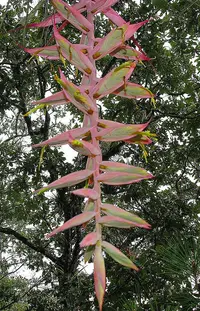
Use open display frames

Attach plants to wire grids or open slatted frames rather than solid wood boards, so air can move around all sides of the plant and dry the dense foliage more evenly.

Seasonal airflow adjustment

Increase fan use or window ventilation during warm, still weather and especially after deep soakings, because the thick foliage needs stronger air movement than smaller air plants to dry properly.

Secure heavy rosettes

Support mature, heavy plants with multiple attachment points using soft garden wire or nylon fishing line, so the weight of the rosette does not twist or tear new growth when it becomes top-heavy.

Manage spent inflorescences

After flowering, wait until the first visible offsets reach at least 1/3 the size of the mother plant before trimming away the dried flower stalk, which helps direct resources toward pups and supports long-term success when caring for Tillandsia prodigiosa.

Common Pests and Diseases

Mealybugs

This pest often hides in the leaf bases and inner rosettes, feeding on plant sap and leaving behind white, cottony clusters. Symptoms include stunted growth, leaf yellowing, and sticky honeydew that can attract sooty mold.

Solution

Remove affected plants from tight groupings, then use a strong, lukewarm water spray to flush insects from leaf sheaths and crevices. Follow with dabbing or misting the colonies with isopropyl alcohol (70%) and improve air movement and light levels to discourage reinfestation while continuing to inspect weekly when caring for Tillandsia prodigiosa.

Scale insects

These insects appear as small, hard or waxy bumps on leaves and leaf bases, where they suck sap and weaken the plant. Symptoms include dull, yellowing foliage and slow decline over time.

Solution

Manually scrape or wipe off visible scale with a cotton swab or soft brush dipped in 70% isopropyl alcohol, then thoroughly rinse the plant. Increase air circulation, avoid overfertilizing, and repeat spot treatments every 7–10 days until no new scale appears.

Spider mites

These insects thrive on stressed plants in dry, stagnant air, feeding on leaf surfaces and causing fine speckling or a gray, dusty look. Symptoms include tiny webbing in the leaf bases and a general loss of vigor.

Solution

Rinse the plant thoroughly under a strong, gentle stream of water, paying attention to the undersides and leaf bases, then allow it to dry quickly in bright, indirect light. Raise ambient humidity slightly, increase airflow, and repeat rinsing every few days until new growth appears clean; insecticidal soap can be used as a targeted spray if populations remain high.

Fungal leaf spot

This disease develops when moisture lingers in the leaf bases and on foliage under low airflow, leading to small brown or black spots that may enlarge and coalesce. Symptoms include discolored patches on the leaf surface and, in severe cases, localized tissue collapse.

Solution

Trim out and discard heavily spotted leaves, then adjust watering so the plant dries within a few hours after misting or soaking, especially in indoor conditions. Provide stronger air movement, reduce crowding with other plants, and if needed apply a light, air-plant-safe fungicidal spray, avoiding heavy residues that can clog the leaf scales (trichomes).

Bacterial soft rot

This disease can occur in damp, poorly ventilated conditions, causing tissue at the base of the rosette to turn water-soaked, foul-smelling, and mushy. Symptoms include rapid collapse of central leaves and a slimy texture at affected areas.

Solution

Remove and discard any rotting parts immediately; if the whole center is affected, discard the plant to protect nearby specimens. To prevent new cases, avoid leaving water standing in the rosette, ensure the plant dries quickly after soaking or heavy misting, increase airflow, and keep temperatures moderate rather than excessively warm and humid.

Interesting Facts

High-elevation epiphyte

This species is native to cool, humid cloud forests of southern Mexico, where it grows as an epiphyte on trees at relatively high elevations compared with many other air plants.

Impressive inflorescence size

Mature plants can produce a large, branched flowering structure that may reach close to 1 m in wild conditions, making it one of the more visually imposing members of the genus.

Fog-harvesting leaf scales

Its leaves are densely covered with specialized scale-like structures called trichomes, which efficiently absorb water from fog and mist in its montane habitat, an adaptation that reduces dependence on direct rainfall.

Botan icon

Did you know?

In parts of its native range, very large, mature specimens have been collected and used ornamentally during local festivities, reflecting the unusual size and sculptural form of this species among wild Tillandsia.

FAQs about Tillandsia prodigiosa

This species usually needs to reach mature size before flowering, which can take several years. Inadequate light, irregular watering, or insufficient air movement slow blooming. Stable, bright conditions and patience are essential, as flowering is naturally infrequent.

Grow Healthy Plants with Botan Care

Keep your plants happy and healthy with plant identification, disease detection, and easy care guidance.

Botan plant care app — identify plants on mobile

Explore More Plants