Snake Plant Care (Dracaena trifasciata 'Moonshine')

Also known as: Mother-in-Law's Tongue
Snake Plant

About Snake Plant

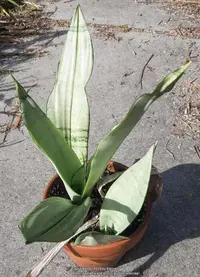
Snake plant Dracaena trifasciata 'Moonshine' is a compact, upright succulent houseplant valued for its pale silvery-green, sword-shaped leaves. The foliage grows in tight clumps from the base, creating a clean, architectural look that suits modern interiors.

This cultivar descends from plants native to West Africa, which helps explain its strong tolerance of dry indoor air and irregular watering. It is generally considered easy to grow, adapting to a wide range of indoor light, from bright indirect to moderate shade.

Because it stores water in its leaves and has a tough root system, it copes well with occasional neglect. Understanding how to care for Snake Plant mainly involves avoiding constant wet soil and providing a free-draining potting mix.

Main Plant Requirements

Care Difficulty

Easy Care

Light Preference

Bright Indirect Light

Water Requirements

Low Water

Temperature Preference

Tropical / Frost Sensitive

Hardiness Zone

10–12

Soil Texture

Sandy, Loamy, Organic-rich

Soil pH

Acidic (5.5–6.5), Slightly acidic (6.5–7.0)

Soil Drainage

Well-drained

Fertilization

Minimal (feed rarely)

Get Personalized Care Plan

Scan your plant to receive care tips personalized for your specific plant

Available on iOS and Android

How to Care for the Snake Plant

Dracaena trifasciata 'Moonshine' prefers bright, indirect light and tolerates some shade without losing vigor.

  • Provide 6–8 hours of bright, filtered light per day, such as near an east- or north-facing window or under sheer curtains.
  • Tolerates partial shade and lower light but growth slows and leaves may deepen in color; prolonged dim conditions can cause stretched, floppy foliage.
  • Avoid strong midday or afternoon sun, especially behind glass, which can scorch leaves; increase light gradually in spring and rotate the Snake Plant for even exposure.

This species stores water in its leaves and needs infrequent but thorough watering in well-drained soil.

  • Water only when the top 3–5 cm of soil feels dry, then water deeply so excess drains away; never leave the root zone standing in water.
  • In spring and summer, this may mean watering every 1–3 weeks, and in cooler or darker months often every 3–5 weeks, depending on light, temperature, and soil type.
  • Watch for mushy, yellowing leaves as a sign of overwatering and crispy, folding leaves as a sign of underwatering, then adjust intervals rather than volume.

This plant prefers warm, stable conditions and does not tolerate frost.

  • Aim for 65–80°F (18–27°C) for steady growth; short periods up to 85°F (29°C) are usually tolerated if light and airflow are balanced.
  • Protect from cold drafts and temperatures below 55°F (13°C), as chilling can damage roots and leaves and invite rot.
  • Never expose to frost; bring plants indoors or provide shelter when outdoor temperatures approach 40°F (4°C), and avoid placing close to heating or AC vents that create hot or cold blasts.

This plant handles a wide humidity range, so humidity management is rarely critical.

  • Ideal humidity is around 30–50%, matching most heated and air-conditioned homes.
  • Dry indoor air is usually tolerated, but very low humidity can worsen leaf tip browning caused by underwatering or excess salts.
  • If air is extremely dry, group plants together or place the pot on a pebble tray with water below the pot base, not touching it.

Dracaena trifasciata 'Moonshine' prefers a fast-draining, airy mix that mimics sandy, rocky ground.

  • Use a loose, gritty mix such as 50–60% cactus/succulent mix combined with 40–50% mineral materials like perlite or pumice.
  • Aim for slightly acidic to neutral pH, roughly 6.0–7.0, which supports nutrient uptake without encouraging salt buildup.
  • Ensure the mix drains completely within a few seconds of watering; water should never pool on the surface or around the roots.
  • Avoid dense, peat-heavy or clay-based potting media that stay wet for many hours, as this promotes root rot in Dracaena trifasciata 'Moonshine'.

This species grows very well in containers with stable, fast-draining conditions.

  • Choose a pot only 2–5 cm wider than the root mass to prevent excess unused mix from staying wet around the roots.
  • Select a heavier ceramic or clay pot if the plant becomes tall and top-heavy, to reduce the risk of tipping over.
  • Raise the container slightly on feet or pot risers so drainage holes stay clear and water can exit quickly after each watering.

This Snake Plant benefits from light feeding but is sensitive to excess fertilizer.

  • Use a balanced liquid fertilizer (for example 10-10-10 or 20-20-20) diluted to 1/4–1/2 strength in well-watered soil.
  • Feed every 6–8 weeks during spring and summer only, when growth is most active.
  • Skip or greatly reduce feeding in fall and winter, as low light and cooler temperatures slow growth.
  • Avoid heavy compost or frequent slow-release products, which can cause salt buildup and root burn in containers.

Dracaena trifasciata 'Moonshine' needs minimal pruning, mainly to remove damaged foliage and maintain a clean outline.

  • Prune in spring or early summer so new growth can respond under good light conditions.
  • Cut yellow, brown, or mechanically damaged leaves at the base with clean, sharp scissors or pruners.
  • Remove crowded or leaning outer leaves to refine shape, but keep enough foliage for adequate photosynthesis.
  • Disinfect blades before and after use with alcohol to limit disease spread between plants.

This plant prefers slightly snug pots and only occasional repotting.

  • Check for roots circling the pot, pushing through drainage holes, or causing the container to bulge; these indicate a need to repot.
  • Plan repotting every 2–4 years in spring, moving to a pot just 2–5 cm wider with excellent drainage.
  • Gently loosen circling roots and remove some old mix, keeping the root ball mostly intact to limit stress.
  • Water lightly after repotting, then allow the mix to dry partly before the next watering, reducing rot risk while roots re-establish.

Dracaena trifasciata 'Moonshine' is most reliably propagated by division, with leaf cuttings as a secondary option.

  • Divide crowded clumps in spring or early summer, separating rhizomes so each division has several healthy leaves and roots.
  • Plant divisions in a free-draining mix, then keep slightly dry and warm (70–80°F) to encourage new root growth.
  • For leaf cuttings, use healthy segments, allow cut ends to callus 1–2 days, then insert upright in barely moist substrate.
  • Provide bright, indirect light and avoid overwatering during rooting, as excess moisture increases the risk of rot.

This species is not frost hardy and needs sheltered winter conditions in most climates.

  • Keep plants above 50°F, with an ideal indoor range of 60–75°F during winter months.
  • Move container plants indoors before night temperatures drop near 45°F, choosing a bright, draft-free spot.
  • Allow soil to dry more between waterings in winter, as low temperatures and light reduce water use and raise rot risk.
  • In cool, bright rooms, avoid placing the plant directly against cold windows to prevent leaf chilling damage.

Care Tips

Rotate For Even Color

Turn the pot 90° every 2–3 weeks so all rosettes receive similar light exposure, which keeps the silvery leaves evenly colored and prevents one-sided leaning.

Stabilize Tall Fans

If tall leaf fans start to wobble in a lightweight pot, top-dress with 2–3 cm of coarse gravel and use a slightly heavier container to reduce tipping risk without increasing soil moisture.

Cluster For Microclimate

Group this plant with other dry-tolerant houseplants a few inches apart to create a slightly more stable root-zone temperature and reduce stress from indoor drafts and vents.

Clean Leaves Strategically

Wipe the wide leaf surfaces with a barely damp microfiber cloth every 4–6 weeks to improve light capture and make it harder for spider mites and scale to establish.

Divide With Intention

When dividing crowded clumps, keep at least 3–4 healthy leaves attached to each rhizome section so the new division has enough stored energy for a stable start, which supports long-term success in caring for Snake Plant.

Common Pests and Diseases

Spider mites

This pest feeds on the sap of the thick leaves, causing fine speckling, dulling of the silver-green surface, and delicate webbing between leaves, especially in dry indoor air.

Solution

Rinse foliage thoroughly in the shower or with a hose, including leaf undersides, then wipe with a soft cloth; repeat weekly until no new webbing appears. Increase humidity slightly around the plant without overwatering, isolate the plant, and if needed apply a neem oil or insecticidal soap spray labeled for indoor use, following directions carefully.

Mealybugs

These insects hide in leaf bases and along leaf margins, appearing as white cottony clusters that cause yellowing patches and sticky honeydew on nearby surfaces.

Solution

Remove visible clusters with a cotton swab dipped in 70% isopropyl alcohol, then wipe leaf axils and crevices thoroughly. Inspect weekly, isolate the plant, and use repeated applications of insecticidal soap or neem oil on all leaf surfaces and into leaf bases until no new insects are seen.

Soft scale

This pest appears as small, flat, tan to brown bumps on leaves and leaf bases, leading to gradual yellowing, weakened growth, and sticky honeydew that can support sooty mold growth.

Solution

Gently scrape or wipe off individual scales with a fingernail or soft cloth, then clean leaves with a mild insecticidal soap solution. Keep the plant isolated and repeat treatments every 7–10 days, focusing on leaf bases where scale tends to cluster, until new growth remains clean.

Southern blight

This disease, caused by soil-borne fungi such as Sclerotium rolfsii, leads to sudden yellowing and collapse of leaves at the base, often with white fungal growth and tan sclerotia on the soil surface or stem base.

Solution

Remove and discard all affected leaves and the top layer of contaminated soil, and do not compost infected material. Allow the soil to dry more between waterings, improve drainage, and if decline continues consider discarding the plant and sterilizing the pot and tools before reusing.

Leaf spot

This disease produces small water-soaked or brown spots on leaves that may enlarge and merge, sometimes with a yellow halo, especially under cool, damp, or poorly ventilated indoor conditions.

Solution

Trim off the worst-affected leaves with clean tools, keep water off the foliage, and space plants to improve air movement. Allow the potting mix to dry partially between waterings, and if spots continue to spread consider using a copper-based fungicide labeled for houseplants, applied according to product directions.

Interesting Facts

Distinct moonlit foliage

This cultivar is selected for its unusually pale, silvery-green leaves with soft, blurred banding, which differ clearly from the darker, sharply mottled foliage of typical snake plant forms.

Color shift with light

The leaves tend to stay lighter and more silvery in bright, indirect light but can gradually turn darker green and lose contrast when grown long term in lower light conditions.

Slow clumping growth

It forms compact clumps from underground rhizomes and typically produces fewer, broader leaves than many standard Dracaena trifasciata types, giving it a more architectural, vase-like outline.

FAQs about Snake Plant

Brown tips usually result from underwatering, low humidity, fluoride or salts in tap water, or exposure to hot or cold drafts. Trim dry tips, flush the soil occasionally, and maintain a more stable environment.

Grow Healthy Plants with Botan Care

Keep your plants happy and healthy with plant identification, disease detection, and easy care guidance.

Botan plant care app — identify plants on mobile

Explore More Plants