


Use gravel collar
Create a 5–8 cm wide gravel or coarse sand ring around the base to keep pads off wet soil and reduce rot and slug damage when growing Brincadora Cholla outdoors.

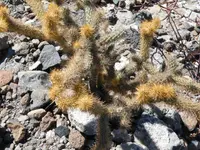
Brincadora cholla, Cylindropuntia alcahes, is a shrubby cactus native to arid regions of northwestern Mexico. It forms many-jointed, cylindrical stems covered with dense spines and small, papery sheaths.
Plants often develop into loose thickets that provide shelter for wildlife but are difficult to handle due to the easily detached, barbed segments. Flowers are typically bright and showy, followed by spiny fruits.
This species is adapted to intense sun, high heat, and very dry, rocky or sandy soils, which makes it drought tolerant but sensitive to excess moisture and poor drainage. Understanding these desert adaptations is key to how to care for Brincadora Cholla in cultivation.

Care Difficulty
Moderate Care

Light Preference
Full Sun

Water Requirements
Low Water

Temperature Preference
Warm Climate

Hardiness Zone
9–11

Soil Texture
Sandy, Rocky, Loamy

Soil pH
Slightly acidic (6.5–7.0), Slightly alkaline (7.0–7.5)

Soil Drainage
Well-drained

Fertilization
Minimal (feed rarely)
Scan your plant to receive care tips personalized for your specific plant
Available on iOS and Android
This desert cactus needs abundant direct sun to maintain compact growth and healthy stems.
This species is highly drought tolerant and must be kept on the dry side to prevent root problems.
This cactus prefers hot, dry conditions but has some tolerance to cool nights if kept frost free.
This desert cactus handles low humidity well and rarely needs special moisture in the air.
This cactus needs very fast-draining, gritty soil that dries quickly after watering.
This species can be grown in containers if the pot is prepared for its fast-draining, top-heavy nature.
This drought-adapted cactus needs very modest feeding, so focus on light support rather than heavy fertilization for Brincadora Cholla.
Pruning Cylindropuntia alcahes is mainly done for safety, size control, and to remove unhealthy stems.
This species is more often transplanted outdoors than repotted, but container plants sometimes need fresh space.
Propagation of Cylindropuntia alcahes is commonly done from stem cuttings and sometimes from seed.
This cactus is fairly cold tolerant when dry but still benefits from sensible winter care in many regions.

Plant Health Check
Not sure what's wrong with your plant? Check your plant's health inside the app.
This species is naturally restricted to arid coastal zones of the Gulf of California, particularly islands and peninsulas of northwestern Mexico, where it grows on rocky, well-drained slopes exposed to strong sun and marine winds.
The segmented stems break off readily at the joints and can root where they fall, a vegetative reproduction strategy that helps the plant spread in its harsh native habitat while also making it a problematic hitchhiker on animal fur and human clothing.
Its long, rigid spines are accompanied by tiny barbed hairs called glochids that detach very easily and penetrate skin, providing strong defense against herbivores and reducing water loss by shading the stem surface.
Growth is moderate for a cholla. In suitable desert or xeric conditions, it often adds 10–30 cm of height per year, forming a multi-stem clump over several years rather than staying small.
Keep your plants happy and healthy with plant identification, disease detection, and easy care guidance.

Wiggins' cholla
Cylindropuntia echinocarpa

Cane Cactus
Austrocylindropuntia cylindrica
Toothpick Cactus
Stetsonia coryne

Aylostera heliosa
Aylostera heliosa
green cockscomb
Sedum praealtum
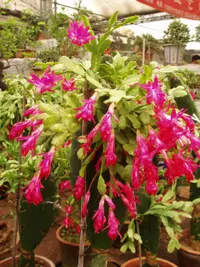 POPULAR
Thanksgiving Cactus
Schlumbergera truncata
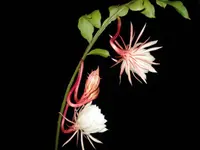 POPULAR
Queen of The Night
Epiphyllum oxypetalum
Rhipsalis micrantha
Rhipsalis micrantha