Chandelier Tree Care (Euphorbia triangularis)

Also known as: River Naboom, River Euphorbia
Chandelier Tree

About Chandelier Tree

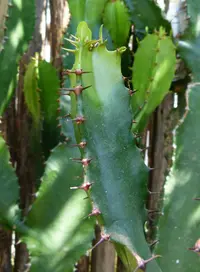
The chandelier tree, Euphorbia triangularis, is a succulent shrub or small tree known for its upright, candelabra-like branches and clean, architectural form. Its green, triangular stems store water and often show small, paired spines along the ridges.

This species is native to dry regions of southern Africa, where it grows in rocky, well-drained sites with intense sun. It is generally slow-growing but long-lived and becomes easier to manage once established.

Its drought tolerance and low leaf drop make it relatively low-maintenance, but the milky sap requires careful handling. Understanding how to care for Chandelier Tree starts with bright light, minimal watering, and sharply draining soil.

Main Plant Requirements

Care Difficulty

Easy Care

Light Preference

Full Sun

Water Requirements

Low Water

Temperature Preference

Tropical / Frost Sensitive

Hardiness Zone

10–11

Soil Texture

Sandy, Loamy, Rocky

Soil pH

Slightly acidic (6.5–7.0), Neutral (7.0)

Soil Drainage

Well-drained

Fertilization

Minimal (feed rarely)

Get Personalized Care Plan

Scan your plant to receive care tips personalized for your specific plant

Available on iOS and Android

How to Care for the Chandelier Tree

This drought-tolerant succulent shrub prefers bright, open sun while avoiding the harshest extremes in hot regions.

  • Provide 6–8 hours of direct sun daily; in very hot climates, aim for morning sun with light afternoon shade to prevent stem scorch.
  • Young or potted Chandelier Tree plants benefit from filtered light during 12–4 p.m. in summer, especially in exposed sites.
  • In winter, ensure an unobstructed, bright position; too much shade leads to elongated, weak stems and reduced branching over time.

This species stores water in its thick stems and needs infrequent but thorough watering.

  • Allow the top 5–8 cm of soil to dry completely before watering; in hot, dry weather, this may mean deep watering every 2–4 weeks outdoors.
  • Use sharply draining soil on a slope or raised area so water runs off easily; standing water around roots quickly leads to rot in Euphorbia triangularis.
  • Overwatering shows as yellowing, soft, or mushy stems, while prolonged underwatering causes wrinkling and shriveling; adjust intervals rather than volume.

This succulent tree prefers warm, dry conditions and is sensitive to prolonged cold and frost.

  • Aim for active growth in 70–90°F (21–32°C); brief peaks up to 100°F (38°C) are tolerated if soil drains well and air moves freely.
  • Protect plants when temperatures drop near 35–40°F (2–4°C); sustained exposure below 32°F (0°C) can damage or kill stems and roots.
  • In regions with cool winters, growth slows below 60°F (16°C); reduce watering and shield from frost pockets, cold winds, and sudden temperature swings.

This species handles typical indoor humidity well and rarely needs special adjustments when caring for Chandelier Tree.

This succulent shrub needs a sharply draining, mineral-rich mix that dries quickly between waterings.

  • Use a cactus/succulent mix blended with extra coarse sand or fine gravel to create a gritty, open texture.
  • Aim for slightly acidic to neutral pH around 6.0–7.5, avoiding highly acidic or alkaline substrates.
  • Improve aeration by adding 30–50% inorganic components such as perlite, pumice, or crushed lava rock.
  • Avoid compact, peat-heavy, or moisture-retentive mixes that stay wet for more than 2–3 days after watering.

This species is well suited to container growing due to its slow, upright, succulent growth.

  • Choose a heavy terracotta or ceramic pot to counterbalance the tall, top-heavy stems and reduce tipping risk outdoors.
  • Select a container that is deeper than it is wide to accommodate the strong taproot and prevent shallow, circling roots.
  • Use a pot with multiple drainage holes so excess water escapes quickly, preventing water from pooling at the base of the stems.

This drought-tolerant succulent tree needs modest feeding, so focus on light, infrequent applications during active growth.

  • Use a balanced liquid fertilizer (around 10-10-10) at 1/4–1/2 strength for Chandelier Tree in spring and summer.
  • Apply every 6–8 weeks only when the plant is actively growing; skip feeding in very hot, dormant spells.
  • Do not fertilize in winter; the plant rests and excess nutrients can harm roots.
  • Avoid heavy compost or rich organic mixes that hold moisture and may cause root rot.

Pruning Euphorbia triangularis is mainly done for safety, shape control, and to remove weak growth.

  • Best time is late spring to early summer, when the plant is actively growing and recovers faster.
  • Remove dead, damaged, crossing, or crowded stems to maintain a stable, open structure.
  • Use clean, sharp loppers or a pruning saw, wearing gloves and eye protection to avoid latex sap contact.
  • Shortening overly tall branches encourages branching and a more compact, wind-stable form.

Container plants or young landscape specimens benefit from occasional transplanting to maintain healthy root development.

  • Look for roots circling the pot, pushing through drainage holes, or noticeably slowed growth as signs to move up a size.
  • Plan repotting or transplanting in late spring, every 3–5 years, when temperatures are warm and stable.
  • Handle the root ball gently, loosening only the outer roots to reduce stress and prevent breakage.
  • Replant in a fast-draining, gritty mix, water lightly once, then allow the soil to dry before resuming a normal schedule.

This species is most often propagated from stem cuttings taken during warm, active growth.

  • Take 10–20 cm stem cuttings in late spring or summer, using a clean, sharp knife or pruners.
  • Allow cut surfaces to dry and callus for several days to reduce rot risk from the milky latex sap.
  • Plant cuttings in a coarse, well-drained medium and keep slightly moist, not wet, in bright, indirect light.
  • Seed propagation is possible but slower; sow in warm conditions (70–80°F) with consistent, light moisture.

This succulent tree is sensitive to hard frost and needs basic protection in colder regions.

  • In ground, it suits mild climates; add a 5–8 cm layer of dry mulch around the root zone in fall.
  • Avoid overhead watering in cold weather to limit fungal issues on chilled stems.
  • Move containers indoors or to a frost-free, bright spot when temperatures approach 32°F.
  • Maintain drier soil in winter, watering sparingly to prevent cold, wet root conditions.

Care Tips

Stability And Support

Once stems reach 60–90 cm, secure the main trunks to a sturdy stake or wall-mounted support using soft ties, leaving a little slack so the thickening stems are not constricted over time.

Safe Sap Handling

When pruning or repotting, wear gloves and avoid touching eyes or mouth, then run any sap-exuding cuts under cool water or blot with a damp cloth to reduce latex flow and lower the risk of skin irritation.

Controlled Height Management

To limit height indoors, tip-prune only the youngest segments in late spring, making clean cuts above a branching point so the plant redirects energy into thicker side branches instead of vertical growth.

Gradual Light Adjustment

Before moving a plant from indoor light to full outdoor sun, increase light exposure over 10–14 days, starting with bright shade and adding 1–2 hours of direct morning sun every few days to prevent stem and skin scorch.

Long-Dry Monitoring

During extended dry or hot periods, monitor stems for wrinkling or slight loss of firmness, using these subtle changes as a signal to water a little earlier than usual when caring for Chandelier Tree.

Common Pests and Diseases

Spider mites

This pest is common on stressed, dry Euphorbia stems and causes fine webbing, pale stippling, and dull, dusty-looking surfaces.

Solution

Rinse stems thoroughly with a strong but controlled stream of water, then increase ambient humidity slightly and avoid hot, stagnant air; for persistent infestations, apply a horticultural oil or insecticidal soap labeled for succulents, repeating every 7–10 days until no new damage appears.

Mealybugs

These insects hide in stem angles and along ribs, forming white, cottony clusters that feed on sap and cause yellowing and stunted growth.

Solution

Isolate the plant, dab visible insects with cotton swabs dipped in 70% isopropyl alcohol, then follow with thorough applications of insecticidal soap to crevices and joint areas, checking and retreating weekly until all signs are gone.

Scale insects

This pest appears as small, tan to brown bumps firmly attached to stems, leading to sticky honeydew and sometimes sooty mold on nearby surfaces.

Solution

Gently scrape or wipe off individual scales with a soft cloth or toothbrush, then treat the plant with a light horticultural oil, ensuring full coverage of rib edges and branch junctions, and repeat treatments several times to catch newly emerging crawlers.

Corking and stem cankers

Symptoms include localized brown, sunken, or corky patches on stems, sometimes following mechanical damage or exposure to cold and excess moisture, which can allow secondary fungal infection.

Solution

Remove severely damaged or soft tissue with a sterile blade, let the wound dry and callus in bright, dry conditions, then adjust care by avoiding cold drafts, overhead watering, and prolonged wetness on the stem surface as part of responsible Euphorbia triangularis plant care.

Interesting Facts

Southern African range

This species is native to arid and semi-arid regions of South Africa, Eswatini, and neighboring areas, where it grows on rocky slopes and dry scrub rather than true desert dunes.

Candelabra growth form

The plant develops a many-branched, upright candelabra shape with distinctly triangular, winged stems, which allows it to maximize light capture while limiting leaf surface that would lose water.

Spines and toxic latex

Short paired spines protect the stems from grazing animals, and like most Euphorbia species it exudes a white, irritant latex sap that deters herbivores and seals wounds after damage.

Botan icon

Did you know?

In parts of its native range, tall mature specimens can function as perching and nesting sites for small birds, which take advantage of the dense, spiny branching pattern for protection from predators.

FAQs about Chandelier Tree

This species performs best outdoors in warm, frost-free climates where it receives ample light and good airflow. Chandelier Tree indoor care is possible in bright spots, but growth is slower and plants stay smaller, often needing more careful monitoring.

Grow Healthy Plants with Botan Care

Keep your plants happy and healthy with plant identification, disease detection, and easy care guidance.

Botan plant care app — identify plants on mobile

Explore More Plants