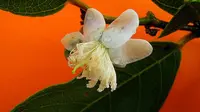
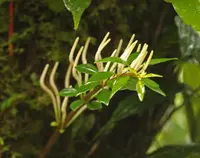
bonete Care (Jacaratia mexicana)

Also known as: K'uun che
bonete

About bonete

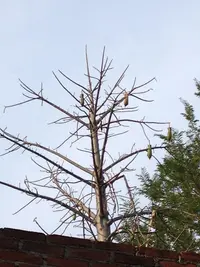
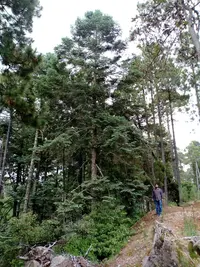
Bonete, Jacaratia mexicana, is a fast-growing tropical tree related to papaya, known for its soft wood and fleshy, elongated fruits. It usually develops a straight trunk with a rounded canopy and sparse, semi-deciduous foliage in seasonally dry areas.

This species is native to Mexico and parts of Central America, where it grows in dry to semi-humid forests and rocky hillsides. Its moderate drought tolerance and preference for warmth make it easier to manage in subtropical and tropical climates.

For home growers, it suits spacious outdoor gardens more than small indoor spaces. It prefers bright light, good air circulation, and well-drained soil, and learning how to care for bonete starts with providing these basic conditions.

Main Plant Requirements

Care Difficulty

Moderate Care

Light Preference

Full Sun

Water Requirements

Moderate Water

Temperature Preference

Tropical / Frost Sensitive

Hardiness Zone

10–11

Soil Texture

Sandy, Loamy, Organic-rich

Soil pH

Slightly acidic (6.5–7.0), Neutral (7.0)

Soil Drainage

Well-drained

Fertilization

Minimal (feed rarely)

Get Personalized Care Plan

Scan your plant to receive care tips personalized for your specific plant

Available on iOS and Android

How to Care for the bonete

Jacaratia mexicana prefers bright, warm conditions similar to its native tropical woodland edges.

  • Provide 6–8 hours of sun daily, with morning sun and light afternoon shade ideal to protect foliage from scorch in hot climates.
  • Tolerates light partial shade, but dense shade leads to lanky growth, fewer flowers, and weaker branching in bonete trees.
  • In summer, protect young plants from intense 2–5 p.m. sun; in cooler seasons, allow more direct exposure to support active growth.

Watering should support steady growth while avoiding prolonged soil saturation.

  • Let the top 3–5 cm of soil dry before deep watering, aiming for moist but not soggy conditions around the main root zone.
  • In warm, active growth periods, increase watering frequency; in cooler or dry-season dormancy, reduce watering once soil dries more thoroughly.
  • Signs of overwatering in Jacaratia mexicana include yellowing, soft leaves, and stem rot, while underwatering shows as leaf droop, edge browning, and early leaf drop.

This species thrives in consistently warm, frost-free conditions.

  • Aim for 70–85°F (21–29°C) for best growth, with stable warmth supporting trunk thickening and canopy development.
  • Protect from temperatures below 40°F (4°C); brief exposure near this limit may stunt growth, while frost can damage or kill young tissue.
  • In hot regions, it tolerates 95°F (35°C) or slightly higher if soil moisture is adequate and the site has some afternoon shade to reduce heat stress.

This dry-tolerant species handles low humidity but benefits from moderate air moisture.

  • Aim for 40–60% humidity; typical indoor levels are usually adequate for bonete.
  • Leaf edge browning, slow growth, and repeated leaf drop can indicate air that is too dry for young plants.
  • Increase humidity with nearby water trays, grouped plants, or an occasional fine misting in very dry, heated rooms.

This species prefers light, fast-draining, slightly fertile substrates that do not stay wet.

  • Use a sandy or sandy-loam mix with 30–40% mineral grit such as coarse sand, pumice, or perlite to keep water moving through the root zone.
  • Incorporate a modest amount of organic matter, such as compost or fine bark, to supply nutrients without creating a heavy, compact mass.
  • Target a slightly acidic to neutral pH, around 6.0–7.2, which supports nutrient uptake for Jacaratia mexicana.
  • Avoid dense clay, peat-heavy mixes, or spots where water pools, since prolonged saturation promotes root rot and weak growth.

This tree can be grown in containers, but only with careful attention to root space and stability.

  • Choose a deep, heavy pot to anchor the tall trunk and prevent tipping in wind or on balconies.
  • Select a container material that does not dry too rapidly, such as thick-walled terracotta or glazed ceramic, to moderate moisture swings around the roots.
  • Fill the base with a coarse drainage layer only if side drainage holes sit slightly above the bottom, ensuring no hidden water reservoir forms.

Jacaratia mexicana benefits from light, targeted feeding rather than heavy fertilization.

  • Apply a balanced NPK fertilizer at 1/2 strength once every 4–6 weeks during the warm growing season.
  • Use a slow-release granular product or well-rotted compost lightly incorporated into the topsoil, avoiding direct contact with the trunk.
  • Reduce feeding in cool months to 1 light application or none, especially for established trees in fertile ground.
  • On young bonete in containers, flush soil with water occasionally to prevent salt buildup from repeated feeding.

Jacaratia mexicana needs only modest structural pruning to stay healthy and manageable.

  • Carry out main pruning in late winter or early spring before active growth starts.
  • Remove dead, diseased, crossing, or storm-damaged branches with clean, sharp bypass pruners or a pruning saw.
  • Thin crowded interior shoots to improve airflow and light penetration, keeping the natural upright form.
  • Limit cuts on large trunks and branches to reduce stress and lower the risk of decay around wounds.

This species is usually grown as a landscape tree, so focus on careful transplanting of young plants.

  • Transplant in late winter or early spring when growth is just about to resume and temperatures are mild.
  • Look for roots circling the container, water running straight through, or slowed growth as cues a nursery plant needs a larger space.
  • Move container plants every 2–3 years into a pot 5–8 cm wider, or plant out into the ground once the root ball is well formed.
  • Minimize root stress by watering deeply before and after planting, handling the root ball gently, and shading the canopy for 1–2 weeks.

Propagation of this tree is usually done from seed and requires warm, stable conditions.

  • Collect fully ripe fruit, clean the seeds, and sow them fresh for best germination rates.
  • Start seeds in late spring to early summer in a well-drained, sandy mix kept at 75–85°F.
  • Provide bright, indirect light and steady moisture, avoiding waterlogging that can cause seed or seedling rot.
  • Transplant seedlings once they have several true leaves, disturbing the roots as little as possible.

This tropical tree is frost sensitive and benefits from specific winter protection in cooler regions.

  • In areas below 30–32°F, grow in large containers and move plants indoors or into a heated greenhouse before the first freeze.
  • Mulch the root zone with 5–8 cm of organic material, keeping it a few cm away from the trunk to reduce rot risk.
  • Wrap young trunks with breathable frost cloth during short cold snaps to lessen bark damage.

Care Tips

Early trunk training

Stake young plants with a sturdy post and use soft, wide ties to guide a single straight trunk during the first 2–3 years, checking and loosening ties every few months to prevent girdling.

Wind and storm management

In exposed sites, install a three-point guying system or a low windbreak fence around young trees to reduce trunk snap and branch breakage during strong winds.

Root-zone protection

Apply a 5–8 cm ring of coarse organic mulch over the root zone, keeping it 5–10 cm away from the trunk, to buffer soil temperature and reduce surface root damage from foot traffic or light cultivation.

Cold-event preparation

Before forecast cold snaps below its comfort range, deep-water the root zone and wrap the lower trunk with breathable frost cloth or burlap to reduce cambium injury and dieback.

Fruit-load thinning

Once the tree begins fruiting heavily, remove excess small or damaged fruits by hand so that remaining fruits size up better and the branches are not overstressed, which supports long-term growing bonete in home gardens.

Common Pests and Diseases

Papaya fruit fly

This pest lays eggs in young, thin‑skinned fruits, and larvae tunnel through the pulp, causing premature fruit drop and internal decay. Symptoms include small puncture marks on the fruit surface and soft, collapsing areas as larvae feed inside.

Solution

Collect and destroy infested fruits as soon as damage is noticed to break the life cycle, and avoid leaving fallen fruit on the ground. Use fine mesh bags over developing fruits or install yellow sticky traps to monitor activity, and in outdoor plantings coordinate with local extension advice for timing any targeted biological or low‑toxicity treatments.

Whiteflies

These insects feed on sap on the undersides of leaves, causing yellowing, leaf drop, and reduced vigor, while also excreting honeydew that encourages sooty mold growth. This pest is most problematic in warm, sheltered sites or greenhouse conditions.

Solution

Rinse the undersides of leaves with a firm stream of water to reduce populations, and remove heavily infested leaves. Use yellow sticky traps for monitoring, encourage natural predators such as lacewings, and if needed apply insecticidal soap or horticultural oil, making sure to cover leaf undersides and repeat according to label directions.

Powdery mildew

This disease causes white, powdery fungal growth on young leaves, shoots, and sometimes fruit, leading to leaf distortion and reduced growth. Symptoms include dull, gray‑green foliage that gradually becomes coated with a white film.

Solution

Prune to improve airflow through the canopy and avoid overhead watering so foliage dries quickly. Remove and dispose of heavily infected leaves, and if conditions stay humid use a labeled sulfur or potassium bicarbonate product for prevention and early infection, following local Jacaratia mexicana care guidance where available.

Anthracnose

This disease produces dark, sunken lesions on leaves, young shoots, and fruit, which may merge into large dead areas and cause early leaf or fruit drop. Symptoms include irregular brown to black spots with defined margins, often starting at the tips or along veins.

Solution

Remove and discard affected leaves and fruit, and keep the area under the tree clean of fallen debris to reduce inoculum. Improve air circulation, avoid wetting foliage, and in regions where anthracnose is common consider preventive copper‑based sprays during warm, wet periods, following label and local extension guidelines.

Scale insects

These insects appear as small, fixed bumps on stems and leaf midribs, sucking sap and weakening the plant over time. This pest often causes sticky honeydew, leading to black sooty mold on leaves and fruit surfaces.

Solution

Gently scrape or wipe small infestations with a cloth or soft brush dipped in soapy water or diluted isopropyl alcohol. For larger populations use horticultural oil to smother scales, ensuring thorough coverage of stems and leaf undersides, and repeat treatments as needed while monitoring for natural enemies such as lady beetles.

Interesting Facts

Edible hollow trunk

Mature trees often develop a soft, partially hollow trunk, and in its native range the inner tissue is traditionally cooked and eaten as a vegetable, somewhat similar in use to papaya stem or heart of palm.

Dioecious flowering habit

This species is dioecious, meaning male and female flowers occur on separate trees, so fruit production in the wild depends on the presence of both sexes within pollination distance.

Specialist butterfly host

In Mesoamerican forests, its foliage serves as a larval food source for certain heliconiine butterflies, including zebra longwing relatives, making it an important component of local butterfly life cycles.

Botan icon

Did you know?

The seeds and inner tissues of the fruit contain active proteolytic enzymes, similar to those in papaya, which can break down proteins and are strong enough to tenderize meat when the fresh pulp or latex is used in traditional cooking practices.

FAQs about bonete

Growth is moderately fast in warm, frost‑free climates. Young trees can add 30–60 cm per year when watered and fertilized properly, then slow as they mature. Poor drainage, cool temperatures, or nutrient deficiency greatly reduce growth rate.

Grow Healthy Plants with Botan Care

Keep your plants happy and healthy with plant identification, disease detection, and easy care guidance.

Botan plant care app — identify plants on mobile

Explore More Plants