Windfirm training
In open or windy sites, stake young trees loosely for the first 2–3 years and gradually remove or lower the ties each season to encourage a sturdy, wind-resistant trunk.

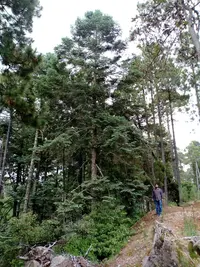
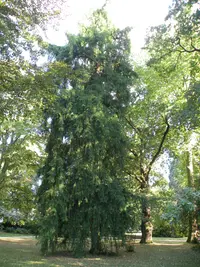
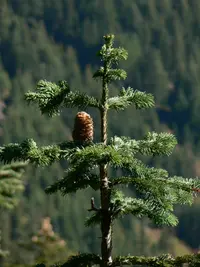
Durango fir, Abies durangensis, is a medium to large evergreen conifer native to the high-elevation forests of the Sierra Madre region in Mexico. It forms a straight trunk with a dense, conical crown and horizontal branches.
The needles are flat, glossy green, and arranged around the shoots, giving the tree a full, layered look. Cones are upright on the branches, typical of true firs.
In cultivation, Durango fir prefers cool to cold winters, moderate summer temperatures, and well-drained, slightly acidic soil. It does best in full sun with consistent soil moisture and is considered a tree for experienced gardeners, as proper site selection and knowledge of how to care for Durango Fir strongly influence long-term success.

Care Difficulty
Moderate Care

Light Preference
Full Sun

Water Requirements
Moderate Water

Temperature Preference
Warm Climate

Hardiness Zone
8–9

Soil Texture
Loamy, Sandy, Rocky

Soil pH
Acidic (5.5–6.5)

Soil Drainage
Well-drained

Fertilization
Minimal (feed rarely)
Scan your plant to receive care tips personalized for your specific plant
Available on iOS and Android
This high-elevation fir prefers bright, cool sun with some protection from harsh afternoon exposure.
This species prefers evenly moist but not saturated soil, especially during establishment.
This fir is adapted to cool, highland climates and tolerates significant winter cold once established.
This fir handles a wide humidity range but performs best in moderately dry air.
Abies durangensis prefers deep, cool, well‑drained mineral soil with moderate organic matter.
This species can be grown in containers only temporarily, mainly as a juvenile plant.
In average garden soil, Durango Fir benefits from light, structured feeding rather than heavy fertilization.
Abies durangensis needs minimal pruning, mainly to maintain health and safe structure.
This fir is usually grown in the ground, so transplanting young Abies durangensis correctly is more important than long-term container repotting.
Abies durangensis is typically propagated by seed, which requires specific conditions and can be slow for home growers.
This fir is cold hardy in suitable climates and usually needs little active winter care once established.

Plant Health Check
Not sure what's wrong with your plant? Check your plant's health inside the app.
This species is native and restricted to the high mountains of the Sierra Madre Occidental in western Mexico, where it forms cool, moist montane forests at mid to high elevations.
It typically grows on north-facing slopes and deep ravines with high atmospheric moisture, often alongside pines and oaks, reflecting its preference for sheltered, humid microclimates.
Abies durangensis is assessed as Near Threatened on the IUCN Red List because its limited range and ongoing logging and habitat disturbance have fragmented many of its native stands.

The wood of this species has been locally valued in Mexico for construction and carpentry, which, combined with its restricted distribution, has contributed to regional overharvesting and the need for focused conservation planning.
Growth is moderate. In suitable mountain conditions, young trees typically add about 20–35 cm of height per year, slowing as they mature. Good moisture, cool summers, and deep, well-structured soil support the best growth rate.
Keep your plants happy and healthy with plant identification, disease detection, and easy care guidance.