Pacific Silver Fir Care (Abies amabilis)

Also known as: Cascade Fir, Lovley Fir, silver fir, beautiful fir
Pacific Silver Fir

About Pacific Silver Fir

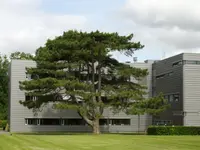
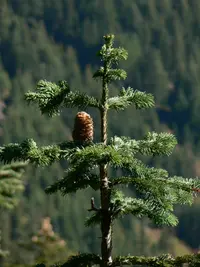
Pacific silver fir, Abies amabilis, is a cold-climate coniferous tree native to moist mountain forests of the Pacific Northwest in North America. It is usually a tall, narrow pyramid with dense, horizontal branches.

The foliage forms flat sprays of soft, glossy, dark green needles with pale silvery bands beneath, giving the tree its common name. Bark starts smooth and gray, becoming furrowed with age.

This species prefers cool temperatures, consistent moisture, and deep, well-drained, acidic soil, so it is not ideal for hot or dry climates. Gardeners who want to care for Pacific Silver Fir should understand that it grows slowly and needs stable, cool, humid conditions to perform well.

Main Plant Requirements

Care Difficulty

Moderate Care

Light Preference

Partial Shade

Water Requirements

Regular Water

Temperature Preference

Cold Hardy

Hardiness Zone

5–7

Soil Texture

Loamy, Silty, Organic-rich

Soil pH

Strongly acidic (4.5–5.5), Acidic (5.5–6.5)

Soil Drainage

Moist but well-drained

Fertilization

Minimal (feed rarely)

Get Personalized Care Plan

Scan your plant to receive care tips personalized for your specific plant

Available on iOS and Android

How to Care for the Pacific Silver Fir

Abies amabilis is a shade-tolerant conifer that naturally thrives in cool, moist forest light.

  • Provide bright, dappled light or light shade, with 2–4 hours of gentle morning sun and protection from strong afternoon sun, especially in warmer regions.
  • Young Pacific Silver Fir trees benefit from partial shade under taller trees, which reduces needle scorch and moisture stress in the first 5–10 years.
  • Avoid deep, dense shade that results in sparse, weak growth, and avoid exposed full sun in hot, dry sites where needles may yellow or brown.

Abies amabilis prefers consistently moist but never waterlogged soil, especially while establishing.

  • In the ground, aim for soil that stays evenly damp to 5–8 cm depth; allow only the surface 2–3 cm to dry slightly between natural rains or supplemental watering.
  • Use deep, infrequent soakings rather than light sprinkles, ensuring excellent drainage to prevent root rot, sour odor, or blackening roots from standing water.
  • Reduce supplemental watering in cool, rainy seasons and increase during hot, dry spells if needles begin to dull, curl slightly, or lower branches droop.

This cool-climate fir is well adapted to cold, moist conditions with moderate summers.

  • Optimal growth occurs around 45–65°F (7–18°C), typical of cool coastal and montane climates, with best vigor where summers stay mild and soils do not overheat.
  • Mature trees tolerate winter lows near -20°F (-29°C), but young plants benefit from snow cover or mulch to buffer repeated freeze–thaw cycles.
  • Heat above 85°F (29°C), especially with low humidity and dry soil, can cause needle scorch, so provide soil cooling with mulch and avoid highly exposed hot sites.

Abies amabilis prefers consistently cool, moist air and benefits from moderate ambient humidity.

  • Aim for 50–70% humidity, especially for young or container-grown Pacific Silver Fir in sheltered sites.
  • It tolerates brief drier spells but prolonged humidity below 40% can cause browning and shedding of older needles.
  • To boost humidity outdoors, group containers together and use a thick organic mulch to reduce surface evaporation around the root zone.

Abies amabilis requires cool, moist, well-aerated soil that never becomes waterlogged.

  • Use deep, loamy soil rich in organic matter, combining garden loam with leaf mold or composted bark for structure.
  • Ensure steady drainage by avoiding compacted sites and incorporating coarse sand or fine gravel into heavier soils.
  • Keep soil slightly acidic, around pH 5.0–6.5, since alkaline conditions can limit nutrient availability and weaken growth.
  • Avoid dry, shallow, or highly compacted soil, and prevent standing water by shaping a gentle slope or raised planting area.

This species is generally unsuited to long-term container growing and is best planted in open ground for stable development.

This naturally slow-growing Pacific Silver Fir needs only light, careful feeding in cultivation.

  • Use a balanced, slow-release conifer fertilizer or well-aged compost mixed into the soil, avoiding high-nitrogen lawn products.
  • Feed lightly once in early spring and again in mid-summer during active growth, skipping the first 1–2 years after planting.
  • Reduce or stop fertilizing in fall and winter when growth is minimal to prevent soft, frost-tender tissue.
  • Apply at half the label rate for trees on nutrient-poor soils, and water thoroughly afterward to minimize root burn.

Abies amabilis requires minimal pruning and is usually shaped well by its natural growth habit.

  • Schedule any structural pruning for late winter to very early spring, before new growth starts.
  • Remove only dead, diseased, crossing, or storm-damaged branches using sharp, clean bypass pruners or a pruning saw.
  • Avoid cutting back into old bare wood, as firs do not regenerate foliage well from such areas.
  • Light thinning near the crown can improve air flow and light penetration without altering the natural conical form.

This species is usually grown in the ground, so focus on careful transplanting rather than long-term container culture.

  • Transplant young Abies amabilis trees in late fall or early spring, when soil is moist and temperatures are cool.
  • Look for roots circling the nursery container or stunted top growth as signs a plant is ready to move out of its pot.
  • Disturb the root ball as little as possible; gently loosen only the outer circling roots, then plant at the same soil depth.
  • Water deeply after planting, apply a 5–8 cm mulch ring, and keep soil evenly moist to reduce transplant shock.

Abies amabilis is usually propagated by seed, with vegetative methods reserved for specialized growers.

  • Collect mature cones in late summer to early fall and extract seeds once scales begin to open.
  • Provide a cold, moist stratification period of about 6–8 weeks at 34–41°F to break seed dormancy.
  • Sow in a well-drained, slightly acidic conifer mix, keeping the medium just moist and shaded from strong sun.
  • Use semi-ripe cuttings only under controlled conditions with rooting hormone, bottom heat, and high humidity, as success rates are low.

This cold-hardy fir generally needs little special winter care when planted in suitable outdoor climates.

  • Mature trees tolerate deep frosts typical of USDA zones 5–7 once fully established.
  • Apply a 5–8 cm layer of bark or woodchip mulch over the root zone, keeping it clear of the trunk flare.
  • Shelter young or container-grown plants from drying winter winds, which can cause needle browning.
  • Move containers into an unheated but frost-sheltered spot in very cold regions to protect roots from freeze–thaw cycles.

Care Tips

Shelterbelt placement

Site young trees where nearby evergreens or structures break prevailing winds, since steady wind protection reduces leader damage and helps establish a straighter, stronger central trunk.

Train a single leader

If the top leader is damaged or forked, stake and loosely tie one vigorous upright shoot as the new leader during late spring, then remove competing vertical shoots the following year to maintain a stable, pyramidal form.

Mulch for cool roots

Apply a 5–8 cm layer of coarse, well-composted bark or wood chips over the root zone, keeping it a few cm away from the trunk, to keep roots cool, conserve moisture, and reduce weed competition without waterlogging the soil surface.

Snow load management

In regions with heavy, wet snow, gently brush accumulated snow off the branches after storms to prevent spreading, cracking, or permanent bending of young, flexible limbs.

Monitor for root stress

Check for pale, sparse needles and dieback on the lower third of the crown, which often signals compaction or poor drainage, and respond by improving soil structure in the surrounding area rather than increasing irrigation when caring for Pacific Silver Fir.

Common Pests and Diseases

Balsam woolly adelgid

This pest attacks the bark and twigs, causing swelling, roughened bark, and crown thinning that can eventually kill branches or whole trees. Symptoms include white, cottony masses on bark and reduced new growth.

Solution

For young or landscape trees, prune out and destroy heavily infested branches and avoid stressing the tree with drought or soil compaction. In regions where allowed, a certified arborist can apply systemic insecticides timed to active crawler stages, and monitoring nearby firs helps catch new infestations early as part of broader Abies amabilis care instructions.

Spruce budworm

This pest feeds on new needles and buds, leading to brown, chewed foliage and thin, ragged-looking branch tips. Severe, repeated defoliation can weaken Pacific silver fir and increase susceptibility to other stresses.

Solution

Light infestations on smaller trees can be reduced by hand-picking larvae and removing damaged shoot tips before they mature. In higher-value plantings, coordinated treatment with biological insecticides containing Bacillus thuringiensis kurstaki (Btk) at budbreak is effective when directed by local forestry or extension guidance.

Fir needle rust

This disease causes yellow spots on needles that later develop blister-like pustules releasing orange spores. Affected needles often discolor and drop prematurely, reducing the tree’s vigor over time.

Solution

Rake up and dispose of fallen needles to reduce spore sources and avoid overhead irrigation that keeps foliage wet for long periods. In areas with repeated severe outbreaks, an arborist may recommend preventive fungicide sprays in spring, timed to new needle growth and local rust forecasts.

Needle cast

This disease leads to browning and premature shedding of older needles, often from the lower branches upward, giving the tree a thin or tufted appearance. Symptoms include small dark fruiting bodies on dead needles when examined closely.

Solution

Improve air circulation by spacing trees properly and selectively thinning dense branches, and always remove and discard heavily affected lower branches and fallen needles. Where needle cast is persistent and severe, a professional may apply targeted fungicides in spring to protect emerging needles.

Fir engraver beetle

This pest bores into stressed or weakened trees, creating winding galleries beneath the bark that disrupt water flow and can cause branch dieback or tree death. Symptoms include pitch tubes, boring dust, and rapid browning of sections of the crown.

Solution

Prevention is critical, so maintain tree vigor through proper watering during drought, avoiding root disturbance, and preventing mechanical damage to the trunk. Remove and properly dispose of heavily infested or dead trees to reduce local beetle populations, and consult a professional about protective bark treatments if beetle pressure is high in the area.

Interesting Facts

Pacific coastal specialist

This species is native almost exclusively to cool, wet, maritime forests from northern California to British Columbia, thriving in foggy, high-rainfall mountains where many other conifers grow poorly.

Distinctive needle pattern

Its blunt, soft needles are arranged in flattened rows with a characteristic V-shaped gap above the twig, and show two bright white stomatal bands on the underside that help control water loss and gas exchange.

Shallow yet stable roots

Despite forming a relatively shallow root system in its often wet, cool soils, it withstands heavy snow loads and frequent storms by developing wide-spreading lateral roots that anchor it on steep slopes.

Botan icon

Did you know?

Mature trees in old-growth forests can exceed 50 m in height and are considered a key late-successional species in Pacific Northwest montane ecosystems, often forming part of stands that have persisted, with partial disturbance, for several centuries.

FAQs about Pacific Silver Fir

This species grows slowly to moderately, often adding about 20–30 cm of height per year under good conditions. Growth is slower in poor soils, exposed, windy sites, or if roots are compacted or frequently disturbed.

Grow Healthy Plants with Botan Care

Keep your plants happy and healthy with plant identification, disease detection, and easy care guidance.


Botan plant care app — identify plants on mobile

Explore More Plants