Encourage Deep Rooting
During the first growing season, give one slow, deep soak and then allow the soil to dry thoroughly, which encourages a deep root system that improves long-term drought tolerance when growing rough jointfir.

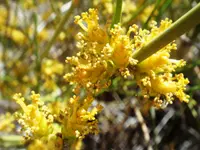
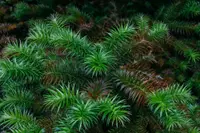
Rough jointfir (Ephedra aspera) is a tough, evergreen shrub known for its thin, jointed green stems and very small, scale-like leaves. It has a sparse, almost leafless look and stays low and spreading in habit.
This species is native to arid regions of the southwestern United States and northern Mexico, where it grows on rocky slopes and desert scrub. It is adapted to intense sun, poor soils, and low moisture.
Ephedra aspera is generally slow-growing but long-lived, valued for drought tolerance and low maintenance needs. Those who care for rough jointfir should provide strong light, sharply draining soil, and avoid frequent watering.

Care Difficulty
Easy Care

Light Preference
Full Sun

Water Requirements
Low Water

Temperature Preference
Cold Hardy

Hardiness Zone
6–9

Soil Texture
Sandy, Rocky, Loamy

Soil pH
Slightly acidic (6.5–7.0), Slightly alkaline (7.0–7.5)

Soil Drainage
Well-drained

Fertilization
Minimal (feed rarely)
Scan your plant to receive care tips personalized for your specific plant
Available on iOS and Android
Ephedra aspera thrives in bright, open sites with strong sun exposure.
This desert shrub prefers dry, fast-draining conditions and is highly sensitive to excess moisture.
This species is adapted to hot, arid climates with cool to cold winters.
Humidity is rarely a concern for Ephedra aspera, which is adapted to very dry air.
Ephedra aspera prefers very lean, rocky, fast-draining soil that mimics desert slopes.
This species can be grown in containers if the pot mimics its dry, rocky habitat.
This desert shrub needs minimal feeding, so focus on not overfertilizing rough jointfir in any setting.
Ephedra aspera benefits from light, occasional pruning to maintain structure and remove weak growth.
This species is better suited to in-ground planting than long-term container culture, so focus on careful transplanting.
Ephedra aspera is most often propagated from seed, with success depending on warmth and drainage.
This drought-adapted shrub is generally cold hardy in suitable climates and needs only modest winter attention.

Plant Health Check
Not sure what's wrong with your plant? Check your plant's health inside the app.
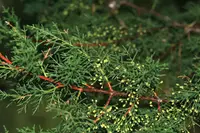
This desert shrub has green, photosynthetic stems with tiny scale-like leaves that drop early, an adaptation that reduces water loss in the arid habitats where it grows.
Ephedra aspera is naturally restricted to dry, rocky sites and desert washes in the southwestern United States and northern Mexico, where it often grows among creosote bush and other drought-adapted shrubs.
Unlike many flowering shrubs that rely on insects, this species produces small, separate male and female cones and depends mainly on wind to move pollen between plants.

Ephedra aspera is one of a small number of living species in the ancient gymnosperm lineage Ephedraceae, making it a modern representative of a group that has existed since at least the Early Cretaceous period.
Growth is slow to moderate. In typical dry garden conditions, it often adds about 5–15 cm per year. Establishment may take several years, but once rooted deeply it maintains a steady, compact growth habit.
Keep your plants happy and healthy with plant identification, disease detection, and easy care guidance.