Windfirm training
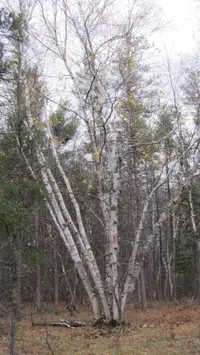
In the first 3–5 years, selectively prune or head back only severely one-sided branches to encourage a balanced crown that is less likely to snap or lean in high winds.

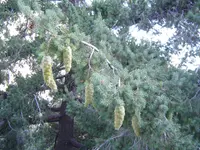
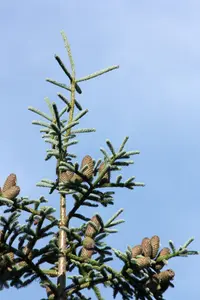
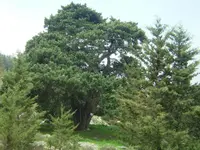
Big-cone Douglas-fir, Pseudotsuga macrocarpa, is a large evergreen conifer native to the mountains of southern California. It forms a tall, straight trunk with layered, horizontal branches and dense green needles. The tree is best known for its massive seed cones, which are much larger than those of other Douglas-firs and give the species its common name.
In cultivation, it prefers full sun, well-drained soil, and moderate moisture, and it is adapted to dry, Mediterranean-type climates. It suits spacious gardens, restoration plantings, and specialized collections rather than small yards, so planning is important when learning how to care for Big-cone Douglas-fir.

Care Difficulty
Moderate Care

Light Preference
Full Sun

Water Requirements
Low Water

Temperature Preference
Warm Climate

Hardiness Zone
7–9

Soil Texture
Sandy, Loamy, Rocky

Soil pH
Acidic (5.5–6.5), Slightly acidic (6.5–7.0)

Soil Drainage
Well-drained

Fertilization
Minimal (feed rarely)
Scan your plant to receive care tips personalized for your specific plant
Available on iOS and Android
This species prefers full sun but can tolerate some light shade, especially in hotter regions.
Pseudotsuga macrocarpa is drought-tolerant once established but still benefits from deep, infrequent watering.
This conifer prefers mild to warm conditions with good tolerance for both summer heat and winter cold.
This species tolerates relatively dry air and usually does not need special humidity management outdoors.
Pseudotsuga macrocarpa prefers deep, well-drained mineral soil with moderate fertility.
This species can be grown in containers only for the short to medium term, mainly while young.
This drought-adapted conifer needs minimal feeding, so focus on soil health rather than heavy fertilizer use when caring for Big-cone Douglas-fir.
Pseudotsuga macrocarpa generally needs only light structural pruning to maintain safety and tree health.
This species is rarely kept long term in containers; young plants are usually shifted once or twice before permanent transplanting outdoors.
Pseudotsuga macrocarpa is typically propagated from seed, with careful handling needed for good germination and early survival.
This tree is cold hardy in its suitable climate range and usually needs little specific winter care once established.

Plant Health Check
Not sure what's wrong with your plant? Check your plant's health inside the app.
This species produces the largest cones of any Douglas-fir, often more than 15 cm long, which is why it is called big-cone Douglas-fir.
Mature trees often retain living crowns high above the ground and can resprout after moderate fire, helping them persist in the fire-prone chaparral and canyon habitats of southern California.
The natural range is restricted to mountains of southern California, where it grows in steep canyons and on north-facing slopes, unlike the more widespread coast Douglas-fir of the Pacific Northwest.

Genetic studies show that big-cone Douglas-fir is evolutionarily distinct from other North American Douglas-firs, reflecting long isolation in southern California mountain refuges through past climatic shifts.
This species grows slowly to moderately, often adding 20–40 cm of height per year under natural conditions. Growth is quickest in youth, then gradually slows as the crown broadens and resources shift to cone production.
Keep your plants happy and healthy with plant identification, disease detection, and easy care guidance.