Wind and snow protection
In exposed sites, install a temporary windbreak and gently shake heavy, wet snow from branches after storms to reduce the risk of leader breakage and distorted crown shape.

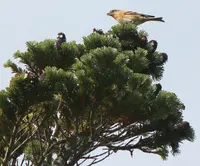
Veitch's fir, Abies veitchii, is a cold-hardy evergreen conifer native to the mountains of central and northern Japan. It forms a narrow, upright tree with dense, layered branches.
Needles are short, glossy dark green above and silvery white beneath, giving the tree a bright, two‑tone look. Cones stand upright on the branches and add ornamental interest.
This species prefers cool climates, consistent moisture, and well-drained, slightly acidic soil. Once established, it grows at a moderate rate and is relatively resilient in suitable conditions.
Gardeners who learn how to care for Veitch's Fir usually find it reliable in temperate gardens, provided it is protected from hot, drying winds and extreme heat.

Care Difficulty
Moderate Care

Light Preference
Full Sun

Water Requirements
Moderate Water

Temperature Preference
Cold Hardy

Hardiness Zone
4–7

Soil Texture
Loamy, Sandy, Organic-rich

Soil pH
Strongly acidic (4.5–5.5), Acidic (5.5–6.5)

Soil Drainage
Moist but well-drained

Fertilization
Minimal (feed rarely)
Scan your plant to receive care tips personalized for your specific plant
Available on iOS and Android
This cold-climate conifer prefers bright outdoor conditions with protection from harsh heat.
This species prefers evenly moist, cool soil that never stays waterlogged.
This high-mountain fir is strongly cold hardy but dislikes hot, stagnant conditions.
This species prefers cool, moderately humid air but usually adapts to typical outdoor humidity in temperate regions.
Abies veitchii grows best in cool, moist, well-aerated soil that drains freely yet retains some consistent moisture.
This species can be grown in containers for several years, mainly as a young specimen or dwarf cultivar outdoors.
This mountain conifer grows well in reasonably fertile soil and usually needs only modest feeding.
Pruning Abies veitchii is mainly corrective, keeping the tree healthy and structurally sound.
This fir is usually grown in the ground, so focus on careful transplanting of young trees.
Propagation of Abies veitchii is possible but slow and better suited to patient or experienced growers.
This cold-hardy fir tolerates typical outdoor winters in much of its range with limited intervention.

Plant Health Check
Not sure what's wrong with your plant? Check your plant's health inside the app.
This fir naturally occurs in cool, very humid cloud forests of central Honshu, Japan, often between roughly 1,600–2,500 m, where it is adapted to heavy snow loads and frequent fog.
Its needles have a characteristic bluish underside with two striking white stomatal bands and a slightly hairy texture near the base, a feature that helps distinguish it from many other Asian firs.
Mature trees develop a narrow, spire‑like crown and flexible branches that help shed deep, wet mountain snow, reducing the risk of limb breakage in its native subalpine environment.

Abies veitchii is considered one of the most cold‑tolerant Japanese firs and has been widely used in breeding and selection work to improve winter hardiness in ornamental fir cultivars grown in temperate regions.
This species has a slow to moderate growth rate, typically adding about 20–30 cm per year in good conditions. Growth is slower in exposed, windy, or nutrient-poor sites and during the first few years after planting.
Keep your plants happy and healthy with plant identification, disease detection, and easy care guidance.