Korean Pine Care (Pinus koraiensis)

Also known as: Korean white pine, Korean nut pine, Manchurian white pine
Korean Pine

About Korean Pine

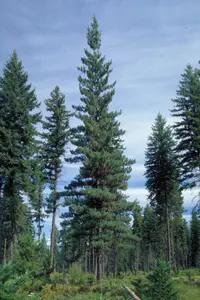
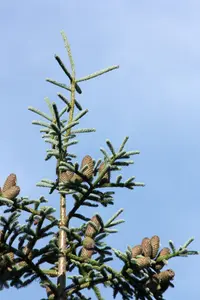
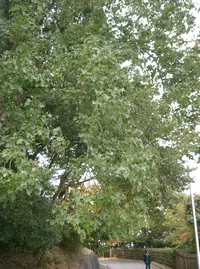
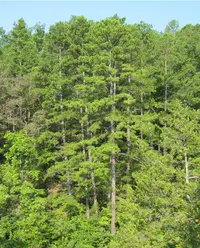
Korean pine, Pinus koraiensis, is a long-lived coniferous tree valued for its tall, straight trunk and soft, bluish-green needles held in dense clusters. It forms a strong, pyramidal crown when young, gradually becoming broader and more irregular with age.

This species is native to mountain forests of Korea, northeast China, and parts of Russia and Japan, where it experiences cold winters and cool summers. It is generally slow to moderate in growth and prefers full sun, well-drained soil, and consistent moisture, though established trees tolerate some drought.

For home gardeners, how to care for Korean Pine mainly comes down to providing enough light, room for its eventual size, and avoiding waterlogged conditions.

Main Plant Requirements

Care Difficulty

Moderate Care

Light Preference

Full Sun

Water Requirements

Moderate Water

Temperature Preference

Cold Hardy

Hardiness Zone

3–7

Soil Texture

Sandy, Loamy, Rocky

Soil pH

Strongly acidic (4.5–5.5), Acidic (5.5–6.5)

Soil Drainage

Well-drained

Fertilization

Minimal (feed rarely)

Get Personalized Care Plan

Scan your plant to receive care tips personalized for your specific plant

Available on iOS and Android

How to Care for the Korean Pine

This slow-growing conifer performs best in bright, open conditions with cool roots and good air movement.

  • Provide full sun for 6–8 hours daily; light afternoon shade is beneficial in hotter regions to limit needle scorch and soil moisture loss.
  • Young Korean Pine trees tolerate light partial shade, but dense shade leads to sparse branching, elongated shoots, and reduced cone production over time.
  • In summer, protect from reflected heat from pavement or walls; in winter, full sun helps maintain vigor, but avoid deep shade from buildings or evergreen windbreaks.

This species prefers evenly moist, well-drained soil and reacts poorly to standing water.

  • Water deeply when the top 5–8 cm of soil feels dry, aiming to moisten the root zone rather than just the surface, then allow the soil to drain fully.
  • During the first 2–3 years, check soil after hot, dry, or windy periods; drooping or dull needles suggest drought stress, while yellowing at the base can signal overwatering.
  • Pinus koraiensis grows best in soil with good drainage; amend heavy clay with grit or composted bark to prevent waterlogging and root rot, especially in winter.

This hardy conifer is adapted to cold climates but still benefits from moderate growing-season temperatures.

  • Optimal growth occurs around 60–75°F (16–24°C), with cool nights; prolonged heat above 86°F (30°C) can slow growth and increase drought stress risk.
  • Mature trees tolerate winter lows near -30°F (-34°C), while young plants benefit from wind protection and mulch to buffer rapid freeze–thaw cycles.
  • In hot-summer areas, site the tree where roots stay cool and soil does not bake, as repeated extremes above 95°F (35°C) can dry needles and stress new shoots.

Pinus koraiensis handles a wide humidity range and usually does not need special humidity management outdoors.

Pinus koraiensis prefers cool, moist, well‑drained mineral soils with stable structure.

  • Use a loamy or sandy loam soil with moderate organic matter, avoiding heavy, sticky clay that holds water for long periods.
  • Aim for slightly acidic to neutral pH around 5.5–7.0, amending very alkaline soils with acidic organic materials such as pine bark fines.
  • Improve drainage and aeration by blending mineral topsoil with coarse sand and fine gravel or grit to prevent water stagnation around the roots.
  • Avoid compacted, waterlogged, or highly saline soils, as poor aeration and excess soluble salts can damage fine feeder roots.

This species can be grown in containers when young, mainly for patios or bonsai-style cultivation.

  • Choose a deep, heavy container that resists tipping, as the tree becomes tall and top‑heavy with age.
  • Select thick-walled or clay pots to moderate root temperature swings on exposed patios or balconies.
  • Elevate the pot slightly on feet or spacers so drainage holes stay clear and excess water can exit quickly.

This slow-growing conifer usually needs modest feeding, especially in poor soils or containers.

  • Use a balanced slow-release granular fertilizer (for example 10-10-10) or well-rotted compost around the drip line, not against the trunk.
  • Apply once in early spring and again in mid-summer during active growth for Korean Pine established in lean soil or pots.
  • Reduce or skip feeding in late fall and winter, when growth is minimal and nutrients are less absorbed.
  • Apply at about half the label rate for young trees to limit salt stress and avoid lush, weak growth.

Pinus koraiensis requires only light structural pruning to maintain health and form.

  • Schedule pruning in late winter or very early spring before new growth starts, avoiding heavy summer cuts.
  • Remove dead, diseased, crossing, or storm-damaged branches first to improve airflow and reduce pest or decay risk.
  • Use sharp bypass pruners or a clean pruning saw, cutting just outside the branch collar without leaving stubs.
  • Limit shaping cuts to minor tip reductions, since excessive removal weakens the tree and distorts its natural habit.

This pine is usually grown in the ground, with transplanting done carefully and infrequently to limit root stress.

  • Transplant young trees in early spring or early fall, when soil is workable and temperatures are mild.
  • Look for slow growth, roots circling the container, or soil drying very fast as signs a container plant needs a larger pot.
  • Shift container plants only every 3–5 years, increasing pot size slightly and using a free-draining, slightly acidic mix.
  • Water thoroughly before and after moving, keep the root ball intact, and provide shade or wind protection for 1–2 weeks.

Reproduction of this species is mainly done from seed and is moderately demanding for home growers.

  • Collect ripe cones in late summer to fall, then extract seeds once scales open naturally.
  • Provide cold stratification at about 34–41°F for 8–12 weeks to break dormancy and improve germination.
  • Sow seeds in a well-drained, slightly acidic medium, barely covering them, and keep evenly moist but not waterlogged.
  • Maintain bright light, good air movement, and cool conditions; vegetative methods like cuttings are rarely successful.

This cold-hardy species tolerates low winter temperatures and usually needs minimal special care once established.

  • In regions with severe freeze-thaw cycles, apply 5–8 cm of mulch around the root zone, keeping it away from the trunk.
  • For young or newly planted trees, use burlap screens to reduce drying winter winds and sunscald on exposed sites.
  • Move container-grown trees into a sheltered, unheated but frost-moderated area, such as a cold frame or attached garage.

Care Tips

Wind-hardening young trees

Stake only very young trees in the first 1–2 years and loosen ties gradually so the trunk can flex in the wind and develop strong wood and root anchorage.


Mulch for root stability

Apply a 5–8 cm layer of coarse bark or wood-chip mulch in a wide ring around the tree, keeping it 5–8 cm away from the trunk, to buffer soil temperature, reduce weed competition, and protect shallow feeder roots.

Deep winter watering

In late fall before the ground freezes, give the tree a slow, deep watering to reduce winter desiccation of needles and support evergreen foliage through dry, cold winds.

Cone and seed management

Remove excess young cones on smaller landscape specimens to reduce stress and breakage on branches, reserving full cone production for only the strongest scaffold limbs.

Preventive pest monitoring

Inspect needles and bark several times a year for early signs of scale insects, adelgids, or needle cast, and address issues promptly with targeted treatments as part of consistent Pinus koraiensis care.

Common Pests and Diseases

Pine wilt nematode

This disease is caused by the pinewood nematode, which blocks water movement in the trunk and leads to rapid browning and death of needles and branches. Symptoms include sudden wilting and death of otherwise established trees, often within a single growing season.

Solution

Remove and destroy affected trees promptly to prevent spread, since there is no effective cure once wilting begins. Control is focused on preventing introduction of infested wood, stripping and chipping dead pines, and managing pine sawyer beetle vectors by avoiding storage of fresh pine logs near living Korean pines.

Pine needle cast

This disease is caused by fungi such as Lophodermium or similar needle-cast pathogens that infect needles, causing yellowing, banding, and premature needle drop from the inner canopy. Symptoms include thinning foliage and lower branches that look bare compared with the outer, newer growth.

Solution

Prune and remove heavily infected lower branches and fallen needles from under the tree to reduce the source of spores. Improve spacing and airflow, avoid overhead irrigation, and in high-risk areas consider a registered preventive fungicide spray on new needles in spring according to local extension or label guidance.

Pine needle scale

This pest appears as small white, oval, crust-like bumps on needles that suck sap and cause needles to yellow, lose vigor, and drop early. Heavy infestations can give branches a grayish cast and reduce growth of the tree.

Solution

Prune out and discard heavily infested twigs and improve tree vigor with proper watering and mulching. For active control, target the crawler stage with a labeled horticultural oil or insecticidal soap in late spring, ensuring thorough coverage of needles while avoiding application during high heat or drought stress.

Pine sawyer beetle

These insects are longhorned beetles whose larvae tunnel in weakened or recently dead pines, and they also act as vectors for the pinewood nematode. Symptoms include exit holes and galleries in the wood, often following storm damage, drought, or other stress that weakens Korean pine.

Solution

Promptly remove, debark, or chip windthrown, dead, or severely weakened pines so they do not serve as breeding sites, which is a key part of Pinus koraiensis care instructions in regions where pine wilt occurs. Avoid stacking fresh pine firewood near living trees, and monitor stressed trees so any that decline rapidly can be removed before beetles emerge.

Scleroderris canker

This disease is caused by the fungus Gremmeniella abietina and leads to cankers on twigs and branches, shoot dieback, and widespread browning of needles, especially on young trees and lower crown sections. Symptoms include dead tips that bend into a shepherd’s crook shape and resin-soaked cankered areas on stems.

Solution

Prune out and destroy infected shoots and branches during dry weather, cutting back into healthy wood, and disinfect tools between cuts. Maintain good spacing and sunlight exposure, avoid planting Korean pine in low, poorly drained frost pockets, and in areas with a known history of this disease consult local extension recommendations for any preventive fungicide schedules for nurseries or young plantings.

Interesting Facts

Nutrient-rich edible seeds

The large seeds of this species, often called pine nuts, are an important traditional food in northeastern Asia and are valued for their high fat and protein content.

Key Siberian tiger habitat

Natural forests dominated by this pine in northeast Asia form part of the core habitat of the endangered Amur (Siberian) tiger by supporting a rich food web based on animals that feed on its seeds.

Cold-adapted evergreen

This species is naturally distributed in mountainous regions of Korea, northeastern China, and the Russian Far East, where it tolerates long, cold winters yet maintains foliage year-round.

Botan icon

Did you know?

Genetic and pollen fossil evidence suggests that this species survived past ice ages in scattered mountain refuges across northeastern Asia, then expanded its range as climates warmed, which makes it a useful model for studying how forest trees respond to climate change over long timescales.

FAQs about Korean Pine

Growth is relatively slow to moderate. Young trees often add 20–30 cm per year, sometimes less in poor conditions. With age, annual growth usually slows, focusing more on trunk thickening and crown development than height gains.

Grow Healthy Plants with Botan Care

Keep your plants happy and healthy with plant identification, disease detection, and easy care guidance.

Botan plant care app — identify plants on mobile

Explore More Plants