Wind-firm training
Expose young trees to moderate, unobstructed wind and avoid staking unless necessary, so the trunk and root system strengthen naturally for better storm resistance.

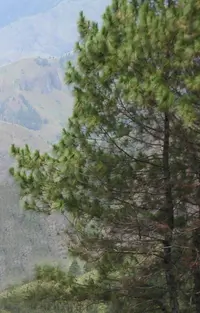
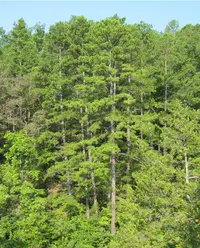
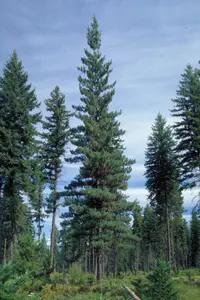
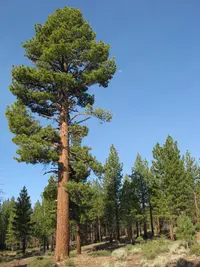
Merkus's pine, Pinus merkusii, is a tropical pine tree known for its tall, straight trunk and long, slender needles arranged in pairs. It often forms open, light-filled stands and is widely used for timber and resin production.
This species is native to Southeast Asia, including parts of Indonesia, the Philippines, Thailand, and neighboring regions, where it grows in warm, often seasonally dry climates. It is generally fast-growing but can be sensitive to poor drainage and severe cold, which affects how easy it is to establish.
To care for Merkus's Pine, provide full sun, well-drained soil, and protection from prolonged frost to support healthy, stable growth in suitable climates.

Care Difficulty
Moderate Care

Light Preference
Full Sun

Water Requirements
Moderate Water

Temperature Preference
Tropical / Frost Sensitive

Hardiness Zone
11–12

Soil Texture
Sandy, Loamy, Rocky

Soil pH
Acidic (5.5–6.5), Slightly acidic (6.5–7.0)

Soil Drainage
Well-drained

Fertilization
Minimal (feed rarely)
Scan your plant to receive care tips personalized for your specific plant
Available on iOS and Android
This sun-loving pine needs strong, direct light for dense, healthy growth in open landscapes.
This pine prefers consistently draining soil and benefits from careful watering that avoids persistent wetness.
This tropical pine thrives in warm, frost-free conditions and shows best growth where cold is minimal.
This pine tolerates a wide humidity range but prefers moderately dry air.
Pinus merkusii prefers sharply draining, lean soil that mimics its native, often sandy or rocky habitats.
This species can be grown in containers when managed for strong drainage and root stability.
In most ground plantings, Pinus merkusii needs little added fertilizer if soil is reasonably fertile.
Pinus merkusii benefits from light, targeted pruning to maintain structure and remove problem growth.
This pine is usually grown in the ground, so focus on careful transplanting rather than frequent repotting.
Propagation of Pinus merkusii is typically done from seed and can be slow, so it suits patient growers or nursery production.
This tropical to subtropical pine lacks strong frost tolerance and needs attention in colder climates.

Plant Health Check
Not sure what's wrong with your plant? Check your plant's health inside the app.
This species is the only naturally occurring pine found in the Southern Hemisphere tropics, with native populations reaching as far south as Sumatra near the equator.
Its thick bark and ability to produce abundant wind-dispersed seeds help stands recover after periodic forest fires in parts of its Southeast Asian range.
Plantations of this species in Indonesia, Thailand, and neighboring countries are widely tapped for oleoresin, which is processed into turpentine and rosin used in industry and adhesives.

Some natural populations of this species in northern Vietnam and Laos grow unusually high in elevation for a tropical pine, forming open, light-demanding stands on exposed ridges where many other tree species cannot persist.
This species is generally fast-growing under warm, sunny, well-drained conditions, often adding 0.5–1 m of height per year when young. Growth slows as it matures or if exposed to poor soil, drought, or strong competition.
Keep your plants happy and healthy with plant identification, disease detection, and easy care guidance.