Jeffrey's Pine Care (Pinus jeffreyi)

Also known as: Jeffery pine, yellow pine, black pine, western yellow pine, bull pine, ponderosa pine
Jeffrey's Pine

About Jeffrey's Pine

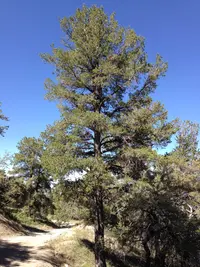
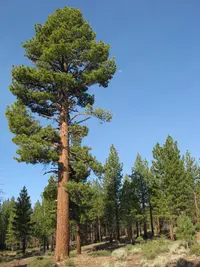
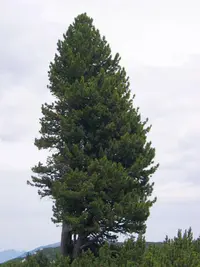
Jeffrey's pine, Pinus jeffreyi, is a long-lived coniferous tree native to the mountains of California, western Nevada, and southern Oregon. It forms a tall, straight trunk with an open, layered crown.

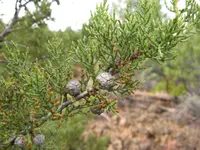
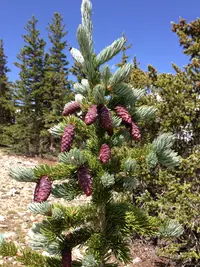
The tree carries long, bluish-green needles in bundles of three and large, heavy cones, giving it a bold, architectural look in landscapes. Its thick bark and deep root system make it well adapted to dry, rocky slopes and harsh mountain conditions.

This species prefers full sun, well-drained, slightly acidic soil, and low to moderate moisture. These traits make it relatively undemanding in suitable climates, though understanding how to care for Jeffrey's Pine is important for long-term success.

Main Plant Requirements

Care Difficulty

Moderate Care

Light Preference

Full Sun

Water Requirements

Low Water

Temperature Preference

Cold Hardy

Hardiness Zone

5–8

Soil Texture

Sandy, Loamy, Rocky

Soil pH

Acidic (5.5–6.5)

Soil Drainage

Well-drained

Fertilization

Minimal (feed rarely)

Get Personalized Care Plan

Scan your plant to receive care tips personalized for your specific plant

Available on iOS and Android

How to Care for the Jeffrey's Pine

This high-elevation conifer performs best in full sun from an early age.

  • Provide 6–10 hours of direct sun daily; open, unshaded exposure promotes dense growth and strong branching for Jeffrey's Pine.
  • Tolerates light partial shade (especially in late afternoon) in hotter regions, but prolonged shade leads to thin, elongated shoots and sparse foliage.
  • In the first 2–3 years, protect from intense reflected heat (pavement, south-facing walls) to reduce needle scorch, especially in dry, windy summers.

This species is drought-tolerant once established but needs thoughtful watering while young.

  • Water new landscape trees when the top 5–8 cm of soil is dry, soaking the root zone deeply, then allow the soil to almost dry before the next watering.
  • During the first 2–3 growing seasons, monitor for wilting, dull needles, or rapid needle drop as signs of underwatering; adjust frequency rather than volume.
  • Ensure sharply drained, sandy or gravelly soil; persistent puddling, sour smell, or blackened roots indicate overwatering or poor drainage for Pinus jeffreyi.

This mountain pine is strongly cold-hardy and adapted to wide outdoor temperature swings.

  • Optimal growing-season temperatures are about 60–80°F (16–27°C), with cool nights supporting steady shoot and root development.
  • Mature trees tolerate winter lows near -10 to -20°F (-23 to -29°C); young plants benefit from mulch to buffer rapid freeze–thaw cycles.
  • Handles dry summer heat up to about 90–95°F (32–35°C) if soil is not waterlogged; prolonged extreme heat with drought can cause needle browning and tip dieback.

This species is adapted to dry mountain air, so humidity control is rarely important for Jeffrey's Pine in cultivation.

Pinus jeffreyi prefers sharply drained, coarse mineral soil that mimics its native mountain slopes.

  • Use sandy or gravelly loam with 20–40% coarse sand or grit to prevent water retention around the roots.
  • Aim for slightly acidic to neutral pH, roughly 5.5–7.0, avoiding very alkaline or salty substrates.
  • In mixes, combine pine bark fines, coarse sand, and a small amount of compost for structure without becoming heavy.
  • Avoid compacted clay, peat-heavy, or waterlogged soils, which restrict aeration and promote root rot.

This species can be grown in containers only temporarily while young, as it eventually becomes too large and deep-rooted.

  • Choose a tall, heavy container to stabilize the developing taproot and prevent tipping in wind.
  • Use a very fast-draining, gritty mix so water moves through in seconds rather than pooling around the root zone.
  • Raise the pot on feet or spacers so the drainage holes stay clear and runoff exits freely after watering.

Established Jeffrey's Pine in the ground usually needs little or no fertilizer if soil is reasonably fertile.

Pruning Pinus jeffreyi is mainly structural and corrective, not cosmetic.

  • Carry out light pruning in late winter to early spring before new growth starts.
  • Remove only dead, diseased, storm-damaged, or badly crossing branches with clean, sharp bypass pruners or a pruning saw.
  • Limit cuts to smaller branches to avoid large wounds that heal slowly on mature pines.
  • Use selective thinning cuts rather than heading cuts to maintain the tree’s natural form and stable structure.

Transplanting Pinus jeffreyi is infrequent and should be planned carefully to minimize root disturbance.

  • Transplant only when root growth circles the container, growth stalls, or the tree becomes unstable in its pot or nursery bed.
  • Choose early spring or early fall, avoiding hot, dry periods for moving field-grown or container plants.
  • Root-prune and undercut in stages 6–12 months before moving large specimens to encourage a compact root ball.
  • Keep the root ball intact, replant at the same depth, water deeply, and maintain even soil moisture until re-established.

Propagation of Pinus jeffreyi is usually done from seed and is moderately slow.

  • Collect mature cones in late summer to fall, dry them until seeds release, then store cool and dry until sowing.
  • Provide cold stratification at about 34–41°F for 6–10 weeks to break seed dormancy and improve germination.
  • Sow seeds in a very well-drained, low-fertility conifer mix, just barely covered, and keep evenly moist, not wet.
  • Grow seedlings in bright light with good airflow and avoid overpotting to prevent waterlogging and damping-off disease.

Winter care for this cold-hardy mountain pine is minimal in most temperate climates.

  • Mature in-ground trees tolerate significant frost and snow with no special covering.
  • Apply 5–8 cm of mulch around the root zone in fall in exposed or newly planted sites, keeping mulch off the trunk.
  • Shelter young or container-grown plants from drying winter winds and desiccation with a windbreak and careful watering.

Care Tips

Wind training

Expose young trees to moderate, unsheltered wind and avoid staking unless absolutely necessary, so the trunk and root system strengthen naturally against future storms.

Root collar inspection

Keep the root flare just above soil level and brush away mulch or soil that accumulates around the base to prevent rot and bark decay at the trunk.

Deep mulching zone

Maintain a wide, 5–8 cm deep mulch ring under the canopy drip line, but keep it 10–15 cm away from the trunk to conserve moisture and reduce competition from turf.

Snow load management

After heavy, wet snowfalls, gently knock snow from branches with a soft broom, working from the bottom up, to reduce the risk of limb breakage.

Low-input monitoring

Use a simple annual checklist for pests, trunk cracks, and needle color changes in late spring, focusing on trends over several years, which is especially useful when caring for Jeffrey's Pine in larger landscapes.

Common Pests and Diseases

Jeffrey pine beetle

This pest is a bark beetle that tunnels under the bark, disrupting water and nutrient flow and often killing stressed or drought-weakened trees. Symptoms include reddish crown fade, boring dust at the base, and pitch tubes on the trunk.

Solution

Reduce stress on trees with proper watering during drought and avoid injuries or soil compaction. Promptly remove and destroy heavily infested trees or limbs, avoid storing fresh pine firewood nearby, and consult a local forestry or extension specialist for region-appropriate beetle management if multiple trees are at risk.

mountain pine beetle

This pest is a small bark beetle that attacks the trunk and larger branches, especially in dense stands or during warm, dry periods. Symptoms include rapid crown discoloration, boring dust in bark crevices, and small exit holes in the bark.

Solution

Maintain tree vigor with adequate spacing, thinning crowded stands where possible, and reducing drought stress through deep but infrequent watering. Remove and destroy infested material before beetles emerge, and in high-risk forest or large-property situations, seek local guidance on trap placement or preventive trunk sprays by a certified arborist.

dwarf mistletoe

This disease is caused by a parasitic flowering plant that embeds in branches and stems, stealing water and nutrients. Symptoms include witches’ brooms (dense, distorted twig clusters), reduced growth, and dieback of heavily infested branches.

Solution

Prune out infected branches at least 30–45 cm below visible swellings and witches’ brooms, disinfecting tools between cuts. For severe infections on larger trees, removal of the most heavily infested trees and improving stand spacing can slow spread; young plantings should be inspected regularly and infected individuals removed early.

needle cast

This disease is caused by fungi that infect needles, leading to browning, spotting, and premature shedding, often from the lower crown upward. Symptoms include thin foliage, discolored bands or spots on needles, and a carpet of fallen needles beneath the tree outside of normal seasonal shed.

Solution

Improve air circulation by avoiding overcrowding and pruning surrounding vegetation, and water at the soil level instead of over the canopy. Rake and remove fallen needles to reduce spore sources, and in persistent or severe cases on valuable trees, consult an arborist or extension service about timing and need-based use of a labeled fungicide.

pitch canker

This disease is a fungal infection that causes branch dieback, resin-soaked cankers, and heavy pitch flow on branches and sometimes the trunk. Symptoms include wilted or dead branch tips, sunken cankers, and abundant resin exuding from infected areas.

Solution

Prune and destroy infected twigs and branches during dry weather, cutting at least 20–30 cm below visible symptoms and disinfecting tools between cuts. Avoid wounding the trunk or roots, reduce other stresses such as drought or soil compaction, and do not move potentially infected plant material or fresh pine firewood into uninfected areas.

Interesting Facts

Gasoline-like resin chemistry

The resin of this species smells strongly like gasoline because it contains high levels of n-heptane, a highly flammable hydrocarbon that was once used to define the zero point of the octane rating scale.

Heavy-soil specialist

This pine commonly grows on ultramafic and serpentine soils that are rich in heavy metals and low in nutrients, showing a strong adaptation to harsh, nutrient-poor substrates that limit many other tree species.

High-elevation dominance

In parts of the Sierra Nevada and southern Cascades it forms extensive pure stands at mid to high elevations, shaping open, park-like forests that influence snowpack retention and local fire regimes.

Botan icon

Did you know?

Mature individuals can exceed 60 m in height and live for well over 400 years, making this pine a long-lived, canopy-dominant conifer in western North American mountain ecosystems.

FAQs about Jeffrey's Pine

This species is slow to moderate growing. Young trees often add 20–30 cm per year, sometimes more in ideal mountain conditions, then gradually slow with age, focusing energy on trunk thickening and root development.

Grow Healthy Plants with Botan Care

Keep your plants happy and healthy with plant identification, disease detection, and easy care guidance.

Botan plant care app — identify plants on mobile

Explore More Plants