Wind protection planning
Site young plants where they get shelter from strong, drying winds, or install a permeable windbreak such as slatted fencing or shrub hedging to reduce winter scorch and branch breakage.

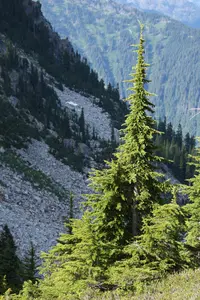
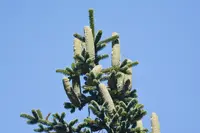
Northern Japanese hemlock, Tsuga diversifolia, is an evergreen conifer valued for its fine, dense foliage and elegant, layered branching. It usually forms a compact tree with a graceful, pyramidal crown and soft, short needles.
This species is native to cool, mountainous forests of northern Japan, where it grows in moist, well-drained, often acidic soils. In cultivation, it is generally slow-growing and long-lived, which suits smaller gardens and collections.
Its need for consistent moisture, shelter from harsh drying winds, and preference for cool conditions can make care for Northern Japanese Hemlock slightly more demanding in hot or exposed sites.

Care Difficulty
Moderate Care

Light Preference
Partial Shade

Water Requirements
Regular Water

Temperature Preference
Cold Hardy

Hardiness Zone
4–7

Soil Texture
Loamy, Sandy, Organic-rich

Soil pH
Strongly acidic (4.5–5.5), Acidic (5.5–6.5)

Soil Drainage
Moist but well-drained

Fertilization
Minimal (feed rarely)
Scan your plant to receive care tips personalized for your specific plant
Available on iOS and Android
This high-elevation conifer prefers cool, bright conditions with protection from harsh midday sun.
This species prefers consistently moist but not saturated soil, especially while establishing.
This cold-adapted conifer thrives in cool to cold climates with moderate summer heat.
This conifer prefers cool, consistently moist air but adapts to many outdoor humidity levels.
This species prefers cool, moist, airy soil with high organic content and steady drainage.
This species can be grown in containers when young or as a dwarf selection, but long-term culture is challenging.
This conifer grows steadily in average garden soil; Northern Japanese Hemlock benefits from light, targeted feeding rather than heavy fertilization.
Tsuga diversifolia generally needs only light structural pruning to maintain a natural, dense form.
This species is usually grown in the ground; focus on careful transplanting rather than frequent repotting.
Propagation of Tsuga diversifolia is possible but slow, and usually done by specialists or patient gardeners.
This cold-hardy conifer tolerates significant frost and generally needs minimal winter care in the ground.

Plant Health Check
Not sure what's wrong with your plant? Check your plant's health inside the app.
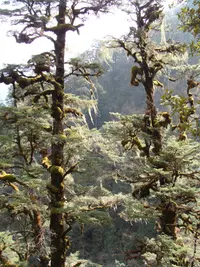
This species is native to cool, moist subalpine forests of northern Honshu, where it often grows in cloudy, fog-influenced zones on steep mountain slopes alongside other cold-adapted conifers.
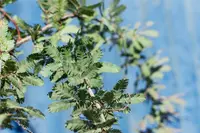
Its needles are unusually short for a hemlock, often only 4–8 mm long, and are arranged in two fairly neat horizontal rows, giving branches a dense, fine-textured appearance compared with many related species.
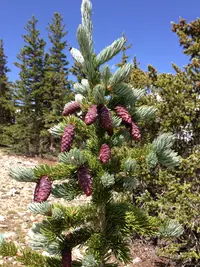
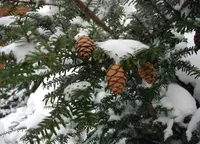
Mature seed cones are small, typically 1.5–2.5 cm long, and show a characteristic purple-brown coloration with rounded cone scales that help distinguish it from other East Asian hemlocks in mixed mountain forests.

This species played a key role in early 20th-century conifer taxonomy, because its combination of short, two-ranked needles and small, rounded-cone morphology helped botanists clarify how East Asian hemlocks differ from North American and European hemlock lineages.
Browning foliage usually results from winter wind scorch, drought stress, or high heat combined with low humidity. Salt spray, compacted soil, and root damage also contribute. Improve soil moisture, mulch the root zone, and provide wind protection where possible.
Keep your plants happy and healthy with plant identification, disease detection, and easy care guidance.