Wind-hardy training
In the first 2–3 years, allow some exposure to moderate wind so the young tree develops a thicker trunk and stronger root system, but stake lightly on the windward side to prevent rocking while it establishes.

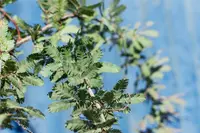
Green wattle, Acacia irrorata, is a fast-growing evergreen tree or large shrub from eastern Australia. It is valued for its fine, feathery foliage and fragrant, pale yellow flower clusters.
In suitable climates it forms a light, airy canopy and can be used as a screening or shelter tree. It prefers sunny, well-drained sites and tolerates poorer soils once established.
This species grows quickly but can be short-lived, so it suits gardeners who want rapid structure rather than a long-term specimen. With the right conditions, it is relatively straightforward to care for green wattle.

Care Difficulty
Moderate Care

Light Preference
Full Sun

Water Requirements
Low Water

Temperature Preference
Warm Climate

Hardiness Zone
9–11

Soil Texture
Sandy, Loamy

Soil pH
Acidic (5.5–6.5), Slightly acidic (6.5–7.0)

Soil Drainage
Well-drained

Fertilization
Minimal (feed rarely)
Scan your plant to receive care tips personalized for your specific plant
Available on iOS and Android
Acacia irrorata grows best in bright outdoor conditions with several hours of direct sun daily.
This species prefers deep but infrequent watering once established, with soil allowed to dry between waterings.
This plant prefers mild, frost-free climates with warm summers and cool, not freezing, winters.
This species tolerates a wide humidity range and does not usually need special humidity management indoors or outdoors.
Acacia irrorata prefers freely draining, moderately fertile soil that mimics its native, slightly lean habitats.
This species can be grown in containers for several years, especially in mild climates or where space is limited.
Acacia irrorata grows in low‑fertility soils, so keep fertilization light and targeted.
Pruning Acacia irrorata focuses on safety, structure, and maintaining a clear framework.
This species is usually grown in the ground, with container culture mainly for young plants or short‑term use.
Acacia irrorata is mainly propagated from seed, which suits its natural biology and produces robust plants.
In mild climates this wattle is fairly tolerant but still benefits from basic winter preparation.

Plant Health Check
Not sure what's wrong with your plant? Check your plant's health inside the app.
In its native range of eastern Australia, this species is a frequent host for several mistletoe species, making it an important structural and nutritional support for these parasitic plants and the birds that feed on them.
The leaves and young stems often show a fine, whitish bloom that gives the tree a softly frosted, greenish appearance, which is the feature behind the common name green wattle.
As a nitrogen-fixing legume, it forms nodules on its roots that house symbiotic bacteria, allowing the tree to establish on depleted or disturbed soils and contribute to early-stage forest regeneration.

Acacia irrorata is a key larval food plant for several native Australian butterflies and moths, so stands of this wattle can significantly boost local insect diversity and support insectivorous birds in remnant woodland habitats.
Poor flowering often comes from plants being too young, heavily pruned at the wrong time, or growing in low light. Nutrient-poor or waterlogged soil, root disturbance, or severe frost can also reduce or delay flower production.
Keep your plants happy and healthy with plant identification, disease detection, and easy care guidance.