Encourage Compact Form
Lightly pinch back soft new shoot tips in late spring to keep the crown dense and rounded, which also helps prevent branches from becoming leggy and wind-prone.

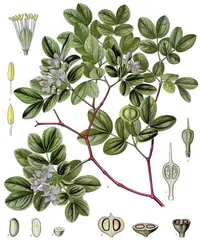
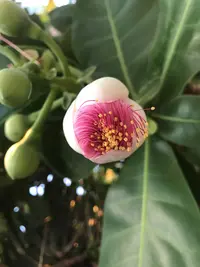
Lignum-vitae, Guaiacum officinale, is a very slow-growing evergreen tree known for its extremely dense, heavy wood and compact stature. It often forms a rounded crown with small, glossy leaflets and showy blue to purple flowers followed by orange seed capsules.
This species is native to the Caribbean and parts of Central America, where it grows in coastal woodlands and dry tropical forests. In cultivation it is valued more as a specialty or collector’s tree than a common landscape plant.
Its slow growth, need for warmth, and sensitivity to frost make it more challenging in cooler climates. Those who want to care for lignum-vitae should provide bright light, moderate moisture, and very well-drained soil.

Care Difficulty
Moderate Care

Light Preference
Full Sun

Water Requirements
Low Water

Temperature Preference
Tropical / Frost Sensitive

Hardiness Zone
11–12

Soil Texture
Sandy, Loamy, Rocky

Soil pH
Slightly acidic (6.5–7.0), Neutral (7.0)

Soil Drainage
Well-drained

Fertilization
Minimal (feed rarely)
Scan your plant to receive care tips personalized for your specific plant
Available on iOS and Android
This slow-growing tropical tree thrives in bright, intense light similar to its native coastal habitats.
This species prefers well-drained soil and moderate moisture rather than constant wetness.
This coastal tropical tree is best suited to warm, frost-free climates with minimal temperature fluctuation.
This species tolerates a fairly wide humidity range but benefits from moderately moist air in containers.
This slow-growing tree prefers lean, very free-draining, slightly alkaline mineral soils.
This species can be grown in containers, especially in regions cooler than its native climate.
Nutrient needs for lignum-vitae are modest, especially in the ground with decent soil.
Guaiacum officinale responds well to light, careful pruning to maintain structure and health.
Transplanting this slow-growing tree should be infrequent and carefully planned to limit root disturbance.
Guaiacum officinale is usually propagated from seeds, which can be slow and somewhat challenging to start.
This tropical tree has low frost tolerance and needs protection in regions with cool winters.

Plant Health Check
Not sure what's wrong with your plant? Check your plant's health inside the app.
The wood of this species is among the densest of all commercial timbers and is so heavy that it sinks in water, which historically made it valuable for ship parts and precision tools.
This tree is one of the national symbols of Jamaica, where its striking blue flowers and durable wood have been culturally important since colonial times.
The species is a very slow-growing evergreen tree naturally restricted to coastal areas of the Caribbean and parts of northern South America, which contributes to its vulnerability in the wild.

This species is listed as Endangered on the IUCN Red List due to overexploitation for its wood and resin combined with habitat loss, and in many areas wild populations have declined so much that international trade is now strictly regulated.
Poor flowering usually relates to age, stress, or pruning. Young trees may take many years to bloom. Drought, root disturbance, or heavy pruning of tips can remove flower buds. Allow recovery time and avoid cutting new growth.
Keep your plants happy and healthy with plant identification, disease detection, and easy care guidance.