Dwarf Alberta Spruce Care (Picea glauca var. albertiana 'Conica')

Also known as: Alberta Spruce, Spruce
Dwarf Alberta Spruce

About Dwarf Alberta Spruce

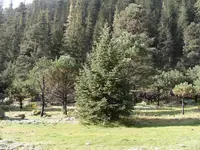
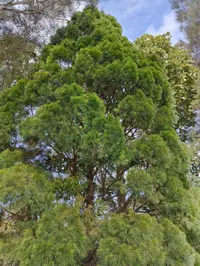
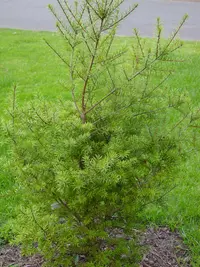
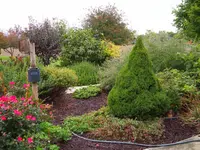
Dwarf Alberta spruce, Picea glauca var. albertiana 'Conica', is a compact evergreen conifer valued for its very dense, naturally cone-shaped form. It stays small and slow-growing, which makes it popular for foundation plantings, containers, and formal gardens.

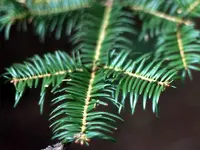
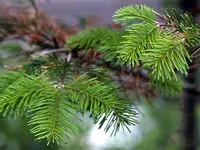
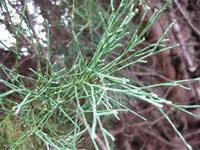
The short, bright to bluish green needles and tight branching create a fine texture that fits well in small spaces. It originates from selections of white spruce native to colder regions of North America.

This cultivar prefers cool conditions, consistent moisture, and well-drained, slightly acidic soil. It can be demanding in hot, dry, or windy sites, so proper placement is the key to successful care for Dwarf Alberta Spruce.

Main Plant Requirements

Care Difficulty

Moderate Care

Light Preference

Full Sun

Water Requirements

Moderate Water

Temperature Preference

Cold Hardy

Hardiness Zone

3–6

Soil Texture

Sandy, Loamy, Rocky

Soil pH

Acidic (5.5–6.5), Slightly acidic (6.5–7.0)

Soil Drainage

Moist but well-drained

Fertilization

Minimal (feed rarely)

Get Personalized Care Plan

Scan your plant to receive care tips personalized for your specific plant

Available on iOS and Android

How to Care for the Dwarf Alberta Spruce

This compact spruce thrives in cool, bright outdoor conditions with steady light exposure.

  • Provide 6–8 hours of sun daily, with full morning sun and light or partial shade after 2–3 p.m. to prevent needle scorch, especially in hotter regions.
  • Dwarf Alberta Spruce tolerates light dappled shade, but in deep shade growth becomes thin, pale, and more prone to fungal issues.
  • In winter, full sun is usually beneficial, but in late winter or early spring, consider windbreaks or temporary shade to reduce sunscald on frozen roots.

This species prefers evenly moist, cool soil and dislikes both drought and standing water.

  • Outdoors in the ground, water when the top 3–5 cm of soil feels dry, applying a slow, deep soak so moisture reaches the full root zone.
  • Ensure sharply draining soil; waterlogged or compacted ground leads to root rot, needle yellowing, and dieback in Picea glauca var. albertiana 'Conica'.
  • In hot, dry weather, monitor more often for drooping or dull, brittle needles, and reduce watering in cool, rainy seasons to avoid chronically wet conditions.

This hardy conifer is adapted to cold climates but benefits from protection from extreme heat.

  • Active growth is best around 55–70°F (13–21°C), though established plants tolerate a wider range once rooted in.
  • Mature plants withstand winter lows near -40°F (-40°C), but newly planted specimens need mulch over roots to buffer freeze–thaw cycles.
  • Heat above 85–90°F (29–32°C), especially with hot, drying winds, can stress foliage, so provide mulch, consistent soil moisture, and some afternoon shade in summer.

This species prefers relatively cool, moderately humid air but usually tolerates typical outdoor conditions.

  • Aim for 40–60% humidity, as very dry air combined with wind increases needle browning and tip dieback.
  • Watch for crispy, browning needle tips and premature needle drop as signs of chronic low humidity stress, especially in containers or exposed sites.
  • Increase local humidity by placing containers near other evergreens as a windbreak and by using a mulch layer to reduce surface evaporation around Dwarf Alberta Spruce.

This conifer needs aerated, moist but fast-draining soil to maintain a healthy fine root system.

  • Use a loose, loamy mix with some sand and fine bark to mimic slightly sandy forest soil structure for Picea glauca var. albertiana 'Conica'.
  • Ensure strong drainage; avoid heavy clay or compacted sites where water puddles or the soil stays saturated after rain.
  • Aim for slightly acidic to neutral pH around 5.5–7.0, adding pine bark fines or leaf mold to gently acidify and increase organic matter.
  • Improve aeration and drainage in dense soils by incorporating coarse sand or fine gravel into the top 20–30 cm before planting and avoiding trampling nearby.

This species adapts well to container growing outdoors when the pot setup supports its deep, fibrous root system.

  • Choose a tall, heavy container that resists tipping in strong winds and gives roots vertical space to develop.
  • Select thick-walled or insulated pots to buffer root temperatures from rapid freezing and overheating on exposed patios.
  • Provide a drainage layer only by ensuring large, unobstructed holes and elevating the pot slightly so water can exit freely after irrigation or rain.

This compact conifer benefits from light, measured feeding in containers, while landscape Dwarf Alberta Spruce usually needs minimal fertilizer in decent soil.

  • For potted plants, use a balanced slow-release fertilizer (around 10-10-10) in early spring, following label rates exactly.
  • Feed once more in mid-summer if growth is weak; avoid high-nitrogen lawn fertilizers near the root zone.
  • Stop feeding in late summer so new growth hardens before frost and do not fertilize in winter dormancy.

Picea glauca var. albertiana 'Conica' needs only light structural pruning to keep its natural cone shape and remove problem growth.

  • Prune in late winter to early spring before new growth starts, avoiding cuts into bare, old wood with no green needles.
  • Use clean, sharp hand pruners to remove dead, diseased, or storm-damaged branches back to a side shoot or trunk.
  • Thin slightly crowded tips by cutting individual shoots, which maintains airflow and the dense conical outline without shearing.

This slow-growing spruce is usually planted in the ground, with container plants needing infrequent repotting and careful handling of the root ball.

  • Check for roots circling the pot drainage holes, soil drying very fast, or stalled growth as signals to move up 1 pot size.
  • Transplant or repot in early spring or early fall when temperatures are mild and moisture is more consistent.
  • Lift the plant by the root ball, not the stem, and keep roots intact; set at the same soil level in the new hole or container.
  • Water thoroughly after planting, then keep soil evenly moist for several weeks to limit transplant shock and support root recovery.

Home propagation of this cultivar is slow and technically demanding, so most gardeners rely on nursery-grown plants instead of doing it themselves.

This spruce is cold hardy in much of the northern US, yet young or container-grown plants benefit from some targeted winter care.

  • Apply 5–8 cm of mulch around the root zone in late fall, keeping it a few cm away from the trunk to avoid rot.
  • In windy or exposed sites, use a breathable burlap screen to reduce drying winds and needle scorch on the south and west sides.
  • For container plants in very cold climates, move pots to a sheltered, unheated space or group and wrap containers to insulate roots.

Care Tips

Prevent Snow Splitting

In snowy climates, wrap the cone lightly with soft twine or horticultural tape from base to tip before heavy storms to keep branches from splaying and permanently deforming the shape.

Rotate Container Plants

For potted specimens on patios or entries, turn the container 90° every 2–3 weeks during the growing season to keep growth even and maintain a symmetrical cone.

Manage Spider Mites

In hot, dry weather, check inner foliage weekly with a white paper test and, at the first sign of mites, use a strong water spray into the canopy every few days to reduce populations before damage is visible.

Thin Inner Foliage

Once a year, gently remove a small amount of dead or heavily shaded interior needles by hand to improve air movement and reduce the risk of spider mites and fungal issues when caring for Dwarf Alberta Spruce.

Use Reflective Mulch

Apply a light-colored, non-organic mulch such as pale gravel around the base in high-heat sites to reflect some sun and keep root temperatures more stable, which reduces stress and browning of lower branches.

Common Pests and Diseases

Spider mites

This pest thrives on the dense, sheltered foliage, causing fine yellow stippling and a dull, grayish cast, often with fine webbing inside the canopy. Symptoms include needle drop and thinning, especially on the sunniest or driest side of the plant.

Solution

Spray the entire plant, including inner branches, with a strong stream of water every few days to dislodge mites, then apply horticultural oil or insecticidal soap labeled for conifers, repeating as directed. Reduce stress by keeping soil evenly moist, increasing ambient humidity slightly, and avoiding heat-reflective sites to support long-term Picea glauca var. albertiana 'Conica' plant care.

Spruce spider mites

These insects are cool-season mites that feed heavily in spring and fall, leaving bronzed or gray, dirty-looking needles and fine webbing deep inside the tight canopy. Damage often goes unnoticed until significant browning and needle loss appear.

Solution

Confirm their presence with a white paper tap test, then treat both the outer surface and inner foliage with horticultural oil or a miticide labeled for spruce, following all timing and temperature limits. Prune out and dispose of heavily damaged inner twigs to open the canopy for better spray coverage and airflow.

Cytospora canker

This disease causes progressive branch dieback, usually starting on lower branches, with resinous oozing and sunken, discolored bark patches. Symptoms include browning needles that remain attached and dead branches that slowly move upward over time.

Solution

Prune out infected branches during dry weather, cutting back to healthy wood and disinfecting tools between cuts with alcohol or a 10% bleach solution. Improve vigor by avoiding drought stress, preventing mechanical injury to the trunk, and spacing plants to reduce shade and moisture retention in the lower canopy.

Rhizosphaera needle cast

This disease leads to interior needle yellowing, then purpling and browning, often starting on the lower shaded branches and moving upward, leaving bare inner stems. Symptoms include small dark fruiting bodies in neat rows on affected needles, visible with a hand lens.

Solution

Remove and discard fallen needles and heavily infected branches to reduce spores, then apply a copper or chlorothalonil-based fungicide labeled for spruce at bud break and repeat as directed. Improve air movement by thinning nearby vegetation and avoiding overhead watering that keeps foliage wet for long periods.

Spruce gall adelgids

These insects induce cone-like or pineapple-shaped galls on new growth that distort branch tips and can stunt small plants. Symptoms include clusters of swollen, green galls that later turn brown and may remain on the plant for years.

Solution

Prune and destroy green, developing galls before adelgids emerge, usually in late spring to early summer, to break the life cycle. For high infestations, apply horticultural oil during the dormant season or just before bud break, thoroughly coating twigs and buds according to label directions.

Interesting Facts

Slow genetic mutation origin

This dwarf form arose as a naturally occurring mutation of the white spruce, first noticed in the early 1900s in Alberta, Canada, and then propagated vegetatively so every plant sold today is essentially a clone of that original find.

Extremely compact growth

Compared with its wild white spruce relatives that can reach 15–30 m, this cultivar typically adds only a few centimeters of height per year and maintains a naturally dense, conical crown without pruning under suitable conditions.

High mite sensitivity

The dense, fine foliage and reduced air movement in the crown make this cultivar notably prone to spider mite infestations, especially in hot, dry or reflected-heat sites, so regular monitoring is recommended in Dwarf Alberta Spruce care instructions.

Botan icon

Did you know?

This cultivar is one of the most widely used conifer varieties in ornamental breeding programs, and its compact, symmetrical form has been used as a parent or model for selecting other miniature and dwarf spruces for rock gardens, container displays, and formal landscape designs.

FAQs about Dwarf Alberta Spruce

Browning is often caused by winter wind burn, hot dry wind, or spider mite damage. Check inner needles and branch tips, improve airflow, water deeply but not excessively, and treat mites with a horticultural oil if confirmed.

Grow Healthy Plants with Botan Care

Keep your plants happy and healthy with plant identification, disease detection, and easy care guidance.

Botan plant care app — identify plants on mobile

Explore More Plants